

There’s a moment every homeowner knows well—standing in a stuffy room in July, fiddling with a thermostat that controls the whole house, wishing one specific space could just be cooler. Or warmer. Or both, depending on the season. Ductless mini split systems solve exactly that problem, and they do it with surprising elegance. More homeowners across the country are making the switch, and once you understand what these systems actually deliver, the reason becomes obvious.
Unlike traditional HVAC systems that push conditioned air through a network of ducts, ductless mini splits connect an outdoor compressor unit to one or more indoor air handlers—no ducts required. Each indoor unit operates independently, giving every room its own climate control. The result? No more arguing over the thermostat. No more freezing bedrooms paired with sweltering living rooms.
What Makes Ductless Mini Splits Different From Traditional HVAC?
Traditional central air systems rely on ductwork to distribute conditioned air throughout a home. The problem is that ducts are inefficient by nature—the U.S. Department of Energy estimates that duct systems can lose more than 30% of airflow due to leaks, holes, and poor connections. That’s a significant portion of your energy bill disappearing before the air even reaches you.
Ductless mini splits bypass that loss entirely. The conditioned air travels directly from the indoor unit into the room, which means the energy you’re paying for is the energy you’re actually using. Combined with inverter-driven compressor technology—which adjusts output based on demand rather than cycling on and off—these systems consistently outperform traditional setups in efficiency ratings.
Most modern ductless systems carry SEER2 ratings well above the federal minimum, and many qualify for federal tax credits and local utility rebates under the Inflation Reduction Act’s energy efficiency incentives.
Which Spaces Benefit the Most From Ductless Mini Split Systems?
This is where ductless systems shine brightest. They aren’t just a replacement for central air—they’re a solution for spaces that central air simply can’t reach.
Home additions and sunrooms are prime candidates. When you add square footage to a home, extending existing ductwork is expensive, invasive, and often impractical. A ductless unit handles the new space independently without touching your current system.
Garages converted into living spaces face the same challenge. Finished garages used as home offices, gyms, or entertainment rooms sit outside the duct loop entirely, leaving occupants at the mercy of whatever temperature happens to drift through the walls.
Older homes without existing ductwork are perhaps the most compelling case. Installing central air in a home built without ducts requires cutting through walls, ceilings, and floors—a renovation that costs tens of thousands of dollars. Ductless installation is comparatively minimal in terms of structural disruption.
Multi-family units and rental properties also benefit significantly. Landlords can give tenants individual climate control without complicated shared systems, and the efficiency gains reduce utility costs across the board.
How Does the Installation Process Actually Work?
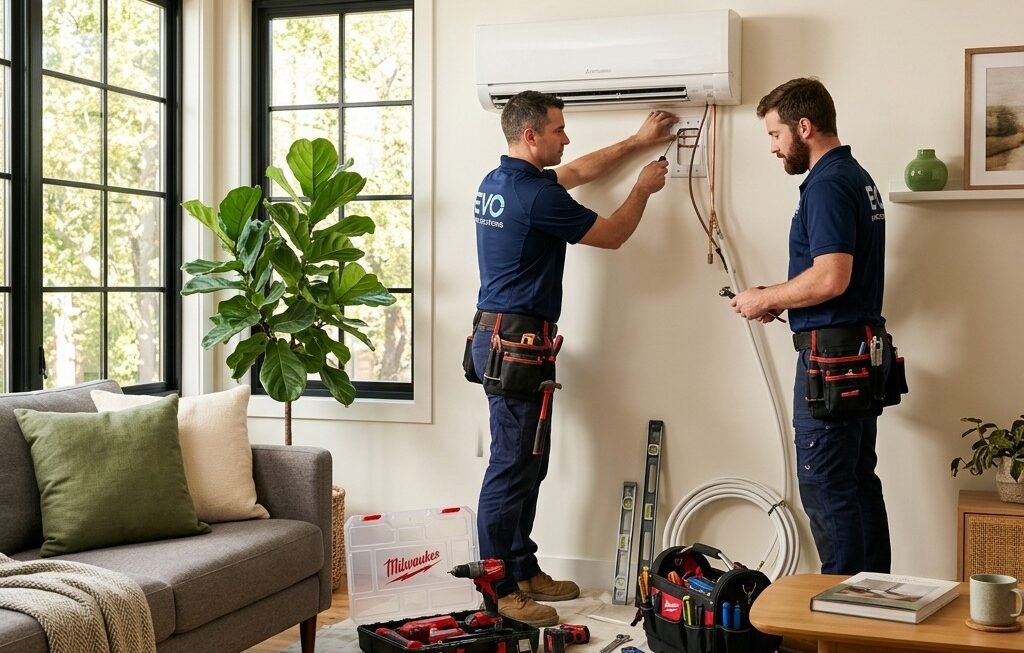
Professional ductless mini split installation involves mounting the indoor air handler—typically high on a wall—drilling a small hole through the exterior wall, and running a conduit that contains the refrigerant lines, power cable, and condensate drain. The outdoor compressor unit is then positioned on a pad or bracket outside.
The conduit hole is usually about three inches in diameter, which means the structural impact on your home is minimal. Most single-zone installations are completed within a day. Multi-zone systems, where multiple indoor units connect to one outdoor compressor, may take longer depending on the number of rooms involved.
Proper installation requires EPA Section 608 certification for refrigerant handling, which is why professional installation isn’t just recommended—it’s legally required for certain aspects of the job. Beyond compliance, professional installation protects your manufacturer warranty, which many brands void if the system is self-installed.
What Are the Long-Term Benefits of Going Ductless?
The upfront cost of ductless installation is higher than a window unit and can approach the cost of central air in some configurations. But the long-term picture tells a different story.
Energy savings accumulate quickly. Because ductless systems only condition the rooms that need it, you avoid paying to heat or cool unoccupied spaces. Homes that use zoning effectively can see meaningful reductions in monthly energy bills.
Maintenance is straightforward. The indoor filter is washable and accessible to homeowners. Professional tune-ups are recommended annually, but the systems don’t require duct cleaning, sealing, or the kind of ongoing maintenance that traditional ductwork demands.
Lifespan is competitive. Well-maintained ductless systems regularly last 15 to 20 years. The absence of ductwork means fewer components that can wear, clog, or fail over time.
Air quality improves. Without ducts collecting dust, pet dander, and allergens, ductless systems tend to deliver cleaner air to the rooms they serve. Multi-stage filtration in many units further reduces airborne particles.
Why Professional Ductless Mini Split Installation Pays Off
Ductless Mini Split Installation handled by a licensed, experienced HVAC team ensures your system is sized correctly for your space, positioned for optimal airflow, and charged with the precise refrigerant levels the manufacturer specifies—all of which directly affect performance, efficiency, and equipment lifespan. Getting these details right from day one means your system runs better, lasts longer, and keeps your home comfortable without unnecessary strain on its components.
Knock Knock Heating & Cooling brings the expertise, equipment, and certifications needed to handle every aspect of the process—from selecting the right unit for your home’s layout to ensuring the installation meets all local code requirements. The goal isn’t just to get the system running. It’s to get it running right.
If you’ve been tolerating inconsistent temperatures, sky-high energy bills, or spaces in your home that no current system can reach, a ductless mini split might be the most practical upgrade you make this year. Reach out to Knock Knock Heating & Cooling to get a professional assessment and find out what a ductless system can do for your specific space.