

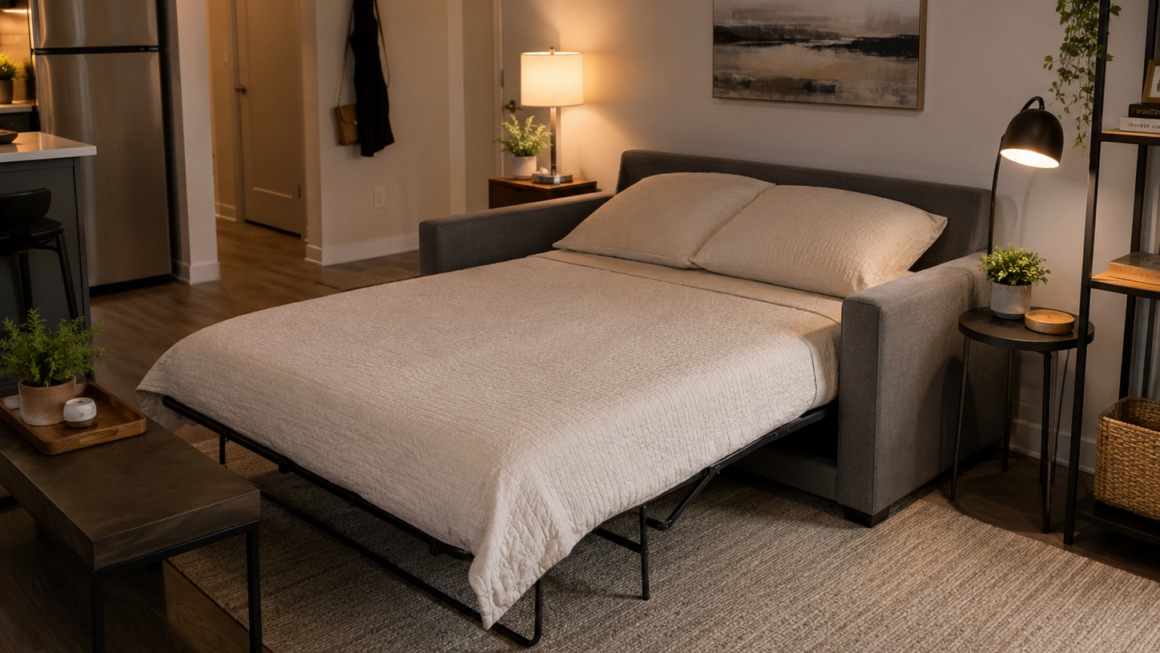
A studio apartment. A home office that turns into a guest room twice a year. A den off the kitchen that has to seat four people on a Saturday and sleep one on Sunday. Rooms like these do not have space for furniture that only performs one task, which is why compact convertible seating has become a standard purchase rather than a niche one.
The trouble is that “small” gets used loosely in furniture listings. A piece can measure under 70 inches wide and still swallow a room once it opens, or it can look right in photos and feel like a bench after twenty minutes. The difference usually comes down to measurements and construction, not styling.
Measure the Open Position, Not Just the Closed One
Most buyers check the sofa width and stop there. The number that actually decides whether a piece works is the depth when it is fully extended, plus the clearance needed to pull it out. A few figures worth writing down before shopping:
- Overall width against the wall space available, including any trim or radiator
- Depth when opened, measured against the nearest coffee table or doorway
- Seat depth and seat height, which determine whether the piece is comfortable for lounging or only for perching
- Arm width, since bulky arms can add eight inches without adding a single inch of usable seat
Anyone comparing Small Sofa Beds across brands will find that two pieces with identical exterior widths can differ by several inches of actual seating room, entirely because of how the arms and frame are built.
Construction Explains the Price Gap
Two convertibles can look nearly identical online and behave very differently after a year. The parts that separate them sit under the upholstery.
Frames built from solid wood or heavy-duty steel hold their shape through repeated conversion. Cheaper particleboard frames loosen at the joints, and the sag shows up first at the seat edge. Foam density matters just as much: high density foam or individually wrapped pocket springs recover their shape, while low density foam compresses permanently within months. The hinge mechanism deserves attention too, since treated hardware moves smoothly instead of catching halfway through the fold.
Performance fabric rated for heavy use is the last variable, and it tends to matter most in rooms that get daily traffic from kids, pets, or guests.
Comfort as a Sofa Comes First
A convertible that sleeps beautifully but sits poorly gets used incorrectly 350 days a year. The seating role should be the primary test, with the sleeping function judged separately. Modern designs have largely moved away from the old fold-out bar mechanism, which means the mattress surface no longer sits on top of a metal grid.
Designs That Stay Relevant
Compact furniture stays in a home for years, often moving between apartments. Clean silhouettes, tapered legs, and neutral upholstery tend to survive changes in room layout and personal taste far better than statement shapes.
For small spaces, the right convertible is not a compromise piece. It is simply furniture doing two jobs properly.