

Key Takeaways
- Compare the neighborhood as carefully as the house itself.
- Verify school assignment, taxes, HOA rules, insurance, and other ownership costs for each specific property.
- Test commutes and visit neighborhoods at several times of day.
- Look beyond lot size to assess privacy, drainage, trees, driveway placement, and maintenance needs.
- Use the same scorecard for every area so that a decision is based on priorities, not only first impressions.
Finding the right home in Southlake, Texas, involves more than comparing square footage, kitchens, and asking prices. Buyers reviewing homes for sale in Southlake, TX can use Hacker Property Group’s Southlake listing search to see available properties while comparing locations, home styles, and neighborhood patterns. With a service area that includes Southlake, Westlake, Trophy Club, and nearby North DFW communities, Hacker Property Group offers local market familiarity that can help buyers notice the practical differences between streets, subdivisions, and daily routes.
A house can be renovated over time, but its setting cannot be changed. The right neighborhood should support the way a household actually lives, including school routines, work travel, outdoor time, maintenance expectations, and future plans.
Why Neighborhood Choice Matters as Much as the Home
Two similarly priced homes can create very different day-to-day experiences. One may sit on a quiet interior street with a large backyard, but add time to every grocery run or commute. Another may offer easier access to shops and major roads but have more traffic, noise, or a smaller outdoor area. In Southlake, buyers may also find meaningful differences in home age, lot configuration, association requirements, and proximity to parks or regular activities.
Start by separating nonnegotiable needs from preferences. List a comfortable monthly payment, target home size, bedroom count, desired lot characteristics, school or childcare needs, commute limits, interest in amenities, and willingness to handle renovations or extensive yard care. This prevents a beautiful feature from outweighing a practical concern that will matter every week.
Compare School Boundaries by Exact Address
City names, postal addresses, and school attendance boundaries do not always align. Before making an offer, confirm the assigned schools for the exact property directly with the applicable school district. Also review enrollment procedures, transportation availability, transfer policies, and any boundary-change information that could affect a future assignment. Listing descriptions and neighborhood names can be useful starting points, but they should not be the final source for school verification.
Measure the Commute in Real Life
Map distance is only part of the picture. A short route with frequent bottlenecks may feel more demanding than a longer route with steady movement. Test the routes that will shape normal life:
- Drive to work during a realistic morning departure time.
- Repeat the route during the afternoon commute period.
- Check access to major roads and regular destinations.
- Make sample trips to grocery stores, medical offices, school activities, and the airport if those trips matter to your household.
- Consider how rain, school traffic, construction, or weekend events could change the experience.
Review Home Styles, Lots, and Layouts
Southlake buyers can encounter established homes with mature landscaping, custom properties, newer construction, and lower-maintenance options. Instead of judging a lot by its stated size alone, walk it. Consider backyard usability, tree cover, sun exposure, privacy, side-yard spacing, driveway placement, and how the home sits relative to neighboring properties.
During showings, look for visible drainage paths, slopes, retaining walls, and signs that warrant further review. A professional inspection remains essential, particularly for major systems and structural concerns. Also consider whether the street has a relatively consistent standard of upkeep and home condition, since surrounding properties contribute to daily enjoyment and future resale appeal.
Calculate the Full Monthly Cost
The list price is not the full price of ownership. Build a separate monthly estimate for every property and neighborhood that includes mortgage principal and interest, property taxes, homeowner’s insurance, HOA dues, utilities, internet, lawn care, pool service if applicable, and a reserve for repairs or replacements. The homebuying guidance from the Consumer Financial Protection Bureau can help buyers organize loan preparation, mortgage questions, and closing responsibilities.
Ask whether the payment will remain comfortable if taxes, insurance premiums, or maintenance costs change. A budget that leaves room for the unexpected can make a home purchase feel more sustainable after closing.
Check HOA Rules Before Falling in Love With a Home
Request association documents early when a property becomes a serious option. Review the annual dues, covered services, rules for exterior changes, fencing, landscaping, roofing, pools, sheds, parking, and rentals. Confirm whether the property belongs to more than one association. It is also wise to examine available budgets, meeting notes, insurance information, and any discussion of planned projects or assessments. HOA documents are a core part of property research, not a closing-week task.
Look at Parks, Trails, and Daily Amenities
A neighborhood should work for ordinary routines, not just special occasions. Visit nearby shopping, restaurants, medical services, and recreation areas rather than relying only on a map. Buyers who value outdoor access can explore the city’s parks, trails, programs, and community facilities while considering how easily those amenities fit into a normal week.
Visit Each Area at Different Times
A quiet showing on a weekend may not reveal weekday conditions. Visit on a weekday morning, during afternoon school and commuter traffic, after dinner, and once on a weekend. Walk nearby streets when possible. Notice lighting, parking, traffic flow, aircraft or road noise, commercial activity, and how the area feels when residents are coming and going.
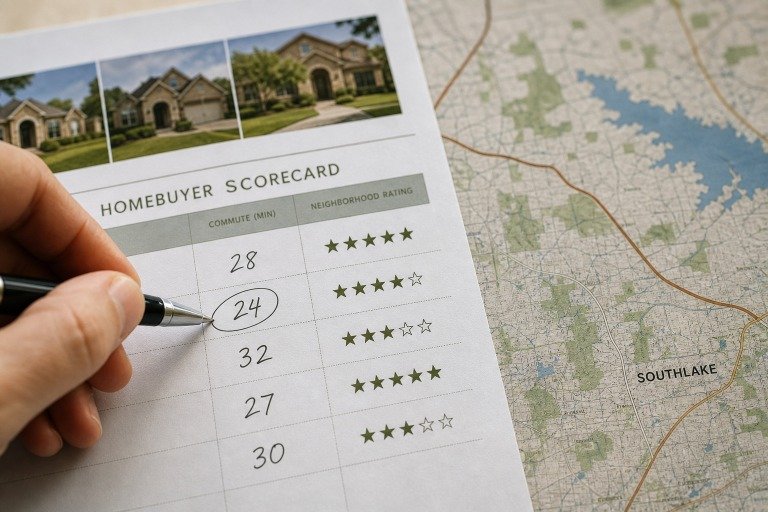
Use a Simple Neighborhood Scorecard
Rate each neighborhood from 1 to 5, then write factual notes beside every score. Categories can include:
- Commute: morning and evening travel experience.
- Home condition: updates, system age, inspection concerns, and likely maintenance.
- Monthly cost: taxes, insurance, HOA dues, utilities, and expected upkeep.
- Outdoor access: parks, trails, trees, privacy, and usable open space.
- Future fit: resale considerations and changing household needs.
A lower score in one category may be acceptable if it supports a higher priority elsewhere. The goal is not to find a perfect neighborhood, but to choose trade-offs intentionally.
Questions to Ask Before Making an Offer
- What do recent comparable sales suggest about the property’s position in the local market?
- Are there known concerns involving drainage, roof condition, foundation performance, or insurance availability?
- What nearby improvements, development, or road work may affect the area?
- Which restrictions could affect a future renovation or outdoor project?
- Will the total monthly cost remain workable if ownership expenses rise?
Common Questions From Southlake Homebuyers
Is the most expensive neighborhood always the best choice?
No. The best choice depends on budget, privacy preferences, commute, home condition, desired amenities, and how long the buyer expects to stay.
Should buyers choose an older or newer neighborhood?
Older areas may offer mature landscaping and established streets, while newer homes may provide more current layouts and newer systems. Compare maintenance needs and lot characteristics property by property.
What should relocation buyers do if they cannot visit every area?
Use live video tours, confirm school boundaries, obtain insurance and lender estimates, review public records, and schedule visits at varied times when possible. Independent inspections and document review still matter, even when the search begins remotely.
Final Checklist Before Choosing a Neighborhood
- Confirm exact school assignment.
- Test key drives at realistic times.
- Review taxes, insurance, HOA dues, and maintenance costs.
- Inspect the lot, street, drainage, and surroundings.
- Visit parks and routine destinations in person.
- Compare at least two or three areas with the same scorecard.
The strongest Southlake home search considers the entire setting around a property. When buyers evaluate daily routines, ownership costs, neighborhood rules, outdoor access, and future needs alongside the home itself, they are better prepared to make a choice that still feels right long after the showing ends.