

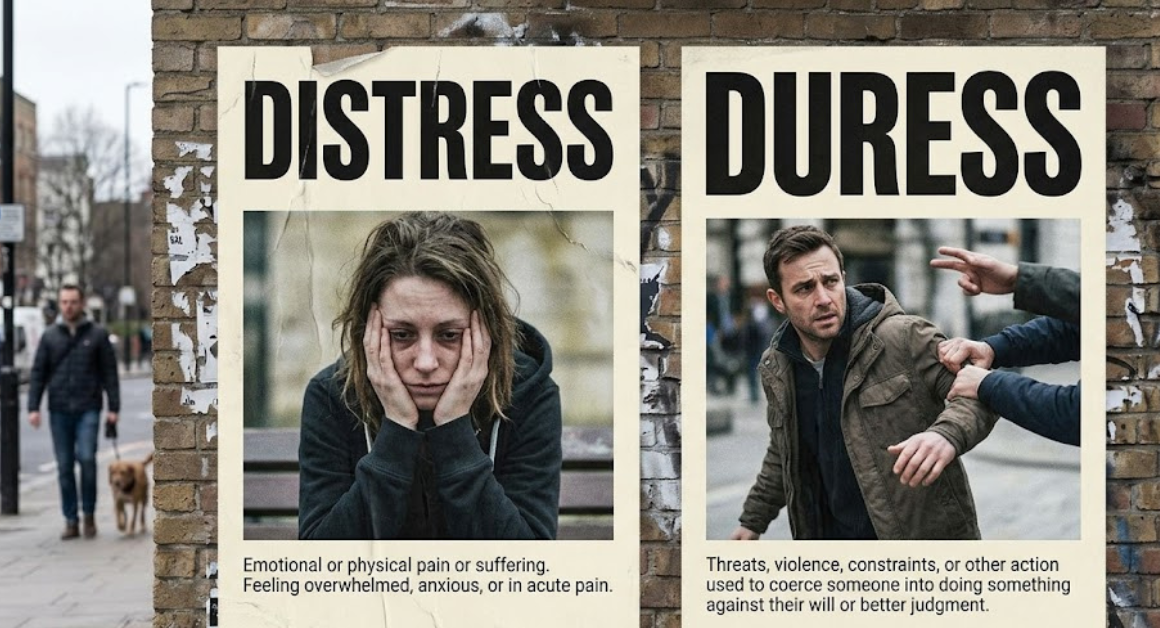
English is full of words that sound similar but carry very different meanings. One pair that often causes confusion is distress vs duress. At first glance, they appear closely related because both involve difficult situations, pressure, or suffering. However, these words are not interchangeable.
Understanding the distinction between distress and duress can improve your writing, communication, and comprehension of legal and professional documents. In this guide, we’ll explore what each term means, when to use it, and how to avoid common mistakes.
Distress vs Duress: What’s the Difference?
The simplest way to understand distress vs duress is to focus on the source of the problem.
- Distress refers to emotional, mental, physical, or financial suffering.
- Duress refers to pressure, threats, or coercion forcing someone to act against their will.
In other words, distress is a state of suffering, while duress is a form of external pressure.
Quick Comparison
| Term | Meaning | Common Context |
| Distress | Pain, anxiety, hardship, or suffering | Emotional, financial, medical |
| Duress | Coercion, threats, or force | Legal, contractual, criminal |
What Does Distress Mean?
Distress describes a condition of severe discomfort, worry, pain, or hardship. It can affect a person’s emotions, finances, health, or overall well-being.
Examples of Distress
- Losing a job may cause financial distress.
- A traumatic event can lead to emotional distress.
- A natural disaster often leaves families in distress.
The focus is on the suffering itself rather than the cause.
Common Types of Distress
Emotional Distress
This includes feelings such as:
- Anxiety
- Fear
- Sadness
- Grief
- Mental anguish
Financial Distress
Financial distress occurs when an individual or business struggles to meet financial obligations.
Examples include:
- Mounting debt
- Cash flow problems
- Bankruptcy risks
Physical Distress
Physical distress involves bodily discomfort or medical emergencies, such as difficulty breathing or severe pain.
What Does Duress Mean?
Duress refers to a situation where someone is forced to do something because of threats, pressure, or intimidation.
The key idea is that the person’s free choice is compromised.
Examples of Duress
- Signing a contract because someone threatened you.
- Handing over money after being intimidated.
- Making a statement due to coercion.
Unlike distress, duress always involves an external force influencing a person’s actions.
Duress in Legal Contexts
The term “duress” is particularly important in law.
Courts may determine that an agreement is invalid if it was signed under duress. This means the person did not genuinely consent because they were pressured or threatened.
Common Legal Examples
- Threats of violence
- Blackmail
- Coercive business practices
- Forced confessions
In many legal systems, proving duress can affect the outcome of contracts, criminal cases, and civil disputes.
Distress vs Duress in Everyday Language
Although both words relate to difficult circumstances, they are used differently in everyday conversation.
Use Distress When:
You’re describing suffering or hardship.
Examples:
- “She was in emotional distress after the accident.”
- “The company experienced financial distress.”
Use Duress When:
You’re describing pressure or coercion.
Examples:
- “He claimed he signed the document under duress.”
- “The confession was made under duress.”
Easy Way to Remember the Difference
A simple memory trick can help.
Distress = Damage or Suffering
Think of distress as the emotional or physical pain someone experiences.
Duress = Driven by Pressure
Think of duress as being driven or pushed into doing something.
If the focus is on suffering, choose distress.
If the focus is on force or threats, choose duress.
Common Mistakes People Make
Mistake #1: Using Duress for Emotional Pain
Incorrect:
- “She felt duress after losing her pet.”
Correct:
- “She felt distress after losing her pet.”
Mistake #2: Using Distress for Coercion
Incorrect:
- “He signed the contract under distress.”
Correct:
- “He signed the contract under duress.”
Mistake #3: Assuming They Are Synonyms
While both words involve unpleasant situations, they describe different concepts and should not be used interchangeably.
Distress and Duress in Professional Writing
Writers, students, lawyers, and business professionals often encounter these terms.
In Healthcare
Distress may refer to:
- Psychological distress
- Respiratory distress
- Emotional distress
In Business
Distress may describe:
- Financial instability
- Corporate hardship
In Law
Duress frequently appears in:
- Contract disputes
- Criminal defenses
- Employment conflicts
Understanding the distinction ensures accuracy and professionalism.
Examples Side by Side
Here are a few comparisons to reinforce the difference.
| Distress | Duress |
| She experienced emotional distress. | She signed the agreement under duress. |
| The family faced financial distress. | The witness testified under duress. |
| The patient showed signs of respiratory distress. | He claimed he acted under duress. |
Frequently Asked Questions
What is the difference between distress and duress?
Distress refers to suffering or hardship, while duress refers to being forced or pressured into doing something against your will.
Can distress lead to duress?
Not directly. Distress is a condition of suffering, whereas duress involves external coercion. However, someone experiencing distress may become more vulnerable to pressure.
Is duress a legal term?
Yes. Duress is widely used in legal settings to describe situations involving coercion, threats, or force.
What are examples of distress?
Examples include emotional trauma, financial hardship, grief, anxiety, and physical suffering.
What does “under duress” mean?
It means a person acted because of threats, pressure, or coercion rather than free choice.
Can a contract be voided because of duress?
In many legal systems, contracts signed under proven duress may be challenged or invalidated.
Conclusion
Understanding distress vs duress is easier once you recognize the core difference: distress is about suffering, while duress is about pressure and coercion. Although the words sound similar, they serve very different purposes in everyday language, professional communication, and legal contexts.
When discussing emotional pain, financial hardship, or personal struggles, use distress. When describing threats, intimidation, or actions taken against someone’s will, use duress. Mastering this distinction will make your writing clearer, more accurate, and more professional.
The next time you encounter these terms, you’ll know exactly which one fits the situation—and why.