
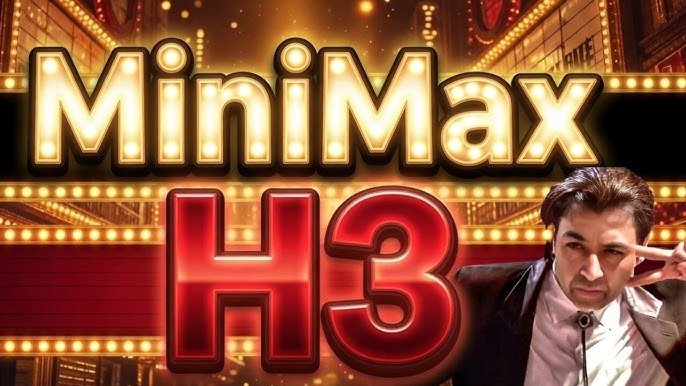
If you spend any time around AI tools right now, you’ve probably seen the name MiniMax H3 popping up everywhere. It launched at the end of July 2026, and within days it was all over creator forums, Twitter threads, and comparison videos. So what is it, why does it matter, and should you actually care? Let’s break it down without the hype.
What Is MiniMax H3, Exactly?
MiniMax H3 is a new AI video generation model from the Shanghai-based company MiniMax. Think of it as one system that can take in text, images, video clips, and audio all at once, then use all of that together to produce a new video. That’s the part that makes it different from most tools you’ve probably tried before.
Older video generators usually made you pick a lane. You’d use one tool for text-to-video, a different one for image-to-video, and yet another for editing an existing clip. H3 folds all of that into a single model. You can hand it a reference clip for camera movement, a photo of a character, and an audio track, and ask it to combine them into one coherent scene. It understands the instructions the same way you’d explain them to a person.
The Numbers That Matter
Here’s what H3 actually delivers, in plain terms:
- Clips up to 15 seconds long, with an extend option that can stretch that to around 30 seconds
- Native 2K resolution at 24 frames per second, which is a real step up from most competitors still working in 1080p
- Built-in stereo audio generated alongside the video, not added afterward
- Support for up to 9 reference images, 3 reference videos, and 3 audio clips at the same time, so you can lock in a character’s look, a voice, and a motion style all together
For a model that’s this flexible, the pricing is surprisingly reasonable. Generating a full 2K clip costs a fraction of what similar-quality output used to run, which is a big part of why smaller creators and agencies are paying attention.
Why Your Feed Is Suddenly Full of This
The timing isn’t an accident. Chinese AI labs have been racing each other in video generation for most of 2026, and each release seems to top the last one. Kuaishou pushed things forward with Kling 3.0 earlier in the year, then ByteDance answered with Seedance 2.0, which impressed a lot of people with how well it blended text, images, audio, and video into a single clip. MiniMax clearly built H3 to compete directly with that.
What’s interesting is that you don’t need to pick a side in this race. If you want to experiment before committing to anything, you can try Seedance free and get a feel for how a leading omni-modal model handles your own prompts, without spending anything upfront. That’s a good way to understand what “good” actually looks like before you judge H3 against it.
MiniMax also announced it plans to release H3’s weights as open source. That means, in theory, anyone with the right hardware could eventually download the model and run it themselves instead of paying per generation. That single decision is a big reason the AI community reacted the way it did — most serious video models stay locked behind an API, and MiniMax is doing the opposite.
How H3 Actually Stacks Up
Comparisons are everywhere right now, and it’s worth being honest about them: independent rankings for brand-new models take time to settle, so treat any “H3 beats everything” claim with a bit of caution. What you can compare today is the feature list, and on paper H3 is genuinely competitive.
Resolution-wise, H3’s native 2K output puts it ahead of most tools still capped at 1080p. Its “omni-reference” system, letting you combine images, clips, and audio in one prompt, is also unusually generous compared to what you’ll find elsewhere. But it’s not the only model doing ambitious multimodal work. If you want to see where the bar currently sits, Seedance 2.5 is worth testing side by side with H3, since it’s built around a similar idea of combining multiple input types into a single generation instead of forcing you to switch tools mid-project.
The honest takeaway: you’re living through a genuine leapfrog race right now, not a case of one clear winner. That’s actually good news for you, because competition between these labs keeps pushing prices down and quality up.
What You Can Actually Do With It
Beyond the specs, here’s where H3 gets practical. MiniMax is positioning it for advertising, product demos, e-commerce listings, game pre-visualization, and even film pre-production. If you make short-form content for a brand, product, or personal project, this is the kind of tool that can take a rough idea, a logo, a script, and a mood clip, and turn it into something close to a finished piece in one pass.
Getting Started Without Overthinking It
You don’t need to become an expert overnight. Start small: try a single reference image plus a short instruction, see how the motion and audio come out, then layer in more references once you understand how the model reacts to your prompts. Because H3 accepts long prompts, it rewards being specific rather than vague, so describe camera angles, pacing, and tone the way you would to a human editor.
Is It Worth Your Time?
If you create video content regularly, yes, it’s worth a look. The combination of 2K output, built-in audio, and multi-reference control is genuinely useful, not just a marketing checkbox. Just keep your expectations grounded: it’s a brand-new release, quality claims are still being tested by real people in real projects, and the “best” model for you might depend on your specific use case more than any single benchmark.
Either way, this is a good moment to experiment. The tools are cheaper and more capable than they were even a few months ago, and trying a couple of them side by side is the fastest way to figure out which one actually fits how you work.