
Most garage floors don’t get much attention—until they start cracking, staining, or peeling. Then suddenly, that slab of concrete becomes a real problem. Whether you’re parking a truck, running a home gym, or using your garage as a workshop, the floor takes a beating every single day. The question isn’t whether it needs protection. The question is what kind of protection actually holds up.
That’s where polyaspartic floor coating comes in. And if you haven’t heard much about it yet, you’re about to find out why homeowners and contractors alike are calling it one of the best investments you can make for your garage.
Why Garage Floors Take More Abuse Than You’d Think
Concrete looks tough, but it’s surprisingly vulnerable. It absorbs oil, reacts to road salt, expands and contracts with temperature changes, and chips under heavy impact. Over time, an uncoated garage floor becomes a patchwork of stains, cracks, and rough patches that are nearly impossible to clean.
Paint? It peels. Epoxy? It yellows and takes days to cure. Many homeowners try one product, watch it fail within a year or two, and then search for something better. That cycle gets expensive fast.
The good news is that the coating industry has evolved significantly. Polyaspartic technology, originally developed for industrial and commercial use, is now available for residential garages—and the results speak for themselves.
What Makes Polyaspartic Coating Different From Other Options?
Polyaspartic coating is a type of aliphatic polyurea. That’s a chemistry term, but what it means practically is simple: this coating cures faster, bonds stronger, and lasts longer than most alternatives.
Here’s what sets it apart:
Cure time is measured in hours, not days. Traditional epoxy coatings can take 24 to 72 hours to fully cure, leaving your garage out of commission for days. Polyaspartic coatings typically cure within a few hours, so your garage is back in use the same day.
It handles temperature extremes. Epoxy often fails in very cold or very hot conditions—it can bubble during application in heat, or not bond properly in cold. Polyaspartic coatings remain flexible and adhere well across a wide temperature range, making them suitable for garages in virtually any climate.
UV resistance keeps it looking sharp. One of the most common complaints about epoxy floors is that they yellow over time when exposed to sunlight. Polyaspartic coating is UV-stable, meaning the color and finish stay consistent for years—even in garages with large windows or open doors.
Hardness and flexibility in one. The coating resists scratches and scuffs from heavy tools, car tires, and equipment without becoming brittle. That balance between hardness and flexibility is rare, and it’s one reason polyaspartic outperforms so many competitors.
The Long-Term Value of Getting It Done Right
Here’s something worth considering: the cost of a floor coating isn’t just the upfront price—it’s the total cost over time. A coating that fails in two years and needs to be stripped and reapplied is far more expensive than one that lasts a decade.
Polyaspartic coatings are built to last. When professionally installed, they can maintain their integrity for 10 to 15 years with minimal maintenance. Cleaning is as simple as sweeping and the occasional mop. There’s no need for special sealers, touch-up kits, or annual reapplications.
For homeowners who want a garage floor that holds up to real-world conditions—hot tire pickup, heavy equipment, chemical spills—this is the coating that delivers.
What the Installation Process Actually Looks Like
One concern homeowners often have is disruption. A multi-day project that leaves your garage unusable for a week isn’t appealing. That’s one area where polyaspartic coating genuinely shines.
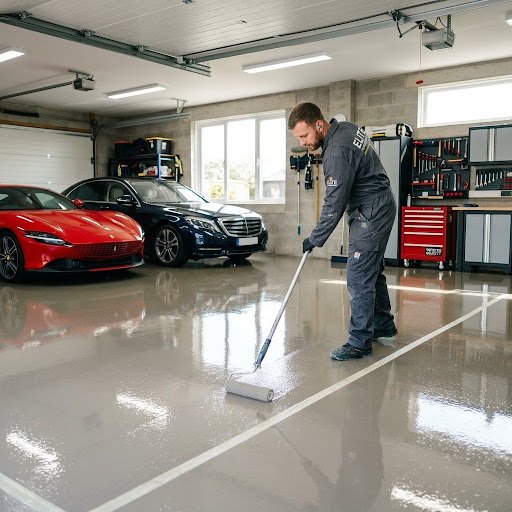
Professional installation typically includes:
- Surface preparation — grinding and profiling the concrete to ensure proper adhesion
- Crack and joint repair — filling any existing damage before coating is applied
- Base coat application — the primary polyaspartic layer bonds to the concrete
- Decorative chips or flakes (optional) — broadcast into the wet coating for texture and aesthetics
- Topcoat application — a clear protective layer is applied for added durability and gloss
The entire process can often be completed in a single day. By the time the crew packs up, the floor is nearly ready to walk on. Light vehicle traffic is typically possible within 24 hours.
Elevate Your Garage With Carbon Concrete Coatings
Your garage floor doesn’t have to look like an afterthought. At Carbon Concrete Coatings, the team brings professional-grade materials and proven installation techniques to every project—delivering results that are as durable as they are visually impressive.
Polyaspartic garage floor coating protects your concrete from oil stains, chemical spills, tire marks, and daily wear while transforming the entire look of your space with a sleek, high-gloss finish that stays vibrant for years to come. This isn’t a cosmetic upgrade—it’s a structural investment that adds real, lasting value to one of the most used spaces in your home.
The Carbon Concrete Coatings team handles everything from surface preparation to final topcoat, using high-quality polyaspartic products that are built to outperform the competition. Every job is treated with the same attention to detail, whether it’s a single-car garage or a large commercial bay.
If you’re ready to stop settling for a cracked, stained, and tired-looking floor, Carbon Concrete Coatings is ready to change that. Reach out today for a free quote and see what a professionally coated floor can do for your garage.
Frequently Asked Questions
How long does polyaspartic garage floor coating last?
When professionally installed, polyaspartic coatings typically last 10 to 15 years. The lifespan depends on traffic levels, maintenance habits, and the quality of surface preparation during installation.
Can polyaspartic coating be applied over existing epoxy?
In some cases, yes—but it depends on the condition of the existing coating. A professional assessment is needed to determine whether the surface is suitable for recoating or requires full removal first.
Is polyaspartic coating slippery when wet?
Broadcast flakes and anti-slip additives can be incorporated into the coating to improve traction. A reputable installer will discuss these options with you before the project begins.
How soon can I drive on the floor after installation?
Most polyaspartic coatings allow light foot traffic within a few hours and vehicle traffic within 24 hours, though this can vary based on the specific product used and environmental conditions.
Does polyaspartic coating work in cold climates?
Yes. Unlike epoxy, polyaspartic coatings can be applied and cured in temperatures as low as -30°F, making them a reliable option for garages in colder regions.