

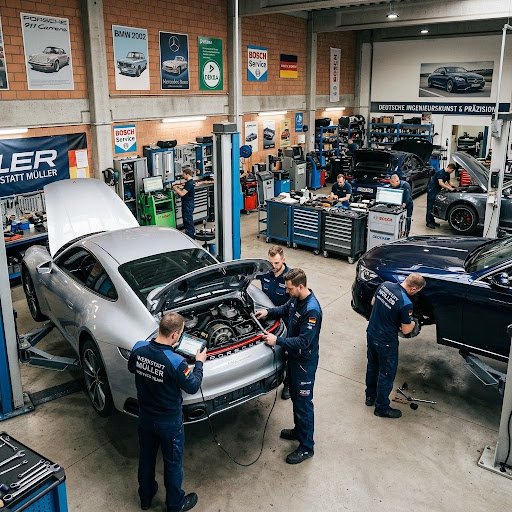
European vehicles are engineered to a different standard. The tolerances are tighter, the technology is more advanced, and the driving experience is unlike anything else on the road. But that precision comes with a responsibility—when something needs attention, it deserves the right hands.
At German Motors, European auto repair isn’t a side service. It’s the specialty. Every technician, every tool, and every diagnostic process is built around the specific demands of European engineering.
What Sets European Vehicles Apart From the Rest
European automakers—BMW, Mercedes-Benz, Audi, Volkswagen, Porsche—build their vehicles with a philosophy that prioritizes performance, safety, and driver engagement above all else. That philosophy shows up in every component, from the suspension geometry to the software running the engine management system.
These vehicles aren’t difficult to work on because they’re poorly designed. They’re complex because they’re sophisticated. And that sophistication requires a repair shop that speaks the same language.
Generic repair shops often lack the manufacturer-specific diagnostic tools needed to accurately read fault codes on European models. They may use parts that meet a general specification but fall short of the OEM standard. The result? A repair that looks complete on paper but doesn’t restore the vehicle to where it should be.
The Diagnostic Difference That Changes Everything
One of the most critical steps in any European auto repair job is proper diagnosis. European vehicles communicate through layered electronic systems—body control modules, transmission control units, adaptive suspension controllers—all talking to each other in real time.
German Motors uses factory-level diagnostic equipment to read these systems accurately. That means identifying the actual root cause of an issue rather than replacing parts based on guesswork. It saves time. It saves money. And it means the repair actually solves the problem.
Why Dealer-Level Tools Matter for BMW, Audi, and Mercedes Repairs
Dealer-level diagnostic platforms like ISTA for BMW, ODIS for Volkswagen and Audi, and XENTRY for Mercedes-Benz provide access to data that generic OBD-II scanners simply can’t reach. Live sensor data, module programming, adaptation resets—these functions are essential for many repairs on modern European vehicles.
Without them, a shop is essentially working with a partial picture. German Motors works with the full one.
Routine Maintenance Built for European Engineering Standards
Routine service on a European vehicle isn’t the same as routine service on a domestic model. Oil viscosity specifications differ. Service intervals are programmed into the vehicle’s onboard computer. Brake fluid flush schedules are more frequent. Coolant formulations are model-specific.
Getting these details right matters—not just for performance, but for longevity. European vehicles are built to last when they’re maintained properly. Cutting corners on the wrong oil grade or skipping an adaptation reset after a battery change can create cascading issues down the road.
German Motors follows manufacturer-recommended service procedures for every job, from an oil service on a 3 Series to a major inspection on an E-Class. The vehicle leaves the shop the way the manufacturer intended it to run.
Common Services German Motors Provides for European Vehicles
- Engine oil and filter service using OEM-specified fluids
- Brake pad and rotor replacement with high-performance European-grade components
- Timing chain and belt service
- Cooling system maintenance and thermostat replacement
- Suspension and steering component inspection and repair
- Transmission fluid service and adaptation resets
- Pre-purchase inspections for used European vehicles
The Real Cost of Choosing the Wrong Shop
A cheaper repair bill today can lead to a much larger one tomorrow. European vehicles respond poorly to incorrect parts, improper torque specs, and missed software updates. A wheel bearing installed without the proper press tool. A brake caliper refit without the correct piston retraction method. An oil service completed without resetting the service indicator—these small missteps compound.
Comprehensive European auto repair performed by technicians trained specifically on European makes and models ensures that every system is addressed correctly, every procedure follows manufacturer standards, and every vehicle leaves performing the way it was designed to.
German Motors has built its reputation on doing the job right the first time. That consistency is what keeps customers coming back—and what keeps their vehicles running at their best.
Transparency and Communication You Can Count On
One thing that often frustrates European vehicle owners is the lack of clear communication from repair shops. Vague estimates, unexpected charges, and explanations that raise more questions than they answer aren’t part of the experience at German Motors.
Before any work begins, the team provides a detailed inspection report and a clear explanation of what needs to be done, why it needs to be done, and what the expected outcome is. There are no surprises at pickup.
That transparency extends to parts sourcing. German Motors uses OEM and OEM-equivalent components for every repair—so customers know exactly what’s going into their vehicle and why it was chosen.
German Motors: Precision Care for European Vehicles
European vehicles deserve more than a general repair shop. The engineering that goes into a BMW M3, a Porsche Cayenne, or an Audi A6 demands a team that understands it deeply—not just in theory, but in practice.
German Motors is that team. With the diagnostic tools, the technical knowledge, and the commitment to manufacturer standards, every vehicle that comes through the shop receives the level of care it was built for. Whether it’s a routine service or a complex repair, the standard stays the same.