

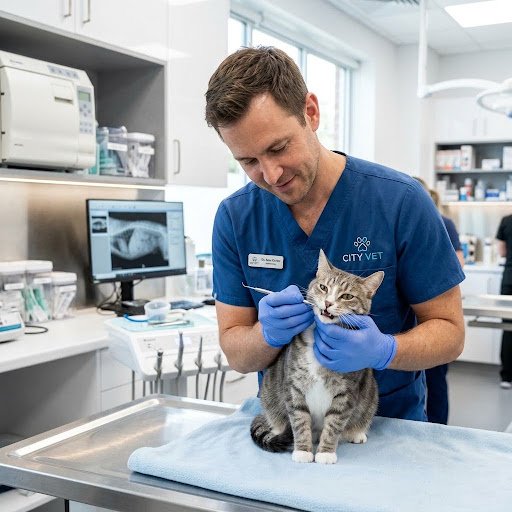
Your cat’s teeth don’t come with a warning label—but maybe they should. Dental disease is one of the most common health problems in cats, yet it’s also one of the most overlooked. By age three, most cats already show signs of periodontal disease. By age five, many are dealing with pain they can’t articulate and problems that are quietly getting worse.
That’s not a scare tactic. That’s just the reality of feline dental health—and it’s exactly why more cat owners are turning to professional veterinary dental care to stay ahead of it.
What Actually Happens Inside a Cat’s Mouth
Cats are masters at hiding discomfort. A cat with a rotten tooth will often still eat, still purr, and still appear perfectly fine. This is one of the reasons dental disease progresses so far before owners notice anything is wrong.
It starts with plaque—a sticky film of bacteria that coats the teeth. Left unchecked, plaque hardens into tartar, which irritates the gums and leads to gingivitis. From there, the disease can progress to periodontitis, tooth resorption, and even bone loss around the root. At its worst, oral bacteria can enter the bloodstream and affect the kidneys, liver, and heart.
The mouth is a window into your cat’s overall health, and when something’s wrong there, the effects can reach far beyond the gum line.
What Does a Professional Cat Dental Cleaning Involve?
A professional cleaning at a veterinary clinic is nothing like wiping your cat’s teeth with a pet toothbrush at home. The two aren’t even in the same category.
Here’s what a professional cleaning typically includes:
- Pre-anesthetic bloodwork to confirm your cat is healthy enough for the procedure
- General anesthesia for a safe and thorough exam—cats don’t cooperate with open-mouth prodding
- Full-mouth dental X-rays to evaluate tooth roots, bone, and structures below the gum line
- Ultrasonic scaling to remove tartar both above and below the gum line
- Polishing to smooth the enamel and slow future plaque buildup
- Tooth extractions if any teeth are diseased, fractured, or non-viable
The anesthesia component often gives cat owners pause, but it’s what makes the procedure safe and effective. Without it, a cleaning is incomplete—and potentially stressful for both the cat and the veterinarian.
How Often Should Cats Get a Dental Cleaning?
Frequency depends on the individual cat. Breed, diet, genetics, and age all play a role. Some cats need professional cleanings once a year; others can go longer between visits.
Cats with flat faces—like Persians and Exotic Shorthairs—tend to have more crowded teeth, which accelerates tartar buildup. Senior cats are at higher risk for tooth resorption, a painful condition that’s only detectable through X-rays. And cats who eat exclusively wet food may need more frequent attention than those who eat dry kibble, since dry food creates slight abrasion on the tooth surface.
Your veterinarian is the best person to set a dental schedule based on your cat’s specific needs. At Fox Veterinary Services, dental assessments are part of routine wellness exams, which means any concerns are caught early—before they turn into expensive, painful problems.
Signs Your Cat May Be Overdue for a Dental Visit
Cats rarely signal pain in obvious ways, but there are subtle signs that something is off:
- Bad breath that doesn’t improve
- Drooling more than usual
- Pawing at the face or mouth
- Dropping food while eating
- Chewing on one side
- Bleeding or red gums
- Weight loss or reduced appetite
If your cat is showing any of these signs, a dental exam should move to the top of the to-do list. Don’t wait for a scheduled check-up.
What to Expect After a Professional Cleaning
Most cats recover quickly from a dental cleaning. In the hours immediately following the procedure, they may be groggy from anesthesia, less interested in food, or slightly quieter than usual. That’s normal. By the following morning, most cats are back to their regular selves.
If extractions were performed, your veterinarian will send home pain medication and care instructions. Soft food is usually recommended for a few days while the gums heal.
The good news? Cats adapt remarkably well to tooth loss. Many owners report that their cat eats better after an extraction than before—because the source of pain has finally been removed.
Keeping Your Cat’s Teeth Healthy Between Cleanings
Professional cleanings do the heavy lifting, but there’s plenty you can do at home to slow down tartar buildup between visits.
Tooth brushing is the gold standard. It takes patience to introduce, especially in adult cats, but with gradual training and cat-specific toothpaste (never human toothpaste—it’s toxic to cats), many cats tolerate it well.
Dental treats and chews can help reduce plaque, though they work best as a supplement to brushing rather than a replacement. Look for products with the Veterinary Oral Health Council (VOHC) seal of acceptance.
Water additives are another option for cats who resist all forms of mouth contact. While not as effective as brushing, they can contribute to a more comprehensive oral hygiene routine.
Dental diets are also available by prescription and are designed specifically to reduce tartar accumulation through mechanical abrasion as the cat chews.
The Lasting Benefits of Prioritizing Your Cat’s Dental Health
Cat dental cleaning carried out by experienced veterinary professionals can extend your cat’s quality of life by preventing painful infections, reducing the risk of systemic disease, and preserving teeth that allow your cat to eat, groom, and live comfortably for years to come. At Fox Veterinary Services, every dental procedure is approached with precision, care, and a genuine commitment to your cat’s long-term well-being.
A cat with a healthy mouth is a cat that feels better, plays more, and thrives longer. The mouth may be small, but its impact on your cat’s overall health is enormous. Dental care doesn’t have to be reactive—make it part of your cat’s routine, and the results will speak for themselves.
Ready to schedule your cat’s next dental appointment? Fox Veterinary Services is here to help.