

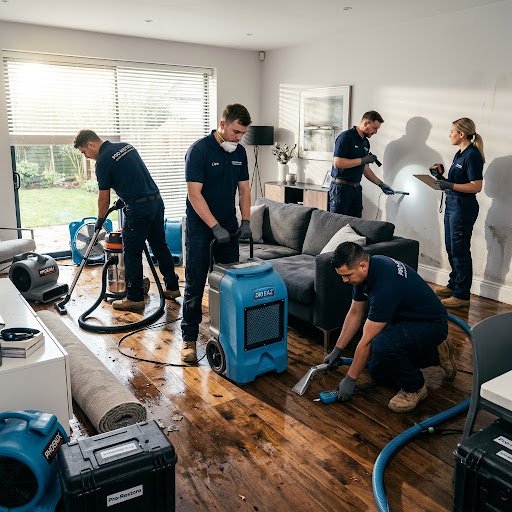
Water damage doesn’t announce itself with a warning. One morning, everything’s fine. By afternoon, a burst pipe or a slow, hidden leak has turned a perfectly good room into a soggy mess. The damage isn’t just cosmetic—it reaches into walls, beneath flooring, and behind cabinets, quietly spreading before most homeowners even realize there’s a problem.
That’s what makes water damage so deceptively dangerous. And it’s exactly why the restoration process matters far more than most people think.
What Actually Happens When Water Invades Your Property
Water doesn’t stay where it lands. It moves through porous materials, seeps into subfloors, and gets trapped inside wall cavities. Within 24 to 48 hours, moisture creates the ideal conditions for mold growth—a secondary problem that can rival the original damage in terms of cost and health risk.
Structural materials absorb moisture differently. Drywall softens and warps. Wood swells, then buckles. Insulation loses its effectiveness once saturated. The longer water sits unaddressed, the more these materials degrade, and the more expensive the restoration becomes.
Understanding this progression is what separates a professional restoration from a surface-level cleanup.
Why Professional Water Damage Restoration Delivers Better Outcomes
There’s a common instinct to grab towels and fans and handle it yourself. For very minor spills, that might work. For anything involving a significant water event—flooding, appliance failure, pipe bursts, or roof leaks—professional restoration produces results that DIY efforts simply cannot match.
Here’s why:
Moisture detection goes beyond what you can see. Professional restoration teams use thermal imaging cameras and moisture meters to locate water that has migrated into walls, floors, and ceilings. Visible damage is often just a fraction of what’s actually there.
Industrial-grade drying equipment works faster and more thoroughly. Commercial air movers and dehumidifiers remove moisture from structural materials at a rate that household fans cannot achieve. This dramatically reduces drying time and limits secondary damage.
Mold prevention is built into the process. Antimicrobial treatments applied during restoration stop mold from taking hold—something a standard cleaning can’t reliably accomplish.
Documentation protects your insurance claim. Professional restorers photograph and document every stage of the damage and repair process, giving you a clear record that insurance companies require.
What the Restoration Process Looks Like in Practice
A proper restoration follows a structured sequence—not because it’s procedurally neat, but because each step sets up the next one for success.
Assessment and Inspection
The process begins with a thorough inspection of the affected area. Restoration specialists identify all moisture-affected zones, classify the damage by water type (clean water, gray water, or black water), and develop a scope of work tailored to the property’s specific conditions.
Water Extraction
Standing water is removed using powerful truck-mounted or portable extraction units. The goal is to remove as much bulk water as possible before the drying phase begins. The faster this step happens, the less moisture has time to migrate deeper into structural materials.
Structural Drying and Dehumidification
This is where patience and precision matter most. Strategic placement of air movers and dehumidifiers creates airflow that draws moisture out of materials. Moisture readings are monitored daily to confirm drying is progressing on track. Rushing this phase—or skipping it—leads to problems that resurface weeks or months later.
Cleaning and Sanitization
Depending on the water source, affected materials may require antimicrobial treatment. Sewage backups and gray water events demand a higher level of sanitization than clean water damage. Proper cleaning at this stage protects both the property and the people living in it.
Restoration and Repairs
Once everything is dry and sanitized, the repair work begins. Drywall is replaced. Flooring is reinstalled. Cabinetry is restored or rebuilt. The goal is to return the space to its pre-loss condition—or better.
The True Cost of Waiting Too Long
Delayed action is one of the most common mistakes property owners make after water damage occurs. The reasoning is understandable—maybe the damage doesn’t look that serious, or scheduling feels complicated. But the cost of waiting compounds quickly.
Mold can begin growing within 24 to 48 hours. Structural deterioration accelerates with every passing day that moisture remains trapped in materials. What might be a contained, straightforward repair early on can become a full-scale renovation if left unaddressed.
Professional restoration services are equipped to respond quickly, assess the full scope of damage, and begin mitigation immediately—limiting both the damage and the overall cost of restoration.
ARG Restoration and Construction: Restoring Properties the Right Way
Professional water damage repair done by a skilled, experienced team gives homeowners and property managers the best possible chance of recovering their space fully—without the hidden costs, incomplete drying, or mold problems that come from cutting corners on restoration. ARG Restoration and Construction brings that level of expertise and commitment to every project, handling each stage of the restoration process with the care and technical precision your property deserves.
From the initial assessment to the final repair, ARG Restoration and Construction treats every job as a full restoration—not just a cleanup. The team is equipped with professional-grade tools, trained in current restoration standards, and committed to getting your property back to the way it should be.
Water damage is stressful enough without having to wonder whether the job was done right. With ARG Restoration and Construction, you don’t have to wonder.
Frequently Asked Questions
How long does water damage restoration typically take?
The timeline depends on the extent of the damage and the materials affected. Minor water damage may be resolved within a few days, while more significant events involving structural materials can take one to two weeks or longer. Structural drying alone generally requires three to five days.
Is water damage always covered by homeowners insurance?
Coverage depends on the cause of the damage. Sudden and accidental damage—such as a burst pipe—is typically covered. Gradual damage from a slow leak or flooding from external sources may not be covered under a standard policy. Documenting damage thoroughly and contacting your insurer early is essential.
Can water damage lead to mold even after the area looks dry?
Yes. Surface drying doesn’t mean the materials beneath are fully dry. Moisture trapped inside walls, subfloors, and insulation can still support mold growth even when the visible surface appears normal. This is why professional moisture verification is a critical part of any restoration.
What should I do immediately after discovering water damage?
Shut off the water source if possible, avoid walking through heavily saturated areas, and contact a professional restoration service as soon as possible. The sooner mitigation begins, the more limited the overall damage will be.