
A flooded basement changes things fast. One heavy rainstorm, one burst pipe, one unexpected groundwater surge—and suddenly, thousands of dollars in furniture, flooring, and personal belongings are underwater. For homeowners who’ve been through it, the experience is unforgettable. For those who haven’t, it’s a risk that’s easy to underestimate until it’s too late.
That’s exactly where Plumbing Solutions comes in. With years of hands-on experience protecting homes from water damage, our team delivers professional sump pump services that give homeowners something invaluable: peace of mind.
What a Sump Pump Actually Does for Your Home
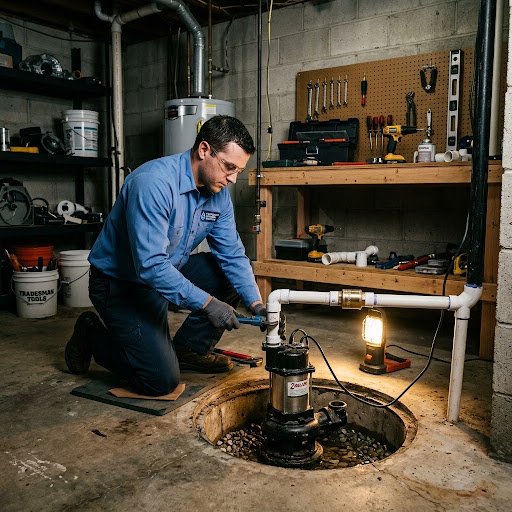
Before understanding why professional installation matters, it helps to know what a sump pump does. Installed in the lowest point of a basement or crawl space, a sump pump collects water that accumulates in a pit (called a sump basin) and automatically pumps it away from the home’s foundation.
Without one, water has nowhere to go. It seeps into walls, warps flooring, encourages mold growth, and weakens structural integrity over time. A properly functioning sump pump intercepts that water before any of that happens.
There are two main types:
- Submersible sump pumps: Installed inside the sump pit, fully submerged. Quieter and more powerful, ideal for homes with frequent flooding.
- Pedestal sump pumps: Motor sits above the pit. Easier to access for maintenance and typically more affordable upfront.
Plumbing Solutions helps homeowners choose the right type based on basement size, local water table levels, and frequency of rainfall—because the wrong pump for the wrong home is almost as bad as no pump at all.
Why DIY Installation Often Creates More Problems Than It Solves
There’s no shortage of online tutorials promising homeowners a straightforward sump pump installation. The reality is more complicated. Incorrect pit depth, poor discharge line routing, or improper electrical connections can all cause a newly installed pump to fail—often at the worst possible moment, during a storm.
Common DIY pitfalls include:
- Incorrect basin sizing: A pit that’s too small fills up faster than the pump can handle, leading to overflow.
- Poor discharge placement: Water pumped out too close to the foundation finds its way back in, creating a frustrating cycle.
- Missing check valves: Without a check valve, water flows back into the pit the moment the pump shuts off, forcing it to cycle constantly and wear out prematurely.
- No backup system: Power outages often coincide with storms—the exact moment a sump pump is needed most. A battery backup unit is essential, and many DIYers skip it.
Professional installation eliminates these risks from the start.
What Sets Plumbing Solutions Apart
Plumbing Solutions has built its reputation on doing the job right the first time. Every installation begins with a thorough assessment of the property—evaluating basement layout, soil drainage, existing waterproofing measures, and local weather patterns. That information shapes every decision, from pump selection to discharge line routing.
The team uses only high-quality, durable equipment from trusted manufacturers, and every installation is completed to local code compliance standards. Homeowners don’t have to wonder whether the job was done properly—they can see it, and they can feel it the next time heavy rain hits.
Beyond installation, Plumbing Solutions also offers:
- Battery backup installation: Keeps your pump running during power outages
- Combination pump systems: Primary and backup pumps working together for maximum protection
- Ongoing maintenance checks: To catch wear, debris buildup, or mechanical issues before they become failures
How Does a Professional Sump Pump Installation Actually Work?
The process with Plumbing Solutions is straightforward and efficient. Here’s what homeowners can expect:
Step 1 – Site Evaluation: A technician visits the property, inspects the basement or crawl space, and identifies the optimal location for the sump pit.
Step 2 – Pit Excavation: The sump basin is dug to the correct depth and diameter, ensuring adequate capacity for the home’s water volume.
Step 3 – Pump Placement & Connection: The pump is installed in the basin, connected to a discharge line that routes water safely away from the foundation—typically to a storm drain, dry well, or designated drainage area.
Step 4 – Electrical Setup: The pump is connected to a dedicated GFCI-protected outlet. Battery backup units are installed at this stage if selected.
Step 5 – Testing: The system is fully tested before the technician leaves, confirming the pump activates correctly, discharges properly, and the float switch operates as expected.
The entire process typically takes a few hours, leaving homeowners with a fully functional system the same day.
Protect Your Home Before the Next Storm Hits
Sump pump installation by a licensed professional keeps your basement dry, your foundation protected, and your home’s value intact—no matter how much rain the season throws at it. Plumbing Solutions has helped countless homeowners across the region take this critical step before water damage forces their hand.
Waiting until there’s a problem is always the costlier route. A proactive installation costs a fraction of what basement flood remediation, mold removal, and structural repairs demand. And unlike a reactive repair, a professionally installed sump pump system works quietly in the background, year after year, protecting your home without you ever having to think about it.
Ready to stop worrying about what the next storm might bring? Contact Plumbing Solutions today and speak with a licensed plumber about the right sump pump system for your home.
Frequently Asked Questions
How long does sump pump installation take?
Most residential sump pump installations are completed within two to four hours, depending on basement conditions and whether a backup system is being added.
How long does a sump pump last?
With proper maintenance, a quality sump pump typically lasts 7 to 10 years. Regular annual inspections by a professional can extend its lifespan and catch issues early.
Does a sump pump need its own electrical circuit?
Yes. Sump pumps should be connected to a dedicated GFCI-protected outlet to prevent tripping breakers and ensure reliable operation during heavy storms.
What happens if the power goes out during a storm?
Without a battery backup, a standard sump pump will stop working during a power outage. Plumbing Solutions recommends installing a battery backup or combination pump system to maintain protection regardless of power status.
Is a sump pump necessary if my basement has never flooded?
A basement that hasn’t flooded yet isn’t necessarily a safe basement. High water tables, poor drainage, and heavy seasonal rainfall all create risk. A sump pump is a preventive measure—most effective before a problem occurs.