

You can’t hear them. You can’t see them. But right now, termites could be quietly dismantling the structure of your home, beam by beam. That’s the unsettling truth about termite activity—it rarely announces itself until the damage is already done. For homeowners, that silence can be incredibly costly.
The statistics are sobering. According to the USDA Forest Service, termites cause an estimated $5 billion in property damage across the United States every year—damage that most homeowner insurance policies don’t cover. What makes termite infestations particularly devastating is their slow, hidden nature. By the time visible signs appear—sagging floors, hollow-sounding wood, or discarded wings near windowsills—colonies may have been active for years.
That’s exactly why professional termite inspections exist. And at Breeze Pest Control, this isn’t just a checkbox service—it’s a comprehensive defense strategy for your most valuable asset.
Why Termite Damage Goes Unnoticed for So Long
Termites are remarkably efficient at staying out of sight. Subterranean termites, the most destructive species in the US, build their colonies underground and travel through mud tubes to reach wood. They consume wood from the inside out, leaving a thin outer layer intact to avoid detection.
Drywood termites, another common species, nest directly inside wood and produce very little visible evidence. No mud tubes, no soil contact—just steady, silent destruction happening behind your walls, beneath your floors, and inside your ceiling joists.
This is why a visual inspection from a homeowner rarely catches an infestation in its early stages. Professional termite inspectors are trained to spot the subtle indicators most people overlook: faint mud tubes along a foundation wall, frass (termite droppings) resembling fine sawdust, tiny exit holes in drywall, or soft spots in hardwood flooring that signal internal damage.
What Does a Professional Termite Inspection Actually Involve?
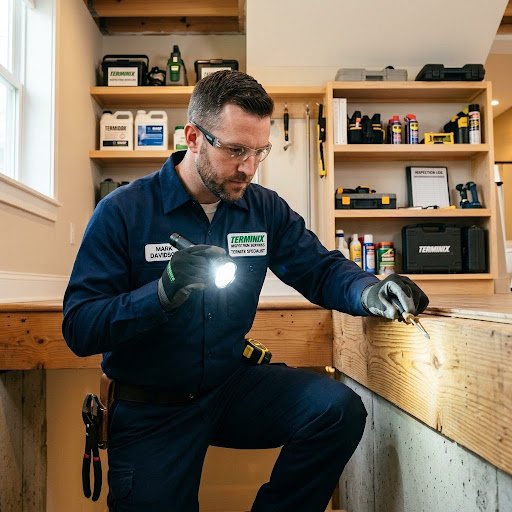
A professional termite inspection goes far beyond a quick walk-through. At Breeze Pest Control, inspectors systematically examine both the interior and exterior of your property, including crawl spaces, attics, basements, garages, fences, decking, and any wood-to-soil contact points around the home’s perimeter.
Interior Assessment
Inside the home, inspectors check baseboards, door frames, window sills, support beams, and subfloor structures. They tap on wooden surfaces to detect hollow spots—an acoustic clue that termites have consumed the wood from within. Moisture meters are also used to identify damp areas, since termites are drawn to moisture-softened wood.
Exterior and Foundation Check
Outside, the inspection focuses on the foundation, exterior walls, and soil contact points. Mud tubes along concrete walls or piers are a reliable indicator of subterranean termite activity. Inspectors also examine wooden structures like porches, sheds, and fencing that may serve as entry points or secondary colonies.
Documentation and Reporting
After the inspection, homeowners receive a detailed report outlining findings, risk areas, and recommended treatment options. This report is also often required by lenders and real estate agents during property transactions—making a professional inspection a practical necessity, not just a precaution.
How Often Should You Schedule a Termite Inspection?
Most pest control professionals recommend an annual termite inspection. However, certain factors can raise that frequency:
- Older homes: Properties with original wood framing or aging structural timber carry higher risk.
- High-humidity regions: Termites thrive in warm, moist environments, making homes in Southern and Coastal US states especially vulnerable.
- Previous infestations: A home that has dealt with termites before is at elevated risk for re-infestation.
- Nearby construction: Disturbing soil during construction or landscaping can displace termite colonies and redirect them toward neighboring homes.
Even if your home has no visible signs of termite activity, annual inspections provide documented evidence that your property is clear—something that holds real value if you ever plan to sell.
The Real Cost of Skipping an Inspection
Some homeowners hesitate at the cost of a professional inspection, viewing it as an unnecessary expense. But consider the alternative.
The average cost of termite treatment ranges from $230 to $930 depending on the method and severity, according to HomeAdvisor. Structural repairs caused by termite damage, however, can climb into the tens of thousands. A compromised floor joist, a weakened load-bearing wall, or a damaged roof truss aren’t just expensive fixes—they’re safety hazards.
A professional inspection costs a fraction of what untreated termite damage will ultimately demand. It’s one of the most straightforward investments a homeowner can make.
Why Breeze Pest Control Is the Right Choice for Your Property
Not all termite inspections are created equal. The quality of an inspection depends heavily on the training, tools, and thoroughness of the pest control team performing it. Breeze Pest Control brings all three.
Termite Inspection gives homeowners the detailed assessment they need to catch early-stage infestations before they escalate into expensive structural repairs—protecting both the safety of your home and the value of your investment.
Breeze Pest Control’s inspectors don’t cut corners. Every inspection is methodical, every report is clear, and every recommendation is backed by experience. Whether you’re a first-time homeowner or a long-term property owner, having Breeze Pest Control assess your home means you’re getting expert eyes on every inch of your property.
Beyond inspection, Breeze Pest Control offers tailored treatment solutions for active infestations—from localized spot treatments to full-structure fumigation—ensuring that whatever is found, there’s a clear, effective path forward.
Protect Your Home Before Termites Do the Talking
Termites don’t wait for a convenient time to cause damage. They work continuously, 24 hours a day, 365 days a year. The longer an infestation goes undetected, the more extensive—and expensive—the damage becomes.
Scheduling a termite inspection with Breeze Pest Control is the single most effective step you can take to protect your property right now. Don’t wait for sagging floors or crumbling trim to force your hand. Get ahead of the problem with a professional inspection that gives you real answers and real peace of mind.
Contact Breeze Pest Control today and schedule your termite inspection.