

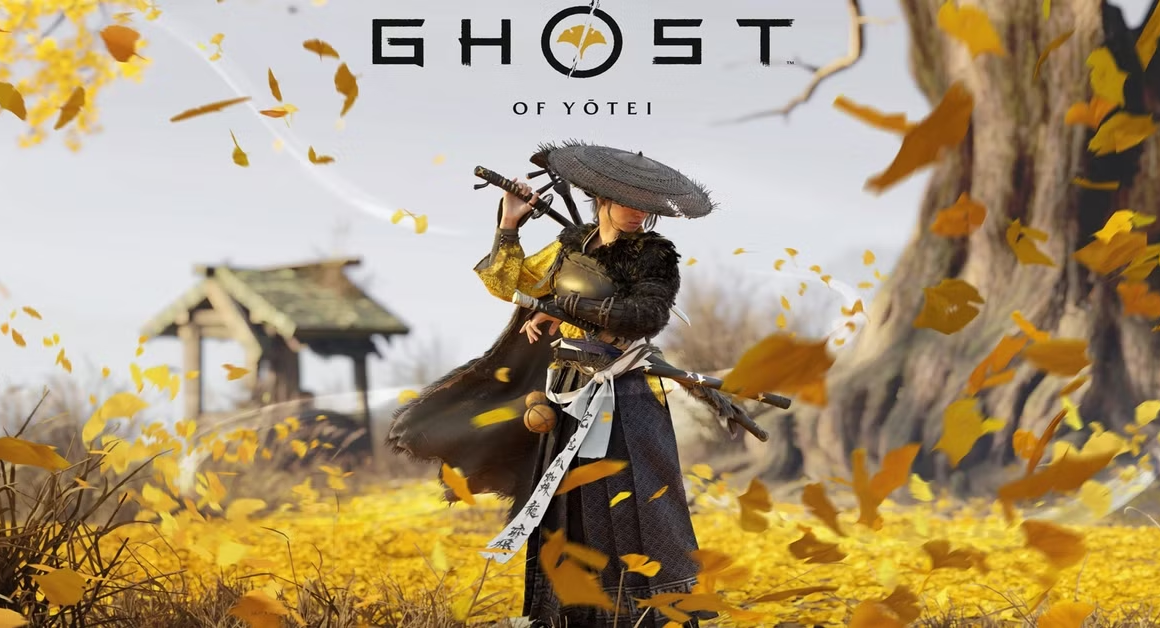
Ghost of Yōtei is one of the most ambitious action-adventure games from Sucker Punch Productions, expanding on the ideas that made Ghost of Tsushima so memorable while introducing an entirely new protagonist, setting, combat system, and story. Rather than continuing Jin Sakai’s personal journey, the game moves the series hundreds of years forward and introduces players to Atsu, a warrior driven by revenge but gradually pulled toward something more meaningful.
Released for PlayStation 5 on October 2, 2025, Ghost of Yōtei takes players to Ezo, the historical region that corresponds to modern-day Hokkaido. The setting immediately separates the game from Ghost of Tsushima. Instead of focusing on the familiar landscapes of Tsushima, players explore rugged northern territories surrounding Mount Yōtei, with enormous grasslands, snowy regions, forests, mountains, and remote settlements forming the backdrop for Atsu’s adventure.
What makes Ghost of Yōtei particularly interesting is the way it treats the idea of the “Ghost.” Sucker Punch has made it clear that this is not simply Jin Sakai’s story repeated with a different character. The developers wanted to explore what the Ghost legend could mean through another person, another period, and another part of Japan. The result is a standalone adventure that respects the identity of the previous game while giving players plenty of reasons to experience something new.
What Is Ghost of Yōtei About?
At its heart, Ghost of Yōtei is a revenge story. Sixteen years before the main events, Atsu’s family was murdered by a group of outlaws known as the Yōtei Six. Atsu was left for dead after being pinned to a burning ginkgo tree, but she survived. Instead of allowing the tragedy to define the rest of her life, she trained herself to become a dangerous warrior and eventually returned to hunt the people responsible.
The Yōtei Six consist of six major targets: the Snake, the Oni, the Kitsune, the Spider, the Dragon, and Lord Saito. Atsu carries a list containing their names and sets out to find them one by one. Her mission is personal rather than political, which gives the story a very different emotional foundation from many traditional samurai adventures.
However, revenge is only the beginning of Atsu’s journey. As she travels through Ezo, she encounters unexpected allies and develops relationships that challenge the idea that her life has to revolve around vengeance. PlayStation describes the story as a journey that goes beyond bloodshed toward healing and the possibility of building a new future. That gives Ghost of Yōtei a more reflective side beneath its violent action.
Atsu Is a Different Kind of Ghost
Atsu is arguably the biggest reason Ghost of Yōtei feels different from Ghost of Tsushima. Jin Sakai was a samurai struggling between tradition and survival, while Atsu is presented as a wandering mercenary shaped by years of loss, training, and isolation. She does not begin her story as an established legend. Instead, players experience her transformation and the creation of her own version of the Ghost.
This distinction matters because the word “Ghost” is not necessarily about one person. Sucker Punch has described the project as an exploration of the idea of the Ghost itself, allowing the developers to create a new legend rather than simply bringing Jin back for another adventure. Ghost of Yōtei therefore treats its predecessor as inspiration rather than a limitation.
Atsu also has a different relationship with the world around her. She can be ruthless when necessary, but her journey includes moments of connection, exploration, reflection, and discovery. That balance helps prevent the revenge plot from becoming one-dimensional. Her objective may begin with six names on a list, but the people she meets along the way gradually change what that list means to her.
A New Setting in Northern Japan
The setting is one of Ghost of Yōtei’s strongest features. The game takes place in 1603, more than 300 years after the events of Ghost of Tsushima, in the lands surrounding Mount Yōtei in Ezo. At that time, the region was outside the centralized rule of Japan, creating a landscape and society very different from the one players explored in the previous game.
This historical setting gives Sucker Punch considerable creative freedom. Ezo offers wild grasslands, snowy tundras, forests, mountains, and remote areas where danger can appear without warning. The game’s official materials emphasize huge sightlines and environmental details, including changing skies, stars, auroras, moving vegetation, and other visual effects designed to make the world feel alive.
The landscape is not simply there to look beautiful. Exploration is a major part of the experience, and players have more freedom in deciding how they approach their journey. Instead of being forced into one fixed order for hunting the Yōtei Six, Atsu can follow different leads, search for other dangerous targets, take bounties, and find weapon masters who can teach her new skills. That flexibility makes the open world feel more connected to the story.
Combat and Weapons in Ghost of Yōtei
Combat remains one of the defining elements of the series, but Ghost of Yōtei expands the number of ways Atsu can fight. Players can combine melee attacks with ranged weapons and develop a style that fits the way they prefer to play. The official PlayStation description highlights weapons such as the katana, bow, and grappling hook while also emphasizing the ability to train with masters and develop new skills.
One particularly appealing aspect is the broader weapon system. Atsu is not restricted to relying on a single sword for every encounter. Different weapons create opportunities to approach enemies from different angles, whether that means fighting aggressively, staying at range, using stealth, or adapting to the strengths and weaknesses of a particular opponent.
The game’s build system also adds another layer of customization. Players can combine armor features with charms and other bonuses to create different approaches to combat. Sucker Punch has even highlighted specialized builds that allow players to favor stealth, ranged attacks, or more direct fighting. This gives the combat system greater flexibility than simply upgrading a standard set of abilities.
Exploring the Open World
Exploration in Ghost of Yōtei is designed around player freedom. Atsu can travel through Ezo on foot or horseback, following major story leads or taking time to investigate optional activities. The developers have specifically emphasized the ability to choose which member of the Yōtei Six to pursue first, making the structure feel less linear.
One of the more interesting additions is Atsu’s ability to establish a campfire almost anywhere in the open world. This small feature fits the character perfectly because she is a wandering warrior rather than someone tied to a permanent home. It also creates opportunities for the player to pause and appreciate the environment instead of constantly rushing toward the next objective.
The world also mixes danger with peaceful moments. Players can move through dramatic landscapes, encounter enemies, discover optional challenges, and take part in activities that improve Atsu’s abilities. This contrast between quiet exploration and sudden violence is an important part of the atmosphere. It allows the world to feel like a place rather than simply a collection of missions.
Is Ghost of Yōtei a Sequel to Ghost of Tsushima?
Ghost of Yōtei is connected to Ghost of Tsushima, but it is not a direct continuation of Jin Sakai’s story. The game takes place approximately 300 years later, meaning players are entering an entirely different historical period and following a completely different protagonist.
Jin Sakai does not appear as the protagonist because the enormous time gap makes that impossible within the normal story. However, the idea of the Ghost continues. His legend survives, allowing the new game to explore how a concept can outlive the person who originally carried it.
This approach is smart because it gives newcomers an accessible entry point while still rewarding people who played Ghost of Tsushima. You do not need to know Jin’s entire story to understand Atsu’s motivation. At the same time, returning players can appreciate how Sucker Punch has transformed the Ghost concept into something larger than a single character.
Ghost of Yōtei and the Yōtei Six
The Yōtei Six serve as the central antagonistic force in Atsu’s story. Each member has a distinct identity, giving the revenge journey a natural structure. Rather than simply moving from one generic enemy camp to another, Atsu is pursuing specific individuals who are connected directly to the tragedy that shaped her life.
The six names also create an interesting sense of anticipation. The Snake, Oni, Kitsune, Spider, Dragon, and Lord Saito each represent a different part of Atsu’s past, and hunting them gives the open-world adventure a clear long-term purpose. Players can decide which leads to follow, making the revenge campaign feel more personal and less like a traditional checklist.
Interestingly, these characters also become important in Ghost of Yōtei Legends, the game’s cooperative multiplayer mode. In Legends, the Yōtei Six are transformed into supernatural, exaggerated versions of themselves, turning the grounded enemies from Atsu’s story into enormous mythic threats designed for multiplayer combat.
Ghost of Yōtei Legends and Multiplayer
Ghost of Yōtei Legends adds a completely different way to experience the game. It is a free co-op multiplayer mode for Ghost of Yōtei owners and supports several different activities. Players can team up with friends and fight supernatural versions of enemies associated with the Yōtei Six.
The mode includes Survival, Story, and Incursion activities. Survival allows teams of up to four players to defend territory against increasingly difficult waves of enemies. Story missions are designed for two players and contain a series of cooperative encounters. Incursions take the concept further with larger four-player assaults ending in major supernatural boss battles.
Players can choose from four classes: Samurai, Archer, Mercenary, and Shinobi. Each class has its own strengths and preferred weapons. The Samurai can use the ōdachi and has access to a broad selection of weapons, the Archer specializes in ranged combat and can use the yari, the Mercenary uses dual katana and utility abilities, while the Shinobi focuses heavily on stealth and the kusarigama.
Visual Design and PlayStation 5 Technology
Ghost of Yōtei was built specifically for PlayStation 5, allowing Sucker Punch to push its environmental presentation further. The developers have talked about larger sightlines, more detailed vegetation, improved movement, atmospheric skies, and visual effects that take advantage of the hardware.
The natural scenery is especially important. Mount Yōtei and the surrounding landscapes provide a strong visual identity, from open fields and forests to snow-covered mountains and dramatic skies. Instead of presenting Japan as a single visual style, the game uses different environments to make travel itself part of the experience.
The PlayStation 5 version also makes use of DualSense features, including haptic feedback and adaptive triggers. These details can make sword combat, ranged attacks, and other interactions feel more physical, adding another layer to the game’s presentation.
New Game Plus and Replayability
Ghost of Yōtei is not designed to end permanently after the main story. Once players complete the campaign, New Game Plus becomes available, allowing them to return to Ezo while keeping their existing progress. Gear, upgrades, cosmetics, resources, and collectibles can carry forward into the new playthrough.
New Game Plus also introduces additional rewards. Players can earn Ghost Flowers from previously completed objectives and exchange them for additional cosmetics, charms, and new armor sets. There are also new armor and weapon upgrades, giving experienced players more reasons to revisit the world.
For completionists, replayable challenges and duels add even more longevity. The official PlayStation information lists 22 Challenge Content Locations and 27 Duels that can be replayed in New Game Plus. This means the endgame is not simply about starting the story again; players can continue experimenting with builds and combat techniques.
Why Ghost of Yōtei Stands Out
The biggest strength of Ghost of Yōtei is that it understands what made Ghost of Tsushima successful without copying it too closely. The new game retains the cinematic atmosphere, open-world exploration, sword combat, and appreciation for Japanese landscapes, but it changes the protagonist, historical period, setting, weapons, and central conflict.
Atsu also gives the story a different emotional center. Her journey begins with revenge, but the developers have deliberately positioned it as something broader. She is not simply trying to kill six people and move on. Her encounters with allies and the world around her gradually force her to reconsider what she wants from the future.
That combination of familiar foundations and new ideas is exactly what a successful follow-up should aim for. Ghost of Yōtei does not need Jin Sakai to justify its existence. Instead, it uses the Ghost legacy as a starting point and builds another story around it.
Final Thoughts on Ghost of Yōtei
Ghost of Yōtei represents a confident new direction for Sucker Punch’s Ghost series. By moving the story to Ezo in 1603 and introducing Atsu, the developers have created a world that feels connected to Ghost of Tsushima while remaining independent enough to stand on its own. The revenge-driven story, flexible exploration, expanded combat, varied weapons, and striking northern landscapes give the adventure its own identity.
The addition of New Game Plus and Ghost of Yōtei Legends also gives the game considerable replay value. Players who enjoy the single-player adventure can return with upgraded equipment and new rewards, while those looking for cooperative action can team up with friends in the supernatural Legends experience.
Ultimately, Ghost of Yōtei is more than another samurai action game. It is an exploration of what happens when the legend of the Ghost is separated from its original hero and placed in the hands of someone with a completely different history. Atsu begins with a list of names and a desire for revenge, but her journey asks a much bigger question: after spending years surviving the past, can she build a future of her own? That question gives Ghost of Yōtei an emotional foundation that goes well beyond sword fights and open-world exploration.
You May Also Raed: Englishtistic