

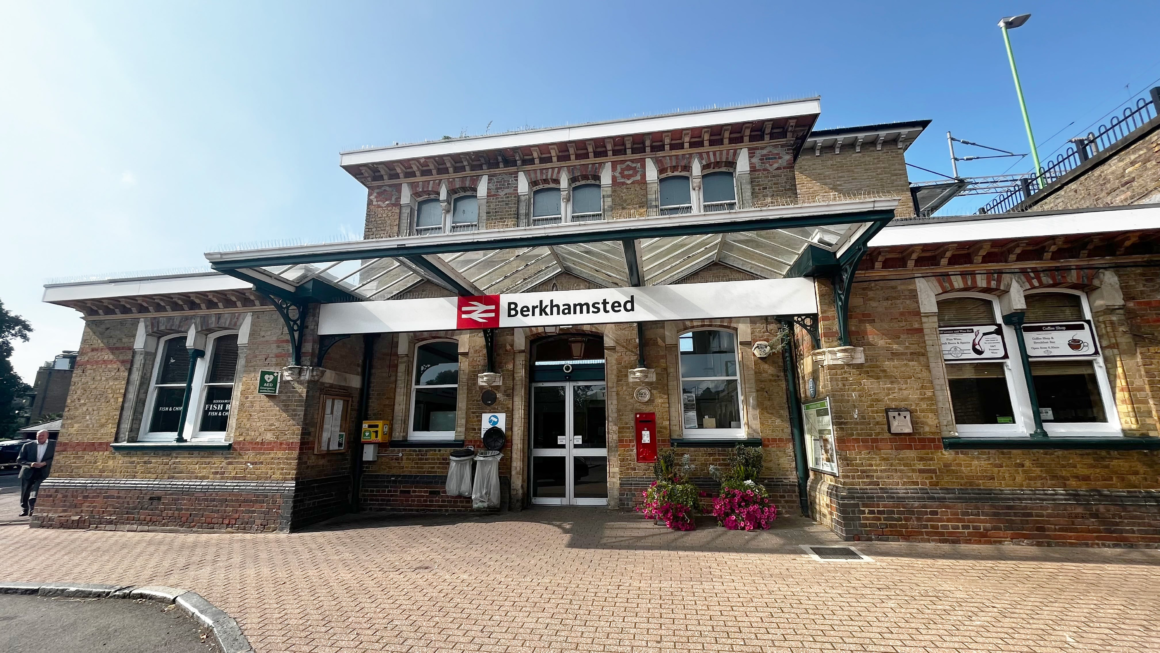
The phrase “Berkhamsted train incident” has attracted attention from people looking for information about an event involving rail services around Berkhamsted, Hertfordshire. However, when a railway incident is discussed online, it is important to separate confirmed information from rumours, recycled posts and reports referring to completely different locations.
At the time of writing, there is no sufficiently reliable public source confirming a major incident at Berkhamsted railway station that matches a specific widely reported event. Searches for the exact phrase produce limited and largely unspecific results rather than a clear official account from the police, railway authorities or established news organisations. That means it would be misleading to invent details simply to fill gaps in the story.
This is particularly important with railway incidents because even a relatively small disruption can quickly become described online as an “incident”, while the original circumstances may be unclear. A delayed service, emergency response, passenger evacuation, track obstruction or police activity can all generate attention without necessarily representing a serious accident.
What Is the Berkhamsted Train Incident?
The term Berkhamsted train incident does not currently point to one clearly established event supported by a detailed public report. Berkhamsted is an important railway town in Hertfordshire, and incidents affecting trains in the area can naturally attract interest from residents, commuters and people travelling along the route.
Berkhamsted railway station is served by services connecting the area with London and destinations further north and west. Because the railway is used heavily by commuters, an unexpected disruption can have consequences beyond the station itself. Even a short interruption may cause trains to be held, cancelled or diverted, leaving passengers searching social media for immediate explanations.
That search behaviour can create another problem: early information is not always accurate. Someone may post that there has been a serious accident before authorities have confirmed what happened. Another person may repeat the claim, and within a short time the original uncertainty can disappear from the conversation. For that reason, readers should be cautious about treating every social-media reference to a “Berkhamsted train incident” as an established fact.
Why Railway Incidents Can Cause Confusion
Railway terminology can be confusing to people who do not work in the industry. A train being stopped because of police activity, for example, is very different from a collision or derailment. Likewise, an emergency response at a station does not automatically mean passengers have been injured.
Railway operators also sometimes describe events in deliberately neutral language while investigations are continuing. Phrases such as “operational incident”, “emergency services dealing with an incident” or “trespass incident” may provide little detail initially. That can leave passengers trying to work out what is happening from incomplete information.
There is also a geographical issue. Berkhamsted sits on a busy railway corridor, so disruption elsewhere on the route can affect trains serving the station. A problem several stations away may therefore appear to passengers as a “Berkhamsted train problem”, even though the original incident occurred somewhere else.
The Importance of Confirmed Information
When an incident involves trains, the first priority should always be safety and accurate communication. Railway operators, emergency services and infrastructure organisations have established procedures for responding to incidents, and the public may not receive full information immediately.
This delay between an event and a confirmed explanation is normal. Emergency responders may need to secure an area, speak to witnesses, assess infrastructure and determine whether trains can safely resume. During that period, early reports can change considerably.
For readers researching the Berkhamsted train incident, the safest approach is therefore to look for confirmation from recognised sources before accepting dramatic claims. A post with a photograph or video may look convincing, but visual material can be old, taken somewhere else or presented without the necessary context.
How a Train Incident Can Affect Passengers
Even when an incident is not particularly serious, the impact on passengers can be significant. Trains may be held at platforms, stopped between stations or removed from service while railway staff deal with the situation.
Commuters can consequently experience missed connections, longer journeys and overcrowded alternative services. People travelling for work, medical appointments, examinations or other time-sensitive commitments may be especially affected.
The practical advice during any disruption is straightforward: check live travel information before starting a journey, allow additional time and follow instructions from railway staff. Trying to bypass closures or enter restricted areas can create additional risks and can interfere with emergency operations.
What Passengers Should Do During an Incident
Passengers who are already on a train should normally remain onboard unless railway staff instruct them to leave. This can be frustrating, particularly when little information is available, but railway control teams need to make sure that any evacuation is carried out safely.
If passengers are asked to leave a train or station, they should follow staff instructions and avoid railway tracks or restricted areas. Railway infrastructure contains numerous hazards that are not always obvious to members of the public.
People who witness something relevant to an investigation should also provide information to the appropriate authorities rather than spreading unverified allegations online. A photograph, video or eyewitness account can be useful when supplied through the correct channels, particularly if investigators need to establish a timeline.
Social Media and the Spread of Railway Rumours
Social media can be extremely useful during transport disruption because passengers can share updates faster than traditional news organisations. At the same time, it can amplify inaccurate information just as quickly.
A short post saying “major incident at Berkhamsted” provides almost no context. It does not necessarily explain what happened, whether anyone was injured, where precisely the event occurred or whether normal services have resumed.
This is why readers should consider the source, date and wording of every post. An old photograph can be reposted during a new disruption, while an unrelated incident from another railway station can be mistakenly associated with Berkhamsted. Searching the exact phrase currently produces little reliable evidence establishing a single major event, which is another reason to avoid presenting speculation as fact.
Berkhamsted and the Wider Railway Network
Berkhamsted’s railway connection is important to the town because rail travel links local residents with larger employment, education and commercial centres. Disruptions therefore have an impact that extends beyond people physically present at the station.
A railway is also a network rather than a collection of isolated stations. When something happens on one section of track, its effects can spread through the timetable. Trains and crews can be displaced, platforms can become congested and services may be reorganised.
That wider network effect explains why passengers may see delays continuing even after the original problem has apparently been resolved. Railway operators often need time to return trains and crews to their planned positions before the timetable becomes stable again.
Why It Is Better Not to Speculate About Injuries
One of the most sensitive aspects of reporting any train incident is the question of injuries. Unconfirmed claims about deaths or serious injuries can cause unnecessary distress to families and the wider community.
If authorities have not confirmed casualties, responsible reporting should not assume that someone has been injured or killed. A police presence, ambulance attendance or temporary railway closure is not, by itself, proof of a particular outcome.
This principle is especially important when people are searching for breaking information. Readers may be worried about relatives or friends who regularly use the railway. Publishing unsupported claims can make an already stressful situation considerably worse.
How to Follow Genuine Updates
Anyone looking for reliable information about a Berkhamsted railway incident should prioritise official railway updates and statements from relevant emergency services. Established local and national news organisations can also provide useful context once enough information has been confirmed.
Passengers should pay attention to the date and time of an update. Railway situations can change rapidly, meaning information that was accurate an hour earlier may no longer describe the current position.
It is also useful to distinguish between information about the incident itself and information about the resulting service disruption. A train cancellation does not necessarily explain why the cancellation occurred, while an operational update may simply describe the effect on passengers.
What the Berkhamsted Train Incident Search Really Tells Us
The current search landscape surrounding the Berkhamsted train incident demonstrates why online information needs to be handled carefully. There is clear interest in the phrase, but the available search results do not provide enough reliable evidence to construct a detailed account of a particular major event.
That does not mean that no incident or disruption has occurred. It simply means that there is not enough verified information available to responsibly claim specific details such as the exact cause, number of casualties, emergency response or precise timeline.
In an era when information travels almost instantly, acknowledging uncertainty is not a weakness. It is part of responsible reporting. A trustworthy article should tell readers what is known, what remains unclear and where they should look for confirmed updates.
Final Thoughts on the Berkhamsted Train Incident
The Berkhamsted train incident is a phrase that may continue to attract searches as passengers and local residents look for explanations about railway activity in the area. However, based on the currently available evidence, there is not enough authoritative information to describe one specific major incident in detail without risking the spread of misinformation.
For passengers, the most sensible response to any railway disruption is to rely on official updates, follow instructions from railway personnel and avoid entering restricted areas. For readers, the same principle applies online: check the source, check the date and avoid repeating claims that have not been independently confirmed.
Railway incidents can be worrying, inconvenient and sometimes serious. That is precisely why accurate information matters. Until a specific Berkhamsted event is confirmed by appropriate authorities or credible reporting, the responsible position is to avoid speculation and focus on verified facts rather than turning an uncertain online claim into a definite story.
You May Also Raed: Englishtistic