

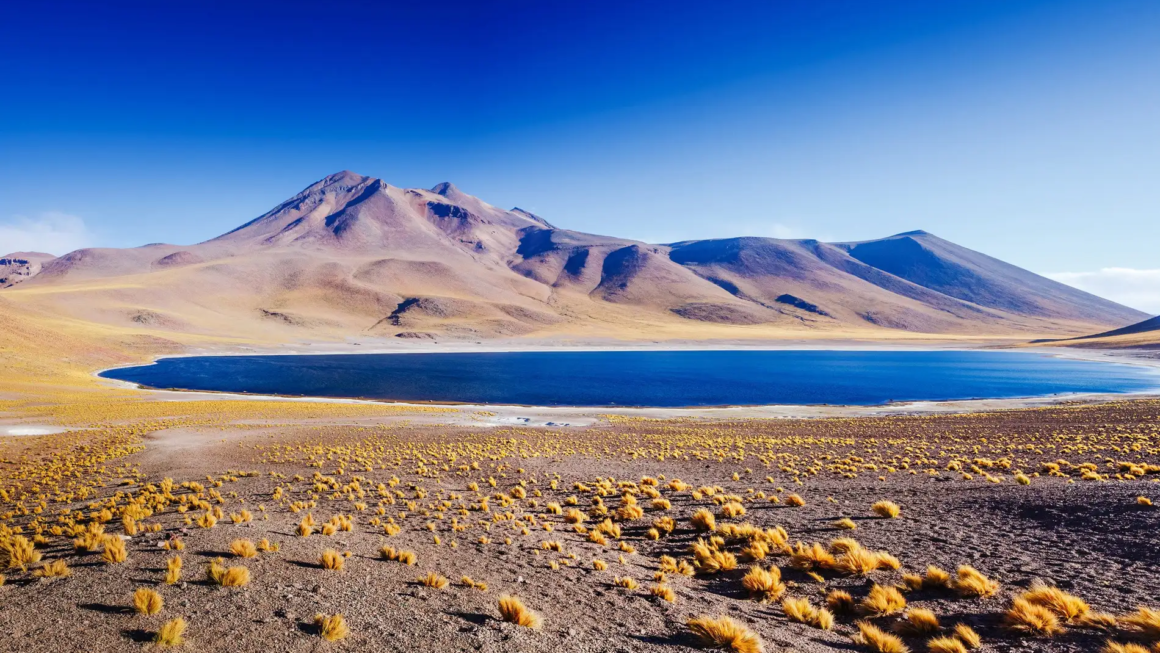
The desert de atacama is one of the most extraordinary landscapes on the planet. Stretching along the northern part of Chile, this vast desert is famous for its extreme dryness, dramatic mountains, salt flats, volcanic scenery, and remarkably clear skies. At first glance, it may look like an empty and lifeless place, but spending time there reveals a landscape full of geological stories, unusual wildlife, ancient cultures, and fascinating natural contrasts.
Unlike many deserts that are defined mainly by high temperatures and endless sand dunes, the desert de atacama has a completely different personality. Large areas are covered with rocks, gravel, salt, and volcanic formations rather than traditional sand. Some parts of the region can go for remarkably long periods with almost no measurable rainfall, creating conditions that are among the driest found anywhere outside the polar regions.
For travelers, scientists, photographers, and astronomy enthusiasts, the desert de atacama offers an experience that is difficult to find elsewhere. One moment you can be looking across a salt-covered plain, and the next you may be surrounded by towering volcanoes or watching the sunset turn the mountains brilliant shades of orange and red. Its unusual combination of climate, geography, and altitude makes it a truly special destination.
Where Is the Desert de Atacama?
The desert de atacama is located primarily in northern Chile, between the Pacific Ocean and the Andes Mountains. It extends across a long, narrow section of the country, with some of its landscapes reaching close to the borders of Peru, Bolivia, and Argentina. The region is enormous, although its exact boundaries can vary depending on how the desert is geographically defined.
One of the best-known gateways to the region is San Pedro de Atacama. This small desert town has become a popular base for exploring surrounding attractions, including salt flats, volcanic areas, lagoons, geysers, and high-altitude valleys. Despite its remote setting, San Pedro offers hotels, restaurants, tour operators, and other facilities that make exploring the area much easier.
The location of the desert de atacama plays a major role in its unusual climate. The Andes block much of the moisture arriving from the east, while oceanic conditions along the Pacific coast also contribute to the desert’s dryness. Cold ocean currents help limit evaporation and cloud formation, while the surrounding mountains further restrict the movement of humid air.
Why Is the Desert de Atacama So Dry?
The incredible dryness of the desert de atacama is the result of several natural factors working together. The Andes Mountains create a rain-shadow effect, preventing moisture from the Amazon Basin and other eastern regions from easily reaching the desert. This means that air arriving from the east has already lost much of its moisture before it reaches the Atacama region.
The Pacific Ocean also has an important influence. The Humboldt Current carries relatively cold water along the coast of western South America. Cold ocean water reduces evaporation and can produce coastal fog without delivering significant rainfall to the interior. As a result, the region can experience atmospheric moisture without receiving the kind of precipitation normally associated with humid environments.
Another factor is the subtropical high-pressure system that influences northern Chile. Descending air associated with this system suppresses cloud development and rainfall. When these geographic and atmospheric conditions combine, they create the remarkable aridity for which the desert de atacama is famous.
The Landscape and Natural Beauty of the Atacama
The scenery of the desert de atacama is far more diverse than the word “desert” might suggest. Visitors can encounter enormous salt flats, rugged mountains, volcanic cones, colorful rock formations, dry valleys, lagoons, and plains covered in pale gravel. The landscape changes dramatically depending on elevation and location.
Valle de la Luna, or Moon Valley, is one of the most recognizable landscapes near San Pedro de Atacama. Its unusual rock formations and sandy ridges have been shaped over long periods by wind, erosion, and geological activity. During sunset, the low sunlight creates dramatic shadows across the formations, making the valley especially popular with photographers.
The region also contains extensive salt deposits. Salar de Atacama is a vast salt flat surrounded by mountains and volcanoes. Certain areas contain shallow lagoons where flamingos can sometimes be seen feeding. The contrast between bright salt surfaces, blue water, distant mountains, and clear skies creates some of the most memorable scenery in the desert de atacama.
Volcanoes, Geysers, and High-Altitude Wonders
The volcanic character of the desert de atacama is impossible to miss. The region sits within the Andes, one of the world’s major volcanic and tectonic zones. Numerous volcanoes rise dramatically above the surrounding desert, and several reach impressive elevations.
One of the most famous geothermal attractions is El Tatio, a large geyser field located at high altitude. Early in the morning, visitors can see columns of steam rising from the ground as hot geothermal water interacts with the cold desert air. The experience can be particularly striking because temperatures at this elevation can be extremely low before sunrise.
The high-altitude lagoons found throughout the region are another major attraction. Some are surrounded by snow-capped or volcanic peaks, while others support specialized forms of life despite the harsh conditions. Their intense blue and green colors can appear almost unreal against the dry brown and red landscape.
Wildlife in an Apparently Lifeless Desert
Although the desert de atacama appears extremely barren in many places, it is not completely without life. Plants and animals have adapted to limited water, intense sunlight, large temperature differences, and high elevations. Life tends to be concentrated around areas where water is available.
Flamingos are among the most recognizable animals associated with the region. Several species can be found around high-altitude and saltwater lagoons, where they feed on tiny aquatic organisms. Seeing a group of flamingos standing in shallow blue water while volcanoes rise in the background is one of the defining experiences of an Atacama journey.
Other animals found in parts of the broader region include vicuñas, llamas, foxes, and various bird species. Vegetation is generally sparse, but hardy plants can survive in places where groundwater, seasonal moisture, or coastal fog provides enough water. These examples demonstrate that even one of Earth’s harshest environments can support surprisingly complex ecosystems.
The Night Sky Over the Desert de Atacama
The desert de atacama is considered one of the world’s premier locations for astronomy. Its high elevation, extremely dry climate, low cloud cover, and limited light pollution create excellent conditions for observing the night sky.
On a clear evening, the difference between an urban sky and an Atacama sky can be astonishing. Thousands of stars become visible, and the Milky Way can appear as a bright band stretching across the darkness. Depending on conditions and location, observers may also see planets, constellations, meteors, and other celestial features.
These qualities have made northern Chile an important location for major astronomical observatories. Professional astronomers take advantage of the region’s stable and exceptionally dry atmosphere to study distant objects in space. For ordinary travelers, organized stargazing tours provide a simpler way to experience the same remarkable skies without needing professional equipment.
Ancient Cultures and Human History
The desert de atacama is not simply a geological destination. People have lived in and around this challenging environment for thousands of years. Indigenous communities developed ways to survive by carefully managing scarce water and using resources available in the desert and surrounding mountains.
The Atacameño, or Lickan Antay, people have a particularly important connection to the region. Their cultural history is closely tied to the desert environment, and their traditional knowledge reflects generations of adaptation to an exceptionally demanding landscape.
Archaeological remains throughout the region provide evidence of ancient settlements, trade routes, agriculture, and cultural exchange. The desert’s position between the Pacific coast, Andes, and neighboring regions made it an important corridor for movement and trade. Ancient travelers crossed portions of the landscape long before modern roads and tourism existed.
Best Experiences for Travelers
Exploring the desert de atacama is usually about experiencing several different landscapes rather than visiting one single attraction. A typical trip might include a sunrise visit to a geyser field, an afternoon around a salt flat or lagoon, and an evening dedicated to stargazing.
Sunset tours are especially popular because the desert’s terrain reacts dramatically to changing light. Valleys, mountains, and rock formations can shift from pale beige to gold, orange, pink, and deep red within a short period. The absence of dense vegetation allows the shape and texture of the landscape to become the main attraction.
Travelers should also take the altitude seriously. Some attractions around San Pedro de Atacama are located at elevations considerably higher than the town itself. Taking time to acclimatize, drinking enough water, protecting yourself from strong sunlight, and avoiding overly ambitious schedules during the first days can make the experience much more comfortable.
When Is the Best Time to Visit?
The desert de atacama can be visited throughout much of the year because its climate is generally extremely dry. However, conditions can vary depending on elevation, season, and the specific attraction being visited.
Daytime temperatures can be pleasant or warm, while nights can become surprisingly cold. At high elevations, temperatures before sunrise may drop well below what visitors expect from a desert destination. Packing layers is therefore more useful than preparing only for hot weather.
Clear skies are one of the region’s biggest attractions, particularly for astronomy. Visitors interested in stargazing should consider the lunar cycle as well as general weather conditions, because a bright moon can make faint stars and celestial objects less visible. Local tour operators can provide guidance based on current conditions.
Why the Desert de Atacama Is Worth Visiting
The desert de atacama stands out because it combines several extremes in one destination. It is incredibly dry, yet it contains lagoons and geothermal activity. It can look completely barren, yet wildlife survives in carefully adapted ecosystems. It feels remote and ancient, while also hosting some of the world’s most advanced astronomical facilities.
Perhaps the most appealing part is the sense of scale. The desert encourages visitors to slow down and look carefully. A seemingly empty valley may reveal fascinating geological formations, while a quiet lagoon can suddenly become alive with birds. The enormous mountains and open horizon create a feeling of space that is difficult to reproduce in more developed environments.
For anyone interested in nature, photography, astronomy, geology, culture, or simply unusual travel experiences, the desert de atacama offers plenty to discover. It is not the typical desert of popular imagination, and that is exactly what makes it so memorable.
Final Thoughts on the Desert de Atacama
The desert de atacama is a remarkable example of how geography and climate can create an environment unlike almost anywhere else on Earth. Its extreme dryness, volcanic mountains, salt flats, geothermal fields, high-altitude lagoons, and crystal-clear skies give the region a character all its own.
What makes the desert even more fascinating is the way life and human culture have adapted to its difficult conditions. From ancient communities to modern scientists, people have found ways to understand, use, and appreciate this demanding environment.
Ultimately, the desert de atacama is more than a place to photograph beautiful scenery. It is a living lesson in geology, climate, astronomy, ecology, and human resilience. Whether you visit for the landscapes, the stars, the wildlife, or the cultural history, the experience offers a powerful reminder that some of the planet’s most extraordinary places are also among its most challenging.
You May Also Raed: Englishtistic