

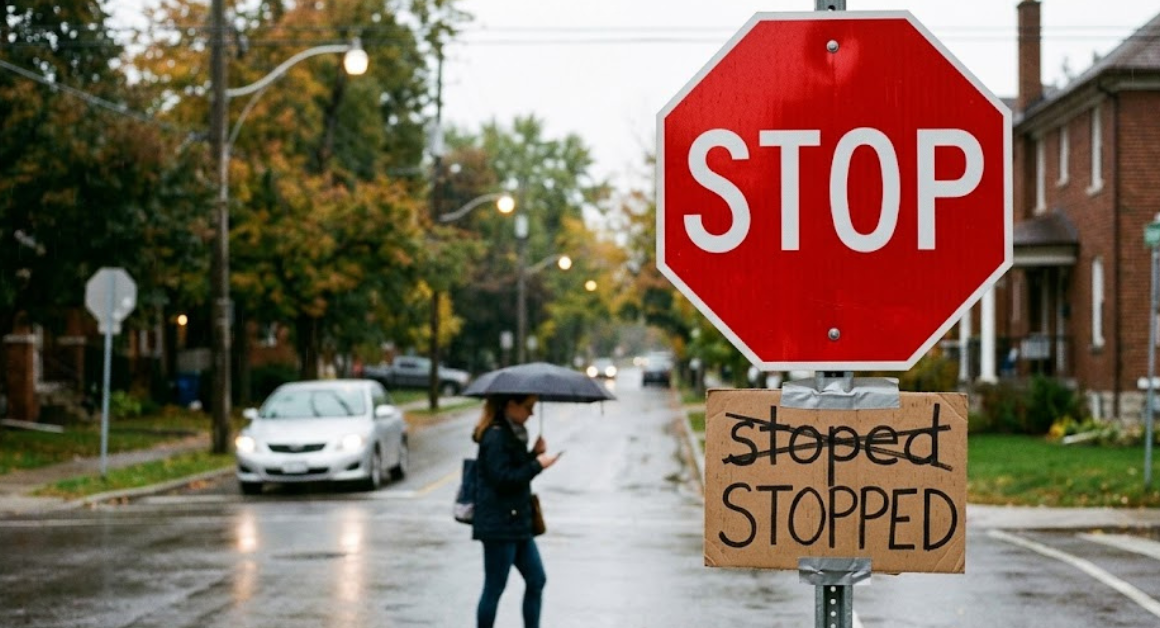
If you’ve ever wondered whether it’s stoped or stopped, you’re not alone. This is one of those common spelling confusions that trips up even confident writers. The correct form is stopped, but the misspelling stoped still appears frequently in searches, essays, and everyday writing.
In this guide, we’ll break down the correct usage of stopped or stoped, explain why the confusion happens, and help you remember the right spelling forever.
What Is the Correct Spelling: Stopped or Stoped?
The correct spelling is stopped.
“Stoped” is considered a spelling mistake in modern English when used to describe the past tense of “stop.”
Correct usage:
- I stopped the car at the signal.
- She stopped talking when the teacher entered.
- They stopped working after sunset.
Incorrect usage:
- I stoped the car
- He stoped suddenly
Why Do People Confuse “Stopped or Stoped”?
The confusion between stoped or stopped usually comes from English spelling rules involving double consonants.
Many verbs double the final consonant when forming the past tense:
- stop → stopped
- plan → planned
- hop → hopped
But since English spelling isn’t always intuitive, learners often assume “stoped” is correct because it “looks simpler.”
What Does “Stoped” Actually Mean?
Interestingly, “stoped” is not always wrong—but it depends on context.
In mining and geology, stoped is the past tense of to stope, which means extracting ore from a mine.
Example:
- The miners stoped the ore vein deep underground.
However, in everyday English, business writing, education, and grammar usage, “stoped” is incorrect and should be avoided.
Grammar Rule Behind “Stopped”
The correct form stopped follows a simple spelling rule in English:
Double the final consonant when:
- The verb ends in consonant + vowel + consonant (CVC)
- The last syllable is stressed (in many cases)
Examples:
- stop → stopped
- drop → dropped
- shop → shopped
This rule helps keep pronunciation and meaning consistent.
Common Mistakes with “Stopped or Stoped”
Here are some frequent errors people make:
- Writing “stoped” in essays or emails
- Forgetting the double “p” in past tense
- Mixing up informal texting with correct grammar
- Assuming simplified spelling is acceptable
Quick tip:
If you’re writing for school, work, or SEO content—always use stopped.
Examples of “Stopped” in Sentences
To make it clearer, here are real-life examples:
- The rain stopped suddenly in the afternoon.
- He stopped smoking last year.
- We stopped by the roadside for tea.
- The machine stopped working without warning.
FAQs About Stopped or Stoped
1. Is “stoped” ever correct?
Yes, but only in technical mining terminology. In general English, it is incorrect.
2. Why is “stopped” spelled with double “p”?
Because of English grammar rules for verbs ending in consonant-vowel-consonant patterns.
3. What is the past tense of stop?
The correct past tense is stopped.
4. Is “stoped” a typo?
In most cases, yes. It is considered a spelling error unless used in a mining context.
5. How can I remember the correct spelling?
Think: “I stopped with two P’s because I paused twice.”
Conclusion
Understanding the difference between stopped or stoped is simple once you know the rule. The correct spelling in everyday English is stopped, while stoped is either a rare technical term or a spelling mistake.
If you want to improve your writing, always double-check verbs that follow the consonant-doubling rule. Mastering small details like this makes your English clearer, more professional, and more accurate.