

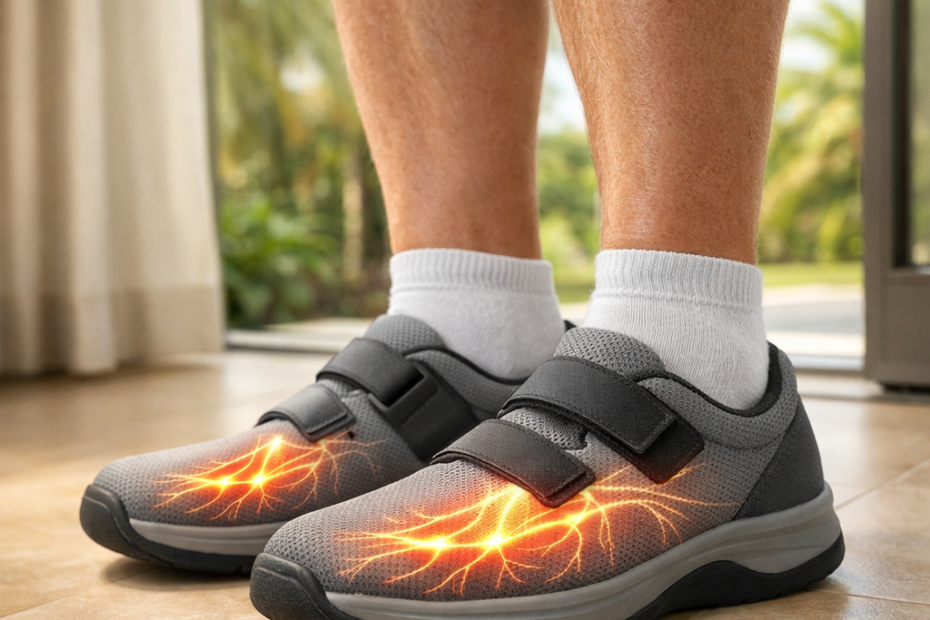
Finding the best shoes for neuropathy can make a surprisingly big difference in everyday comfort. Neuropathy can affect how the feet sense pressure, temperature, pain, and movement, so a shoe that feels perfectly fine to one person may create irritation or pressure points for someone with reduced sensation. The goal is not simply to find a soft shoe. Good neuropathy-friendly footwear should provide enough room, cushioning, stability, protection, and adjustability without creating unnecessary pressure on the feet.
Choosing footwear carefully is especially important when sensation is reduced. A small area of rubbing or an uncomfortable seam may go unnoticed for hours, potentially leading to skin irritation or an injury. For that reason, people dealing with neuropathy should think about shoe fit and foot protection as part of their daily routine rather than treating footwear as just a fashion choice.
The good news is that there are plenty of practical options. From walking shoes with generous toe boxes to lightweight sneakers with removable insoles, the right pair can help you move more comfortably while protecting sensitive areas of the foot. This guide explains what to look for when shopping for the best shoes for neuropathy and how to make a more informed choice.
What Makes the Best Shoes for Neuropathy?
The best shoes for neuropathy generally share several important characteristics. They should fit comfortably without squeezing the toes, provide cushioning under the foot, and offer enough structure to keep the foot stable. A flexible upper can also be useful because it allows the shoe to move naturally with the foot instead of creating rigid pressure points.
A roomy toe box is one of the most important features to consider. Your toes should have enough space to spread naturally without touching the front or sides of the shoe. Narrow footwear can create pressure on the toes and forefoot, while an overly short shoe may cause repeated contact between the toes and the front of the shoe.
Cushioning matters too, but more cushioning is not automatically better. A very soft shoe may feel comfortable initially but can sometimes provide less stability. Look for footwear that combines shock absorption with a reasonably supportive sole. The ideal balance depends on your foot shape, walking habits, and individual needs.
Why Proper Fit Matters When You Have Neuropathy
When foot sensation is reduced, your feet may not give you the normal warning signs that a shoe is causing trouble. A person without neuropathy might immediately notice a tight spot, blister, or irritating seam. Someone with reduced sensation may not recognize the problem until the shoe is removed.
This makes proper sizing particularly important. Do not assume that your usual shoe size is automatically the correct size for every brand. Shoe dimensions can vary considerably, and feet can change shape over time. It is worth measuring both feet and choosing a shoe based on the larger foot.
Try shoes on later in the day when your feet may be slightly more swollen. Wear the type of socks you normally use with the shoes and walk around for several minutes. Pay attention to pressure around the toes, heel, sides, and ball of the foot. If anything feels tight or uncomfortable in the store, it is unlikely to improve simply because you wear the shoe more often.
Look for a Wide and Comfortable Toe Box
A wide toe box is one of the most useful features when looking for the best shoes for neuropathy. Instead of forcing the toes into a narrow shape, a properly designed toe box allows them to sit naturally. This can reduce unnecessary pressure and make walking more comfortable.
The toe box should be spacious without allowing your foot to slide excessively inside the shoe. Too much movement can create friction, while too little space can cause pressure. The shape should match the natural shape of your foot rather than forcing your toes into a pointed or compressed position.
It is also helpful to look for uppers made from materials that can accommodate minor changes in foot volume. Stretchable mesh, soft textile materials, and flexible synthetic uppers can sometimes provide a more forgiving fit than stiff materials. However, the material should still be durable enough to protect the foot during normal activities.
Cushioning and Shock Absorption Are Important
Walking puts repeated forces through the feet, ankles, knees, and hips. Shoes with appropriate cushioning can help make these repeated impacts feel more manageable. For people with sensitive or uncomfortable feet, a well-cushioned midsole can make walking considerably more pleasant.
Look for cushioning that feels supportive rather than unstable. When you stand in the shoe, your foot should feel comfortably supported instead of sinking excessively into the sole. A stable platform can be particularly useful if neuropathy affects balance or awareness of foot position.
Remember that cushioning cannot compensate for a poor fit. A shoe can have an excellent foam midsole but still be unsuitable if it squeezes your toes or rubs your heel. Fit, stability, cushioning, and protection should work together.
Choose Shoes With Good Support and Stability
Support is another major consideration when choosing footwear for neuropathy. A stable shoe can help your foot move through its normal walking pattern while reducing unnecessary movement inside the shoe.
A supportive heel counter can help keep the heel positioned properly. The outsole should provide reliable traction, particularly if you regularly walk outdoors or on surfaces that may become wet. Slipping is a concern for anyone, but maintaining secure footing can be especially important when sensation or balance is affected.
At the same time, avoid assuming that an extremely rigid shoe is automatically more supportive. The shoe should provide structure where it is useful while still allowing a reasonably natural walking motion. Your individual foot mechanics may determine whether a neutral, stability-oriented, or custom option works best.
Adjustable Closures Can Make a Big Difference
Shoes with adjustable closures are often easier to fit correctly. Traditional laces allow you to fine-tune the amount of pressure across different parts of the foot. Hook-and-loop straps can also be convenient, particularly for people who have difficulty tying laces.
Adjustability becomes useful when feet change size during the day. Swelling can make a shoe that felt comfortable in the morning feel much tighter later. A shoe that can be loosened slightly gives you more control over the fit.
Avoid fastening shoes so tightly that they leave noticeable pressure marks. The objective is a secure fit without restricting circulation or creating concentrated pressure. Your heel should remain reasonably stable while the forefoot has enough room to move naturally.
The Best Shoes for Neuropathy Should Protect the Feet
Protection is often overlooked when people focus primarily on comfort. If sensation is reduced, protecting the feet from external hazards becomes even more important. A closed-toe shoe can provide a barrier against bumps, rough surfaces, and small objects.
The inside of the shoe matters as well. Look for smooth interiors with minimal seams or rough edges. An irritating seam may not seem important when you first try on a shoe, but repeated friction can become a problem during longer walks.
Check the shoes regularly for anything that could create pressure. Insoles can shift, materials can wear down, and small objects can occasionally become trapped inside. Developing the habit of checking your shoes before putting them on is a simple precaution.
Consider Walking Shoes for Everyday Use
For everyday activities, comfortable walking shoes are often a practical choice. They typically combine cushioning, a stable outsole, breathable materials, and enough flexibility for repeated walking.
When shopping for walking shoes, focus on the way the entire shoe works together rather than choosing based on appearance alone. The upper should hold the foot securely without squeezing it, the midsole should provide comfortable cushioning, and the outsole should offer dependable traction.
If you spend many hours on your feet, pay particular attention to weight. Heavy footwear can become tiring over the course of a long day. A lightweight shoe with adequate structure may provide a better balance between comfort and support.
Are Running Shoes Good for Neuropathy?
Running shoes can be a good option for some people with neuropathy, particularly if they have generous toe space, comfortable cushioning, and a secure fit. Many modern running shoes are designed to manage repeated impact and provide a comfortable platform for walking as well as running.
However, the label “running shoe” does not automatically make a shoe appropriate for neuropathy. Some running shoes have narrow shapes or aggressive designs that may not suit every foot. Always judge the individual shoe by its fit and features.
If you enjoy walking for exercise, try the shoes on and walk at your normal pace. Make sure your toes are not hitting the front, your heel is not slipping excessively, and there are no pressure points anywhere inside the shoe.
Don’t Forget About Socks
Even the best shoes for neuropathy can become uncomfortable when paired with unsuitable socks. Socks should generally fit smoothly without bunching up inside the shoe. Wrinkles can create areas of repeated pressure and friction.
Breathable, moisture-managing materials can also help keep the feet more comfortable. Avoid socks with tight elastic bands if they leave deep marks or feel restrictive. Seam placement is another consideration, particularly if your toes are sensitive.
It is useful to check your socks just as carefully as your shoes. A small fold or rough area can become surprisingly irritating over several hours of walking.
When Custom Orthotics May Be Worth Considering
Some people need more individualized support than a standard shoe and insole can provide. Custom orthotics may be considered when there are specific pressure areas, foot alignment concerns, or other biomechanical issues.
A qualified healthcare professional can assess how your feet bear weight and determine whether additional support would be appropriate. In some cases, a removable insole is valuable because it creates enough interior space for an orthopedic insert.
If you use an orthotic, take it with you when buying new shoes. A shoe that fits perfectly without the insert may become too tight once the orthotic is installed.
How to Test Shoes Before Buying Them
Testing footwear properly can prevent many problems. Start by standing in both shoes and checking whether your toes have adequate space. Your heel should feel secure, while the front of your foot should not feel compressed.
Walk around on a clean, level surface for several minutes. Pay attention to any rubbing, pinching, sliding, or unusual pressure. Do not rely solely on the first few seconds of wear. A shoe can feel comfortable initially but reveal pressure points after several minutes.
When you get home, inspect your feet after wearing new shoes. Look for areas of redness, irritation, swelling, or rubbing. If you have reduced sensation, visual inspection is particularly important because discomfort may not be an accurate warning signal.
Common Mistakes to Avoid
One of the biggest mistakes is buying shoes based only on softness. A very soft shoe can feel wonderful when you first put it on, but if it lacks stability or does not fit properly, it may not be a good long-term choice.
Another mistake is buying shoes that are too small with the expectation that they will stretch. Shoes may loosen slightly with use, but they should not need to be painfully broken in. If your toes are compressed from the beginning, choose another size or style.
It is also easy to ignore wear and tear. Even high-quality footwear eventually loses cushioning and traction. Inspect your shoes regularly and replace them when the sole becomes excessively worn, the cushioning deteriorates, or the interior develops areas that could cause rubbing.
When to Talk With a Healthcare Professional
Footwear is only one part of caring for feet affected by neuropathy. If you notice a persistent sore, blister, wound, swelling, unusual discoloration, or other concerning change, it is important to seek appropriate medical advice rather than trying to solve the problem with a different shoe.
Professional guidance can also be useful if you have significant balance problems, recurring pressure areas, foot deformities, or difficulty finding shoes that fit comfortably. A podiatrist or other qualified healthcare professional can evaluate your feet and help determine what type of footwear or orthotic support is appropriate.
Regular foot checks are particularly valuable when sensation is reduced. The earlier a potential problem is noticed, the easier it may be to address. Comfortable shoes can help protect your feet, but they should complement—not replace—appropriate foot care.
Final Thoughts on the Best Shoes for Neuropathy
The best shoes for neuropathy are not necessarily the most expensive shoes or the ones with the thickest cushioning. The right pair should fit your individual feet, provide adequate room for the toes, cushion the sole, offer stable support, protect the foot, and avoid unnecessary pressure and friction.
Look for a comfortable toe box, adjustable fit, breathable materials, reliable traction, and an interior that feels smooth against the skin. Take your time when trying shoes on, and inspect your feet regularly after wearing them. If standard footwear does not provide enough comfort or protection, professional assessment and customized options may be worth considering.
Most importantly, think of footwear as part of everyday foot protection. A well-fitting pair can make walking more comfortable while helping reduce avoidable pressure and friction. With careful fitting and regular foot checks, choosing supportive footwear becomes a practical part of maintaining comfortable, active daily life.
You May Also Raed: Englishtistic