
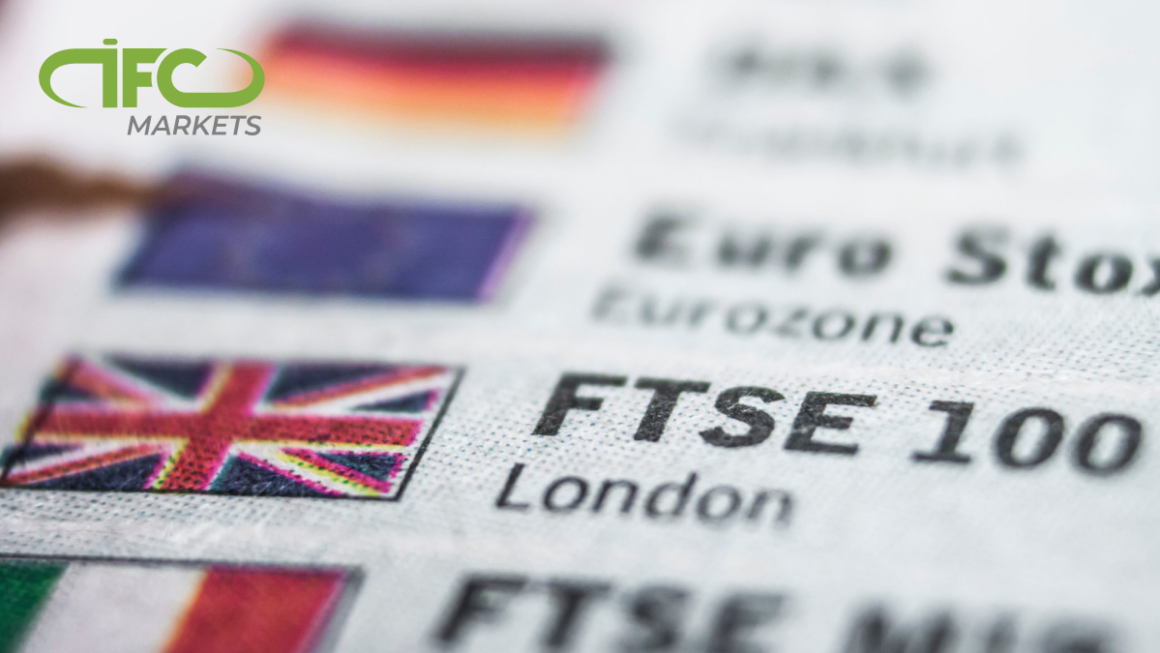
The FTSE 100 is one of the most closely watched stock market indices in the world. Often referred to as the “Footsie,” it represents the performance of the largest publicly traded companies listed on the London Stock Exchange. For investors, analysts, journalists, and businesses, the FTSE 100 provides an important snapshot of the UK’s corporate and financial landscape.
Although it is frequently described as a measure of the British economy, the FTSE 100 is more complicated than that simple definition suggests. Many of its largest companies operate internationally and earn substantial portions of their revenue outside the United Kingdom. As a result, movements in the index can be influenced by global commodity prices, exchange rates, international economic conditions, and geopolitical developments.
Understanding how the FTSE 100 works can help investors interpret financial news and better understand the relationship between major companies and the wider economy. Whether someone is considering investing in UK shares or simply wants to know what headlines about the FTSE 100 actually mean, learning the basics of this index is a useful starting point.
What Is the FTSE 100?
The FTSE 100 is a stock market index made up of 100 of the largest eligible companies listed on the London Stock Exchange. The companies included are generally selected based on their market capitalization, which is the total market value of a company’s publicly traded shares. Because these businesses are among the largest in the UK market, the index attracts significant attention from investors around the world.
The index was launched in 1984 and has since become a major benchmark for the performance of large British-listed companies. When financial news reports that the FTSE 100 has risen or fallen, it means that the overall value of the companies within the index has changed according to the index’s calculation methodology.
However, the FTSE 100 should not be confused with a direct measurement of the entire UK economy. It tracks publicly listed companies rather than employment, household spending, gross domestic product, or other traditional economic indicators. A strong performance in the FTSE 100 can occur even when some areas of the domestic economy are struggling, and the reverse can also be true.
How the FTSE 100 Is Calculated
The FTSE 100 is a market-capitalization-weighted index, which means larger companies have a greater influence on its movement. If one of the biggest companies in the index experiences a significant increase or decline in its share price, that movement can have a noticeable effect on the overall index.
This approach makes sense because the largest companies represent a greater share of the market’s total value. However, it also means that the FTSE 100 is not a simple average of 100 stock prices. A small company experiencing a dramatic price increase may have less impact on the index than a relatively modest movement in one of the largest companies.
The composition of the index is also reviewed regularly. Companies can enter or leave the FTSE 100 depending on changes in their market value and whether they continue to meet the eligibility requirements. This keeps the index focused on the leading companies in the UK market rather than permanently preserving the same group of businesses.
The Companies Included in the FTSE 100
The FTSE 100 includes companies from a wide variety of industries. Financial services, energy, pharmaceuticals, consumer goods, mining, telecommunications, defense, retail, and other sectors can all be represented. This variety gives the index a broad corporate reach, although the balance of industries can change over time.
Many companies within the index are internationally focused. Global brands and multinational corporations often generate a significant proportion of their revenue in overseas markets. This is one reason why the FTSE 100 can sometimes move differently from what people might expect based solely on news about the UK economy.
For example, a weaker British pound can potentially benefit some internationally focused companies because overseas earnings may be worth more when converted back into pounds. On the other hand, businesses that rely heavily on imports or have substantial costs in foreign currencies may face different pressures. These international connections make the FTSE 100 a global index in many practical respects.
Why the FTSE 100 Moves Up and Down
Like every major stock market index, the FTSE 100 responds to changing expectations. Investors constantly evaluate company earnings, interest rates, inflation, economic growth, consumer demand, currency movements, and many other factors. When the outlook appears stronger, share prices may rise. When uncertainty increases, prices may fall.
Corporate earnings reports are especially important. If major companies announce stronger profits, improved forecasts, or successful business strategies, investor confidence can increase. Disappointing results, weaker guidance, or unexpected financial problems can have the opposite effect.
Global events can also influence the index. Changes in oil prices may affect major energy companies, while movements in commodity prices can influence mining businesses. Interest-rate decisions can affect banks and other financial firms. Political developments and international conflicts may also create uncertainty. The FTSE 100 reflects all of these forces through changes in the prices of its component stocks.
FTSE 100 and the UK Economy
It is tempting to think of the FTSE 100 as a direct economic scoreboard for the United Kingdom, but that is not entirely accurate. The index can provide useful information about investor confidence and the health of major companies, yet it does not represent every part of the British economy.
Small businesses, private companies, and many domestic industries are not directly represented in the index. A large part of the UK’s economic activity takes place outside the group of major publicly traded companies included in the FTSE 100. Therefore, a rising index does not automatically mean that every business or household is experiencing economic improvement.
At the same time, the index remains economically important. The companies within it employ large numbers of people, invest heavily, pay taxes, operate internationally, and influence major sectors of the economy. Their financial health matters, but investors should view the FTSE 100 as one important indicator rather than a complete picture of the UK economy.
How People Invest in the FTSE 100
Investors who want exposure to the FTSE 100 do not necessarily have to purchase shares in all 100 companies individually. Many investment products are designed to track the performance of the index, allowing investors to gain broad exposure through a single fund or financial product.
Exchange-traded funds and index funds are popular ways to invest in a market index. These products generally aim to replicate the performance of the companies within the index, although costs, tracking differences, and investment structures can vary. For many investors, this approach is simpler than researching and buying a large number of individual stocks.
However, investing in the FTSE 100 still involves risk. Stock prices can fall as well as rise, and there is no guarantee that an investment will generate a profit. The value of an index can change significantly during periods of economic stress or market volatility. Investors should consider their financial circumstances, investment goals, and risk tolerance before making decisions.
Advantages of Following the FTSE 100
One major advantage of the FTSE 100 is that it provides a quick overview of the performance of many large companies through a single number. Instead of tracking dozens of individual share prices, investors and market observers can look at the index to understand the general direction of a major segment of the UK stock market.
The index also provides diversification compared with investing in a single company. Because it contains businesses from different sectors, problems affecting one company may be offset by stronger performance elsewhere. Diversification does not eliminate risk, but it can reduce the impact of relying entirely on one business or industry.
Another benefit is transparency. The FTSE 100 is widely followed, regularly reported, and supported by extensive financial information. Investors can easily find historical charts, company news, market commentary, and economic analysis related to the index and its constituent companies.
Risks and Limitations of the FTSE 100
Despite its importance, the FTSE 100 has limitations. The index is concentrated in large companies, meaning smaller British businesses are not represented to the same extent. Investors seeking exposure to the broader UK market may need to consider additional indices or investment options.
Sector concentration can also become an issue. If certain industries become dominant within the index, developments affecting those sectors can have a greater impact on overall performance. Energy prices, financial conditions, pharmaceutical developments, or commodity markets may therefore influence the FTSE 100 more strongly than some people expect.
There is also the simple reality that past performance cannot predict future results. An index may perform strongly over one period and struggle during another. Long-term investors should avoid assuming that a well-known index will automatically produce consistent returns every year.
The Difference Between the FTSE 100 and Other UK Indices
The FTSE 100 is the best-known UK stock index, but it is not the only one. Other indices track medium-sized and smaller companies, offering different perspectives on the British market. These companies may be more closely connected to domestic economic conditions or may have different growth characteristics.
The FTSE 250, for example, focuses on a different group of companies and is often viewed as having greater exposure to the domestic UK economy than the largest multinational businesses in the FTSE 100. This does not make one index automatically better than the other; they simply provide different types of market exposure.
Looking at several indices can therefore offer a more complete picture. A situation in which the FTSE 100 performs well while another UK index performs poorly may reveal differences between internationally focused companies and businesses that depend more heavily on domestic economic conditions.
Why the FTSE 100 Still Matters
The FTSE 100 remains one of the most influential financial benchmarks in Europe and an important part of global market coverage. Its companies include major businesses with international operations, substantial market values, and significant economic influence.
For everyday investors, following the index can provide useful context without requiring constant analysis of every individual company. A move in the FTSE 100 can encourage people to look deeper into what is happening with interest rates, currencies, commodities, corporate earnings, and investor confidence.
The most useful approach is to treat the FTSE 100 as a starting point rather than the final answer. Understanding why it is moving is often more valuable than simply knowing whether it is up or down on a particular day.
Final Thoughts on the FTSE 100
The FTSE 100 is far more than a number appearing on a financial news screen. It represents the combined market performance of many of the largest companies listed in the UK and provides insight into investor confidence, corporate performance, and global economic trends.
Its international nature means that the index does not always move in line with the domestic UK economy. Currency movements, global demand, commodity prices, interest rates, and overseas developments can all play a major role in determining its direction. That complexity is exactly why understanding the index is valuable.
For anyone interested in investing or following financial markets, the FTSE 100 is an essential benchmark to understand. By learning how it is constructed, what influences its movements, and where its limitations lie, readers can interpret market news with greater confidence and develop a clearer understanding of the forces shaping one of the world’s most recognized stock market indices.
You May Also Raed: Englishtistic