
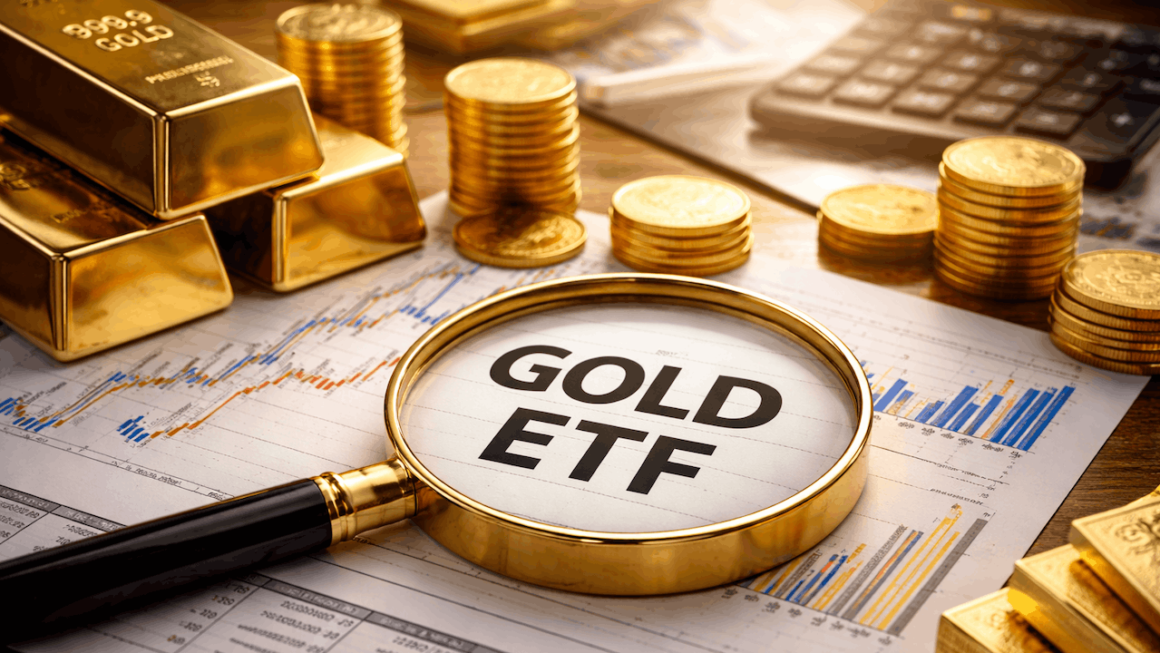
Gold has been used as a store of value for centuries and continues to attract investors during periods of economic uncertainty, inflation concerns, and market volatility. For Malaysian investors who want exposure to gold without buying and storing physical bullion, a Gold ETF in Malaysia can be an option worth understanding.
Gold exchange-traded funds provide a way to gain exposure to gold through a fund structure that can be traded through a brokerage account. However, not every gold ETF works in exactly the same way, and investors should understand the fund’s structure, fees, currency exposure, and risks before investing.
This beginner’s guide explains what gold ETFs are, how they work, and what Malaysian investors should consider when adding gold exposure to a portfolio.
What Is a Gold ETF?
A Gold ETF (Exchange-Traded Fund) is an exchange-traded investment product designed to provide exposure to the price of gold.
Depending on its structure, a gold ETF may:
- Hold physical gold
- Track gold futures
- Use other financial instruments linked to gold prices
Physically backed products generally hold allocated or otherwise specified gold through a custodian, while futures-based products obtain gold exposure through futures contracts.
Because structures differ, investors should read the fund’s official documentation before investing.
Why Invest in Gold?
Gold can play several potential roles in an investment portfolio.
Portfolio Diversification
Gold does not always move in the same direction as equities or other assets. Adding gold exposure may therefore help diversify a portfolio.
However, correlation can change, and gold can also decline in value.
Inflation Considerations
Gold is sometimes viewed as a hedge against inflation or currency weakness. However, this relationship is not guaranteed over every period.
Economic Uncertainty
Investors may increase their interest in gold etf during periods of geopolitical or economic uncertainty.
Alternative Asset Exposure
A gold ETF allows investors to add exposure to a commodity without purchasing physical bars or coins.
How Does a Gold ETF Work?
The process can be relatively simple from an investor’s perspective.
Investor → Brokerage account → Gold ETF → Gold-related exposure
The ETF trades on a stock exchange, and its market price can change throughout the trading session.
The performance depends on the fund’s structure and the underlying gold exposure.
A physically backed ETF may broadly track the spot price of gold, minus expenses and other factors.
A futures-based product can behave differently because futures prices may differ from the spot price.
Gold ETF vs Physical Gold
Malaysian investors can gain gold exposure through different methods.
Physical Gold
This may include:
- Gold bars
- Gold coins
- Jewellery
Physical gold gives you direct possession, but it can involve storage, insurance, security, and buying or selling spreads.
Gold ETF
A gold ETF can be purchased and sold through a brokerage platform.
Potential advantages include:
- Convenient trading
- No personal storage requirement
- Portfolio diversification
- Easier transaction process
However, an ETF involves management expenses, brokerage costs, and other risks.
Gold ETF vs Gold Savings Accounts
Some financial institutions offer gold-related accounts where customers buy or sell gold exposure through the bank.
A gold ETF is different because it is a security traded on an exchange.
Before choosing between the two, compare:
- Fees
- Liquidity
- Ownership structure
- Minimum investment
- Redemption options
- Regulatory framework
- Counterparty considerations
What Should Malaysian Investors Look for in a Gold ETF?
Choosing a gold ETF requires more than looking at its recent performance.
1. Underlying Gold Exposure
Determine whether the ETF tracks:
- Physical gold
- Gold futures
- A gold-related index
- Another gold-linked strategy
2. Expense Ratio
The fund charges expenses for management, administration, custody, and other activities.
These costs can reduce returns over time.
3. Tracking Difference
Compare the ETF’s performance with its intended benchmark.
A fund may not perfectly match gold prices because of fees, transaction costs, taxes, and structural factors.
4. Liquidity
Check trading volume and bid-ask spreads.
Greater liquidity can make buying and selling more efficient.
5. Fund Domicile
International ETFs can have different legal and tax structures depending on where the fund is domiciled.
6. Currency
For Malaysian investors, currency exposure is important because gold is commonly priced internationally in U.S. dollars.
Currency Risk for Malaysian Investors
Suppose the price of gold rises in U.S. dollar terms.
That does not necessarily mean a Malaysian investor will receive the same percentage return in ringgit.
Changes in the USD/MYR exchange rate can influence the value of an overseas gold investment when measured in MYR.
For example, a stronger U.S. dollar against the ringgit can increase the ringgit value of a dollar-denominated asset, while a weaker U.S. dollar can have the opposite effect.
Currency movements therefore need to be considered alongside gold-price movements.
Gold ETFs Listed in Malaysia vs Overseas
Malaysian investors may encounter gold-related ETFs or exchange-traded products listed on different markets.
A locally listed product may provide a simpler trading experience for some investors.
An overseas ETF may offer:
- Greater product selection
- Higher liquidity
- Different fund structures
- Access to larger international markets
However, overseas investments may introduce additional considerations such as:
- Foreign-exchange costs
- International brokerage fees
- Tax treatment
- Market-hour differences
- Regulatory differences
Always check the specific product rather than assuming all gold ETFs work the same way.
How to Buy a Gold ETF in Malaysia
The process generally involves the following steps.
Step 1: Set Your Investment Objective
Decide why you want gold exposure.
Possible objectives include:
- Portfolio diversification
- Long-term asset allocation
- Commodity exposure
- Reducing dependence on equities
Step 2: Choose a Brokerage Account
Select a broker that provides access to the relevant exchange.
Compare:
- Trading commissions
- Currency conversion costs
- Platform fees
- Custody charges
- Available markets
Step 3: Research the ETF
Check the fund’s:
- Gold exposure
- Expense ratio
- Holdings or underlying instruments
- Fund domicile
- Liquidity
- Tracking performance
- Distribution policy
Step 4: Consider Currency Exposure
Determine whether the investment is denominated in MYR, USD, or another currency.
Step 5: Decide Your Allocation
Gold should be considered within the context of your overall portfolio rather than as an automatic replacement for diversified investments.
Step 6: Place Your Order
Once you understand the product, you can place a buy order through your brokerage platform.
Risks of Gold ETFs
Gold ETFs are not risk-free.
Gold Price Risk
The price of gold can rise and fall significantly.
Currency Risk
International gold investments can be affected by exchange-rate movements.
Tracking Risk
An ETF may not exactly follow the gold price.
Liquidity Risk
Some products may have lower trading volume and wider spreads.
Management and Counterparty Risk
Depending on the fund structure, investors may face risks related to custodians, counterparties, derivatives, or other financial institutions.
Market Risk
The ETF’s market price can differ temporarily from the value of its underlying assets.
Does Gold Pay Dividends?
Unlike a company, physical gold does not generate dividends or interest.
A physically backed gold ETF generally derives its value primarily from the gold it represents rather than from income generation.
This makes gold different from dividend-paying stocks or interest-bearing investments.
Investors generally buy gold for potential price appreciation and diversification rather than regular income.
Gold ETF and Portfolio Diversification
One reason investors consider gold is its potential role alongside other asset classes.
A diversified portfolio might contain a combination of:
- Equities
- Bonds
- Cash
- Gold or other commodities
The appropriate allocation depends on the investor’s goals, risk tolerance, and investment timeframe.
There is no universal percentage that is appropriate for everyone.
Gold ETF vs Gold Mining Stocks
Gold ETFs and gold mining companies are not the same investment.
A gold ETF primarily provides exposure to gold prices or gold-related instruments.
A gold mining stock represents ownership in a company that extracts and sells gold.
Mining companies can be affected by:
- Gold prices
- Production costs
- Management decisions
- Energy prices
- Political risks
- Company debt
- Operational problems
As a result, gold mining stocks can behave very differently from gold itself.
Common Mistakes Beginners Should Avoid
Buying Only Because Gold Prices Are Rising
Past performance does not guarantee future gains.
Ignoring ETF Structure
A physical gold ETF and a futures-based product can behave differently.
Forgetting Currency Exposure
Malaysian investors should consider MYR performance, not just the quoted USD gold price.
Ignoring Fees
Expense ratios, brokerage charges, and spreads can reduce returns.
Putting All Savings Into Gold
Gold can diversify a portfolio, but concentrating your entire portfolio in one asset creates its own risks.
Confusing Gold ETFs With Mining Stocks
The two investments have different risk and return characteristics.
Is a Gold ETF Suitable for Beginners?
A gold ETF can be relatively straightforward to trade, but beginners should understand what they are purchasing before investing.
It may be useful for investors who want commodity exposure without storing physical gold.
However, it should be viewed as one possible component of a broader financial strategy rather than a guaranteed source of profit.
Conclusion
A Gold ETF in Malaysia can provide a convenient way to gain exposure to gold without purchasing and storing physical bullion. ETFs may offer liquidity and ease of trading, while also allowing investors to incorporate gold into a diversified portfolio.
Before investing, carefully examine the ETF’s underlying structure, expense ratio, liquidity, fund domicile, currency exposure, tracking difference, and associated risks.
For Malaysian investors, currency movements between the U.S. dollar and ringgit can be particularly important when evaluating international gold investments.
Most importantly, do not choose a gold ETF simply because gold prices have recently increased. Consider how gold fits into your overall portfolio, investment horizon, and risk tolerance.
Always review the latest official fund documents, brokerage charges, tax considerations, and applicable Malaysian regulations before investing. This article is for educational purposes only and should not be considered personalized financial advice.