
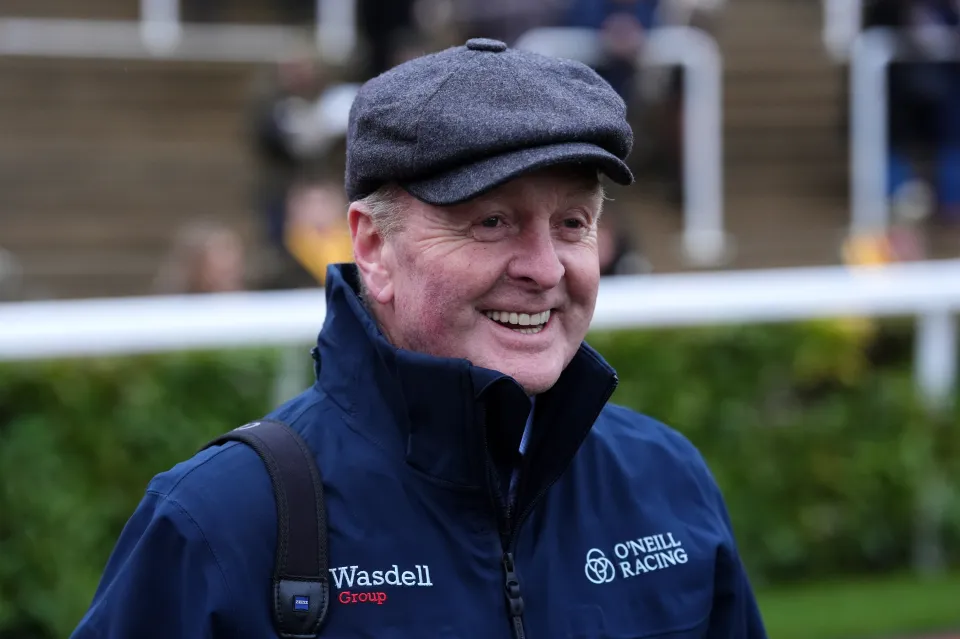
When searches spike around “Jonjo O’Neill horses withdrawn,” it is usually because racing fans have noticed one or more horses trained by Jonjo O’Neill and A.J. O’Neill appearing in a race declaration before subsequently being listed as a non-runner. In National Hunt racing, this can happen for several perfectly ordinary reasons, and a withdrawal does not automatically mean that something serious has happened to the horse.
Jonjo O’Neill is one of the most recognisable names in British jump racing. His career spans decades, first as a highly successful jockey and later as a trainer at Jackdaws Castle in Gloucestershire. He has handled numerous high-class jumpers and competed regularly at major meetings.
The important point is that a horse can be withdrawn for reasons ranging from unsuitable ground to a minor health concern, a change of plans, or simply because connections believe another race will provide a better opportunity. Recent examples involving O’Neill-trained horses show why looking at the official reason is much more useful than assuming the worst.
What Does “Jonjo O’Neill Horses Withdrawn” Actually Mean?
The phrase Jonjo O’Neill horses withdrawn can refer to horses trained by Jonjo O’Neill and, increasingly, the O’Neill team operating under the joint Jonjo and A.J. O’Neill licence. A horse being withdrawn simply means it was entered or declared for a race but did not ultimately take part.
There is an important distinction between a horse being declared and actually running. Trainers nominate horses for races based on their entries, but circumstances can change considerably between declaration and the start. Weather, ground conditions, the horse’s wellbeing, jockey arrangements and the trainer’s assessment can all influence the final decision.
Official stewards’ reports demonstrate this clearly. For example, Yes Day, trained by Jonjo & A.J. O’Neill, was withdrawn at Ludlow in October 2025 because of the going. The report specifically recorded the withdrawal as being made by the trainer.
That kind of decision is a normal part of racing rather than evidence of a crisis. Trainers have a responsibility to make sure the conditions are suitable before asking a horse to compete.
Why Jonjo O’Neill Horses Can Be Withdrawn
One of the most common reasons for a National Hunt horse being taken out of a race is the going. Going describes the condition of the racing surface, and it can change significantly after rain or prolonged dry weather.
A horse that performs well on good-to-soft ground may be less effective on heavy going, for example. Some horses prefer quicker conditions, while others are considerably more comfortable when the ground has plenty of moisture. Trainers therefore have to consider the horse’s previous form, physical demands and likely level of comfort.
This has affected O’Neill runners before. Indiana Dream, another horse trained by Jonjo & A.J. O’Neill, was withdrawn from a Haydock race in January 2026 because the going had changed since declarations. The official stewards’ report records that the trainer withdrew the horse because of those altered conditions.
Health is another major consideration. A horse does not need to be seriously ill to be removed from a race. Something as straightforward as a horse not eating properly, displaying a minor temperature, or simply not appearing quite right can be enough for a trainer to wait.
For example, Gaelic Rambler, trained by Jonjo & A.J. O’Neill, was listed as a non-runner at Doncaster in December 2025 with the reason recorded as “Self Cert (Not Eaten Up).”
That illustrates an important aspect of professional racing: protecting the horse comes before forcing a race-day appearance.
The Going Can Change Everything
For anyone following Jonjo O’Neill horses withdrawn, the going is one of the most useful things to monitor. A racecourse might initially be described as good to soft, only for overnight rain to make parts of the track considerably softer.
National Hunt racing places substantial physical demands on horses. Jumping obstacles while travelling at speed is already challenging, and the condition of the surface can affect stamina, balance and jumping efficiency.
Recent British racing has shown just how dramatically weather can alter racing plans. In August 2026, more than 40 horses were withdrawn across Goodwood, Beverley and Yarmouth after heavy rainfall changed the ground conditions.
So when an O’Neill-trained horse is withdrawn because of the going, it should not automatically be interpreted as bad news. In many situations, it is simply evidence that the trainer does not believe the race offers the right conditions.
Trainers Often Have a Bigger Plan
Another reason a horse might be withdrawn is that the trainer has a different race in mind. Racing calendars give connections plenty of options, particularly for horses with specific preferences.
A trainer may enter a horse in several races while waiting to see how the horse progresses, how the weather develops and which races attract the strongest opposition. The final decision can therefore be strategic rather than reactive.
This approach is particularly important with valuable National Hunt horses. There is little benefit in running a horse in an unsuitable race simply because it has been declared. If a more appropriate opportunity is available a week or two later, waiting can make considerably more sense.
Jonjo O’Neill has repeatedly demonstrated this long-term approach throughout his career. His training operation has produced major winners and high-profile contenders, and successful National Hunt training often depends on patience rather than simply chasing every available opportunity.
A Withdrawal Does Not Necessarily Mean an Injury
One of the biggest misconceptions surrounding racing non-runners is that withdrawal automatically means injury. That is not the case.
A horse can be removed because of the ground, a tactical decision, a minor concern, unsuitable opposition or a change in the race programme. The official reason should therefore be checked before drawing conclusions.
The distinction matters because racing fans sometimes see a horse disappear from a racecard and immediately assume that something has gone badly wrong. In reality, trainers make these decisions precisely because they are monitoring their horses closely.
There have been occasions in O’Neill’s career when health concerns affected the entire stable. In 2004, for instance, the Jackdaws Castle operation temporarily reduced its racing activity because a bug had affected several horses. O’Neill explained at the time that the yard wanted to give the horses time to recover.
That historical example is useful context, but it should not be confused with every modern withdrawal. Each non-runner needs to be considered on its own circumstances.
Jonjo and A.J. O’Neill’s Modern Training Operation
The name Jonjo O’Neill remains strongly associated with Jackdaws Castle, but modern race reports increasingly identify horses as being trained by Jonjo & A.J. O’Neill. A.J. O’Neill joined the licence at the start of the 2024-25 campaign, adding another generation to the established training operation.
That development is significant because racing yards are complex operations. Training racehorses involves far more than preparing them physically. Trainers and their teams must manage entries, fitness, recovery, veterinary considerations, ground preferences, jockey bookings and long-term targets.
In December 2025, Racing Post reported that the O’Neill team had temporarily stopped sending horses to the races after a difficult spell of form. A.J. O’Neill explained that the horses had experienced what he described as a relatively minor illness and that the stable wanted to give them time before returning to racing.
That decision shows why periods without runners can sometimes be misunderstood. A quiet spell does not necessarily indicate that a stable has lost confidence in its horses. Sometimes it reflects responsible management.
What Punters Should Check When a Horse Is Withdrawn
For racing followers, the best response to an O’Neill withdrawal is to check the official non-runner reason rather than relying on social media speculation.
If the reason says “going,” the obvious question is whether the horse has a history of performing well on similar ground. If it says the horse has not eaten, has a temperature or has another health-related issue, the sensible interpretation is that connections have decided not to risk the horse.
The timing also matters. A horse withdrawn several days before a race can simply be redirected elsewhere, whereas a late withdrawal can sometimes be caused by changing conditions or a last-minute concern.
It is also worth checking subsequent entries. If the horse quickly appears in another race, that can indicate that the original withdrawal was primarily about suitability rather than a major problem.
What Fans Should Expect From Future O’Neill Runners
The O’Neill yard remains an important part of Britain’s National Hunt scene, and withdrawals are likely to continue appearing in racecards simply because that is how racing works.
The key is to judge each situation individually. A trainer who withdraws a horse because the ground is unsuitable may actually be demonstrating good judgement. Similarly, removing a horse that is not quite right can prevent a small problem from becoming a larger one.
O’Neill’s career provides plenty of evidence of the value of patience. His transition from a successful jockey to a major trainer has given him decades of experience in understanding horses, race conditions and the demands of jump racing. His riding career included the famous 1986 Cheltenham Gold Cup victory on Dawn Run, one of the defining moments of his sporting life.
That experience naturally influences how a stable approaches race planning. There is rarely a reason to treat a withdrawal in isolation without considering the bigger picture.
Final Thoughts on Jonjo O’Neill Horses Withdrawn
The keyword “Jonjo O’Neill horses withdrawn” may sound alarming at first, but a withdrawal is not automatically bad news. Horses can be taken out of races for many reasons, with unsuitable ground being one of the most common and straightforward explanations.
Recent official records involving O’Neill-trained horses show exactly how varied the reasons can be. Yes Day was withdrawn because of the going, Indiana Dream was taken out after the conditions changed, and Gaelic Rambler was a non-runner because the horse had not eaten up.
For racing fans, the most reliable approach is therefore simple: check the official reason, consider the horse’s form and preferences, and look for its next intended engagement. A withdrawal often represents careful race planning rather than a setback.
Ultimately, good training is not about getting every declared horse to the starting line. It is about choosing the right moment, the right conditions and the right race. For a long-established National Hunt operation such as Jonjo and A.J. O’Neill’s, knowing when not to run can be just as important as knowing when to run.
You May Also Raed: Englishtistic