
Mold doesn’t announce itself. It grows quietly—behind drywall, beneath flooring, inside HVAC ducts—until the damage is already done. By the time most homeowners notice discoloration on a ceiling or catch that musty odor in the basement, mold has often spread far beyond what’s visible to the naked eye. That’s the nature of the problem, and it’s exactly why professional intervention makes such a critical difference.
At Global Restoration, mold remediation is more than a service—it’s a structured, science-backed process designed to eliminate mold at the source, restore healthy air quality, and protect the long-term integrity of your property.
What Makes Mold So Difficult to Handle Alone?
Mold is resilient. Certain species, like Stachybotrys chartarum (commonly known as black mold), produce mycotoxins that pose serious health risks, including respiratory issues, chronic headaches, and immune system disruption. Even less aggressive mold varieties can aggravate asthma, trigger allergic reactions, and accelerate the deterioration of building materials.
DIY approaches—bleach sprays, surface scrubbing, air fresheners—address what you can see. They don’t address what you can’t. Without proper containment, disturbing mold colonies can actually spread spores to previously unaffected areas, making the problem significantly worse.
Professional remediation works differently. It follows a proven sequence: assessment, containment, removal, cleaning, and prevention. Each step matters, and skipping any one of them is where things go wrong.
How Global Restoration Approaches Mold Remediation
Thorough Assessment Before Any Work Begins
The process starts with a comprehensive inspection. Global Restoration’s technicians use moisture meters, thermal imaging, and air quality testing to locate mold growth in areas that aren’t immediately visible. Moisture readings help identify the underlying source—because without addressing that, mold will return regardless of how thoroughly it’s removed.
This diagnostic phase shapes everything that follows. It determines the scope of the work, the containment strategy, and the materials that will need to be removed or treated.
Containment That Protects the Rest of Your Property
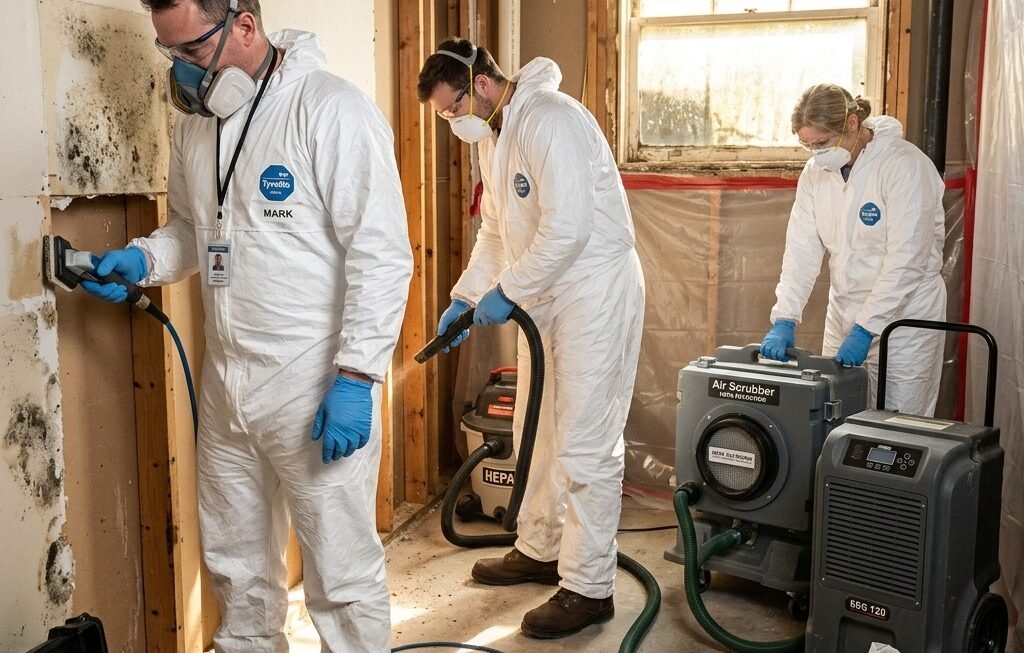
Once the affected areas are mapped, containment barriers go up. Plastic sheeting seals off the remediation zone, and negative air pressure machines ensure that mold spores don’t migrate to clean areas of the building during the removal process. HEPA filtration runs continuously throughout.
This step is what separates a professional remediation from a cleanup. It’s not just about removing what’s there—it’s about making sure the process itself doesn’t create new problems elsewhere.
Removal, Treatment, and Restoration
Porous materials that have absorbed mold—drywall, insulation, flooring, ceiling tiles—are carefully removed and properly disposed of. Non-porous surfaces are treated with EPA-registered antimicrobial agents. Affected wood framing may be wire-brushed, HEPA-vacuumed, and treated before any encapsulation takes place.
Global Restoration also handles the restoration side of the equation. After remediation, affected areas are rebuilt to pre-damage condition, which means homeowners and business owners don’t have to coordinate multiple contractors. One team manages the entire process from start to finish.
Why the Source of Moisture Always Has to Be Fixed First
Mold needs three things to thrive: organic material, warmth, and moisture. The first two are unavoidable in any building. The third is the variable that can be controlled.
This is why the most effective mold remediation always includes identifying and eliminating the moisture source—whether that’s a roof leak, plumbing failure, condensation issue, or flood damage. Remediation without moisture correction is temporary. The mold comes back, often faster the second time because the spore count in the environment is already elevated.
Global Restoration’s team traces moisture pathways carefully, ensuring that the fix addresses the root cause rather than just the symptom.
Mold in Commercial Properties: A Different Set of Stakes
Residential mold remediation and commercial remediation share the same core principles, but the stakes in commercial settings are often higher. A mold problem in an office building, school, healthcare facility, or rental property affects employees, tenants, or the public—not just a single household.
Regulatory compliance adds another layer of complexity. Many jurisdictions have specific requirements around mold disclosure, testing, and documentation, particularly for commercial landlords and property managers. Global Restoration provides thorough documentation throughout the remediation process, which supports compliance requirements and liability protection.
Scheduling matters too. Commercial clients often need work completed in phases or outside business hours to minimize operational disruption. Global Restoration’s team works around those constraints without cutting corners on the process itself.
What a Property Looks Like After Professional Remediation
The result of a properly executed remediation is a property that’s clean, structurally sound, and protected against immediate recurrence. Air quality testing following the work confirms that spore counts have returned to acceptable levels. Affected areas are rebuilt, sealed, and ready for normal use.
Homeowners often describe the difference in terms of how the air feels—less heavy, no lingering odor, easier to breathe. That change is measurable, not just subjective. Post-remediation testing documents it.
Mold remediation done by trained professionals not only eliminates existing growth but also gives property owners a clear picture of what caused the problem, how it was resolved, and what preventive steps will keep it from coming back—making it one of the most protective investments a property owner can make in the health of their building and the people inside it.
Global Restoration brings that level of thoroughness to every project. Whether the issue is isolated to a single bathroom or has spread across multiple floors, the approach is the same: complete the assessment, contain the problem, eliminate it, and restore the space to safe, livable condition.
Frequently Asked Questions About Mold Remediation
How long does professional mold remediation take?
The timeline depends on the size of the affected area and the severity of the growth. Small, contained problems may be resolved in one to two days. Larger infestations involving structural materials can take a week or more. Global Restoration provides a clear timeline estimate after the initial inspection.
Is mold remediation covered by homeowners insurance?
Coverage varies by policy and the cause of the mold. Mold resulting from a sudden, covered event—like a burst pipe—is more likely to be covered than mold from long-term moisture issues or deferred maintenance. Global Restoration can help document the damage to support your insurance claim.
Can I stay in my home during mold remediation?
In many cases, yes—especially when the affected area is contained to one part of the property. If the mold is widespread or involves HVAC systems, temporary relocation may be recommended. Global Restoration advises on this during the assessment phase.
What’s the difference between mold removal and mold remediation?
Mold removal typically refers to physically taking mold out of a space. Mold remediation is a broader process that includes removal, treatment, air quality control, moisture correction, and restoration. Remediation addresses the full problem; removal alone often doesn’t.
How can I tell if mold is still present after cleanup?
Post-remediation air quality testing is the most reliable method. Visual inspection alone isn’t sufficient because mold can remain in areas that aren’t easily visible. Global Restoration includes post-remediation verification testing to confirm the work has been effective.