
The Newham local elections 2026 turned out to be one of the more closely watched contests in London. Newham has traditionally been a strong Labour area, but the political landscape going into the election was far less predictable than it had been in previous years. Independent candidates, the Greens, Reform UK and other parties all attempted to make an impact, creating a much more competitive contest across several wards.
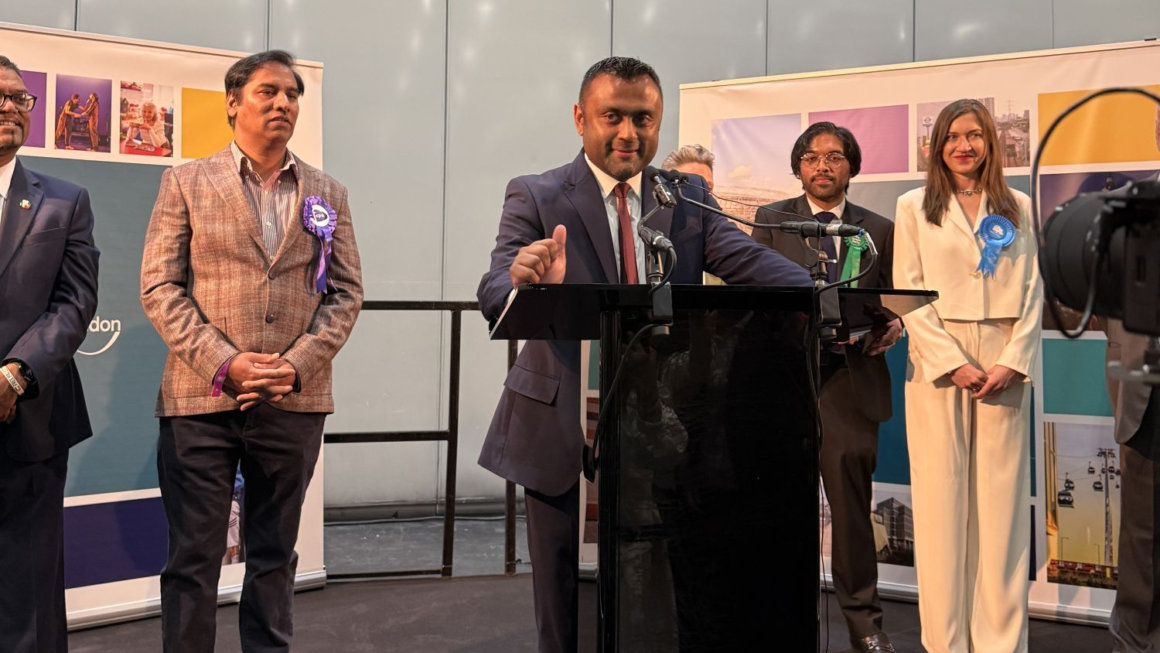
Voting took place on Thursday, 7 May 2026, with residents choosing councillors across Newham as well as voting in the borough’s directly elected mayoral contest. The final figures showed that Labour managed to retain the mayoralty, although the result was much more competitive than the party’s traditional position in Newham might have suggested. Forhad Hussain of the Labour Party was elected mayor with 25,538 votes.
The election was therefore important for more than simply determining who would run the council. It provided a snapshot of changing political attitudes in one of east London’s most diverse boroughs. The results also demonstrated that local campaigns, independent candidates and issues such as housing, public services, the cost of living and international affairs could influence voters alongside traditional party loyalties.
What Happened in the Newham Local Elections 2026?
The Newham local elections 2026 were held against a backdrop of significant political change across London. Labour had been expected to face serious pressure in several parts of the capital, with the Greens and independent candidates making gains in areas where Labour had historically performed strongly. Newham was particularly interesting because predictions before polling day suggested that Labour’s long-standing dominance could be challenged by grassroots independent campaigns.
When the votes were counted, however, Labour retained the Newham mayoralty. Forhad Hussain received 25,538 votes, ahead of independent candidate Mehmood Mirza, who received 20,234. Green candidate Areeq Chowdhury finished with 18,999 votes, while Reform UK’s Clive Furness received 7,313. The result showed that Labour remained the largest force in the borough, but it was certainly not an uncontested victory.
Turnout was another notable feature. Newham’s mayoral election recorded a turnout of 34.9%, with 84,762 ballot papers received from an electorate of 242,828. That means a substantial majority of eligible voters did not participate. For political parties and community groups, this is an important reminder that winning elections is not only about persuading existing supporters; it is also about convincing less-engaged residents that local government decisions are worth voting on.
Why the Mayoral Result Mattered
The mayoral contest was arguably the biggest headline from the election because Newham uses a directly elected mayoral system. That gives the winning candidate a particularly visible role in shaping the borough’s political direction. Forhad Hussain’s victory meant Labour would continue leading the borough at a time when several other London councils experienced major changes in political control.
The margin, however, tells a more complicated story than the headline result. Hussain’s 25,538 votes represented roughly 30% of the votes cast for the mayoral candidates. Mehmood Mirza and Areeq Chowdhury also attracted substantial support. The figures suggest that voters were willing to look beyond the traditional Labour-versus-Conservative choice and consider candidates offering different political identities and local priorities.
That fragmentation could become increasingly important over the next few years. A strong traditional party machine can still win an election, but a lower share of the overall vote means it cannot necessarily assume that future contests will be straightforward. Newham’s political parties will need to pay close attention to local concerns and maintain visible connections with communities between elections rather than relying solely on established loyalties.
Independent Candidates and Changing Political Loyalties
One of the defining features of the Newham local elections 2026 was the performance of independent and locally focused candidates. This trend was part of a broader movement across Britain, particularly in urban areas where voters have become less willing to automatically support the party they have backed for years. Newham was identified before the election as an important target for independent campaigns challenging Labour’s established position.
The ward results provide some striking examples. In East Ham, Newham Independents candidates Abdul Halim, Sahera Begum and Syed Taqi Jawad Naqvi were elected, defeating candidates from Labour, the Greens, Conservatives, Reform UK and the Workers Party. Abdul Halim received 1,674 votes, while Sahera Begum received 1,561 and Naqvi received 1,376.
The pattern was not limited to one ward. In Plashet, Newham Independents candidates Zuber Gulamussen and Ilyas Sharif were elected, while in Green Street West, Idris Ibrahim, Rumana Salim Bhuiyan and Qasim Yaseen won seats under the Newham Independents banner. This demonstrates why the 2026 election cannot simply be described as a Labour-versus-other-parties contest. Local political identities became a meaningful part of the story.
Ward Results Show a More Competitive Newham
The ward-level results reveal just how varied the election was across the borough. In Canning Town North, for example, Labour candidates Aleya Hussain and Shaban Mohammed were elected alongside Green candidate Imogen Anderson. The result was a reminder that voters in individual wards could produce very different outcomes even within a borough that has traditionally leaned heavily toward Labour.
Maryland provided another interesting example. Green Party candidates Kelly Drake and Ren Tilbury were elected, alongside Labour candidate Reece McMahon. Drake received 1,101 votes and Tilbury 797, while McMahon received 785. The ward recorded a turnout of 33.48%, showing both the competitiveness of the contest and the relatively modest level of participation among eligible voters.
These ward results matter because councillors make decisions that directly affect everyday life. While a mayor may receive most of the media attention, councillors deal with planning applications, housing concerns, local environmental issues, community services and the detailed business of council governance. The composition of the council can therefore influence how effectively the mayor and administration are able to implement their priorities.
The Issues That Shaped the Election
Housing was inevitably one of the major issues surrounding the Newham local elections 2026. Newham has experienced substantial development and population growth, while many residents face high housing costs and concerns about affordability. Questions about social housing, private renting, new developments and the availability of genuinely affordable homes are likely to remain central to local political debate.
The cost of living was another major concern. Even when inflationary pressures change, household budgets remain sensitive to rents, energy costs, food prices and transport expenses. Local councils cannot solve every financial problem faced by residents, but they can influence local services, support programmes, regeneration decisions and the way public money is spent. Candidates who could demonstrate a practical understanding of these pressures had an opportunity to connect with voters.
Political and international issues also played a role in the campaign. Reporting before the election highlighted anger over Gaza and dissatisfaction with Labour among some voters in Newham and other diverse London boroughs. The election therefore demonstrated how national and international questions can spill into local politics, particularly when voters feel that mainstream parties are not adequately reflecting their concerns.
What the 2026 Results Mean for Newham’s Future
The most obvious conclusion from the Newham local elections 2026 is that Labour remains a major political force in the borough, but its position should not be taken for granted. Retaining the mayoralty was an important achievement, especially after predictions that independent campaigns could seriously disrupt the party’s traditional dominance. At the same time, the performance of independent and Green candidates showed that voters are prepared to divide their support.
For the new administration, that creates an interesting political challenge. Winning an election provides authority, but governing successfully requires maintaining public confidence afterwards. Residents will judge the council on visible outcomes such as housing, neighbourhood conditions, transport, regeneration, waste collection, community safety and access to local services. Political arguments matter, but practical results usually matter even more once an election is over.
The next few years could therefore be significant for Newham. The 2026 results suggest a borough where political competition is becoming more diverse and where established voting patterns can no longer be assumed. Labour may continue to lead, but independent candidates and smaller parties have demonstrated that they can win support at ward level. That makes future elections more difficult to predict and potentially much more competitive.
Final Thoughts on the Newham Local Elections 2026
The Newham local elections 2026 produced a result that was both familiar and surprisingly different. Labour retained the mayoralty through Forhad Hussain, confirming that the party remains a central force in Newham politics. Yet the scale of support for independent candidates and the Greens showed that the borough’s political landscape is changing.
The ward results are particularly revealing because they show voters making more complicated choices than a simple party-versus-party contest. Independent candidates won seats in several areas, Green candidates made an impact in places such as Maryland and Canning Town North, and Labour continued to secure important victories. The result is a more politically varied picture than Newham’s traditional reputation might suggest.
Ultimately, the significance of the 2026 election will depend on what happens after polling day. Residents will want to see whether campaign promises translate into better services, more effective housing policies, responsible spending and stronger engagement with local communities. If political competition continues to grow, every major party and independent group will have to work harder to earn voters’ trust. That may be the most important lesson from the Newham local elections 2026: the borough remains politically distinctive, but its voters are increasingly willing to demand more than simply a familiar name on the ballot paper.
You May Also Raed: Englishtistic