

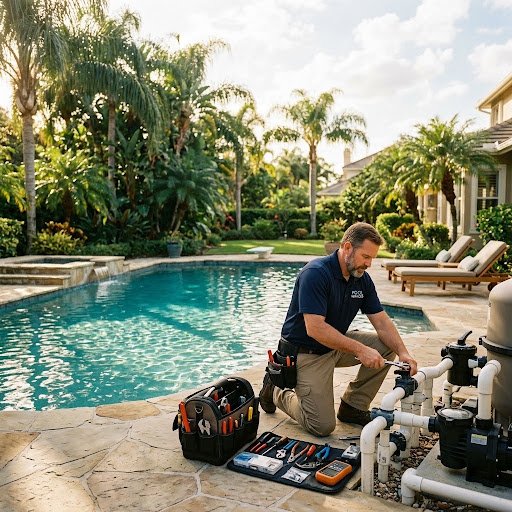
A quiet pool is a happy pool—until it isn’t. One day, everything is running smoothly; the next, your pump is making strange noises, your filter is struggling to keep up, or your heater refuses to kick on. Pool equipment doesn’t fail dramatically overnight. It gives you signals, and knowing what to look for can mean the difference between a quick fix and a costly overhaul.
At Palm Beach Pool & Spa Services, we’ve seen it all. And one thing holds every time: the earlier a problem is caught, the easier and more affordable it is to resolve.
What Causes Pool Equipment to Break Down?
Pool equipment works hard—often 24/7—to keep your water clean, safe, and swim-ready. Over time, that constant workload takes a toll. Several factors accelerate wear and tear:
- Chemical imbalances: Water that’s too acidic or too alkaline eats away at seals, gaskets, and metal components faster than normal use ever would.
- Debris buildup: Leaves, dirt, and algae don’t just make your pool look bad—they clog filters and strain pumps.
- Florida’s climate: Heat, humidity, and UV exposure put additional stress on equipment that might last a decade elsewhere but shows signs of aging sooner here.
- Infrequent servicing: Skipping routine maintenance doesn’t just delay the inevitable—it compounds problems over time.
Understanding these causes helps pool owners take proactive steps rather than reactive ones.
Common Pool Equipment Issues Palm Beach Homeowners Face
Pump Problems
The pump is the heart of your pool’s circulation system. When it fails, everything downstream suffers. Signs of pump trouble include unusual noises, reduced water flow, or the unit shutting off unexpectedly. In many cases, worn impellers, clogged baskets, or faulty motor capacitors are the culprit—all of which are serviceable with the right expertise.
Filter Failures
Your filter’s job is to remove contaminants from the water. A filter that’s backwashing too frequently, losing pressure, or failing to keep water clear is a filter in distress. Sand filters may need media replacement, while cartridge filters often require cleaning or a new cartridge. DE filters can crack internally without any obvious exterior signs.
Heater Malfunctions
Pool heaters—whether gas or electric—are complex systems with multiple components that can fail independently. Ignition issues, heat exchanger corrosion, and sensor errors are among the most common complaints. A heater that cycles on and off or refuses to reach temperature is signaling a repair need that shouldn’t be ignored.
Saltwater System and Chlorinator Issues
Saltwater pools are popular in Palm Beach for good reason—they’re gentler on skin and easier to maintain. But salt chlorine generators do require attention. Cell buildup, low salt readings, and flow sensor errors are frequent issues that reduce sanitizing effectiveness.
Why Timely Pool Equipment Repair Pays Off
Here’s where the math matters. A pump seal replacement today might cost a fraction of what a full motor replacement will cost if water is allowed to reach the motor housing. A cracked filter tank becomes a liability—and a safety hazard—if left unaddressed.
Pool Equipment Repair done promptly by trained technicians keeps your system running efficiently, reduces your energy bills, and extends the overall lifespan of every component in your setup—saving you from the expense and disruption of premature full-system replacements.
Beyond the financial side, there’s peace of mind. A well-maintained pool is a pool you can trust. No unexpected closures. No cloudy water right before a weekend gathering. No scrambling for emergency service calls.
What Sets Professional Repair Apart from DIY Attempts
Some pool owners attempt to handle repairs themselves. For minor tasks—like cleaning a skimmer basket or rinsing a cartridge filter—that’s perfectly fine. But anything involving electrical components, pressurized systems, or gas connections is a different story entirely.
Professional technicians bring diagnostic tools and hands-on experience that make a real difference. A motor that appears to have a wiring issue might actually have a capacitor fault—misdiagnosis leads to replacing the wrong part and spending more than necessary. Trained eyes catch secondary issues that aren’t yet causing problems but soon will.
Palm Beach Pool & Spa Services technicians are equipped to handle all major equipment brands and system types, from variable-speed pumps and smart automation systems to aging single-speed setups that need upgrading.
Recognizing the Signs That Service Is Overdue
You don’t need to be a pool expert to notice when something is off. Watch for:
- Higher-than-usual energy bills: A struggling pump or heater draws more power.
- Water clarity issues that persist despite chemical treatment: Often a filtration problem.
- Unusual sounds from the equipment pad: Grinding, humming, or air-sucking noises warrant a look.
- Visible leaks or moisture near equipment: Even small drips lead to major damage over time.
- Equipment that shuts off unexpectedly: Often an early sign of electrical or thermal issues.
If any of these sound familiar, the right move is to get a professional assessment sooner rather than later.
Keeping Your Pool in Peak Condition Year-Round
Repair and maintenance go hand in hand. Palm Beach Pool & Spa Services offers scheduled maintenance programs that keep your equipment in peak shape throughout the year. Regular inspections catch wear before it becomes failure. Chemical balancing protects equipment from corrosion. And when something does need attention, you’re already working with a team that knows your system inside and out.
Your pool represents a significant investment in your home and lifestyle. The equipment that keeps it running deserves the same care and attention as the pool itself.
Frequently Asked Questions
How often should pool equipment be professionally inspected?
At minimum, once a year—ideally before heavy use season begins. For pools in continuous use, every six months is a better target.
Can a damaged pool pump be repaired, or does it always need to be replaced?
Many pumps can be repaired by replacing individual components like impellers, seals, or capacitors. Full replacement is typically only necessary when the motor housing is cracked or when the unit is significantly outdated.
What is the average lifespan of pool equipment in Palm Beach’s climate?
With proper maintenance, pumps typically last 8–12 years, filters 10–15 years, and heaters 7–10 years. Florida’s heat and humidity can reduce these timelines without regular servicing.
Is it safe to use the pool while equipment is malfunctioning?
It depends on the issue. Filtration problems can lead to unsafe water quality, while electrical faults pose direct safety risks. When in doubt, it’s best to suspend use until a professional has assessed the situation.
Does Palm Beach Pool & Spa Services work on all equipment brands?
Yes. The team services all major brands and equipment types, including variable-speed pumps, salt systems, automation controllers, and both gas and electric heaters.