
Trees add undeniable beauty and value to any property. They provide shade, improve air quality, and boost curb appeal in ways that few other landscaping features can match. But beneath that natural charm, some trees carry hidden dangers that aren’t visible to the untrained eye. That’s exactly where professional tree risk assessment becomes not just useful—but essential.
At Arborwright Tree Care, we’ve seen firsthand what can happen when tree health goes unchecked. What looks like a perfectly healthy oak from the outside can be harboring internal decay, compromised root systems, or structural weaknesses that put your property and loved ones at real risk. The good news? With the right professional service, those risks can be identified and addressed long before they become a crisis.
What Makes a Tree Dangerous—and Why It’s Hard to Tell
Most property owners are surprised to learn that a visually appealing tree can be structurally unsound. Trees can develop problems over time due to environmental stress, disease, pest damage, improper pruning, soil compaction, or even lightning strikes. Many of these conditions develop slowly and silently, which is precisely what makes them so dangerous.
Common warning signs include:
- Leaning trunks that weren’t there before
- Dead or hanging branches in the canopy
- Fungal growth at the base of the tree (often indicating internal rot)
- Cracks or splits in the main trunk
- Heaving soil near the root zone
The challenge is that even experienced homeowners can mistake a dangerous tree for a healthy one. Some of the most significant decay happens internally, with no surface-level indication until the tree is already in a critical state. That’s why a professional assessment by a certified arborist is the most reliable tool available for accurate detection.
How Arborwright Tree Care’s Assessment Process Works
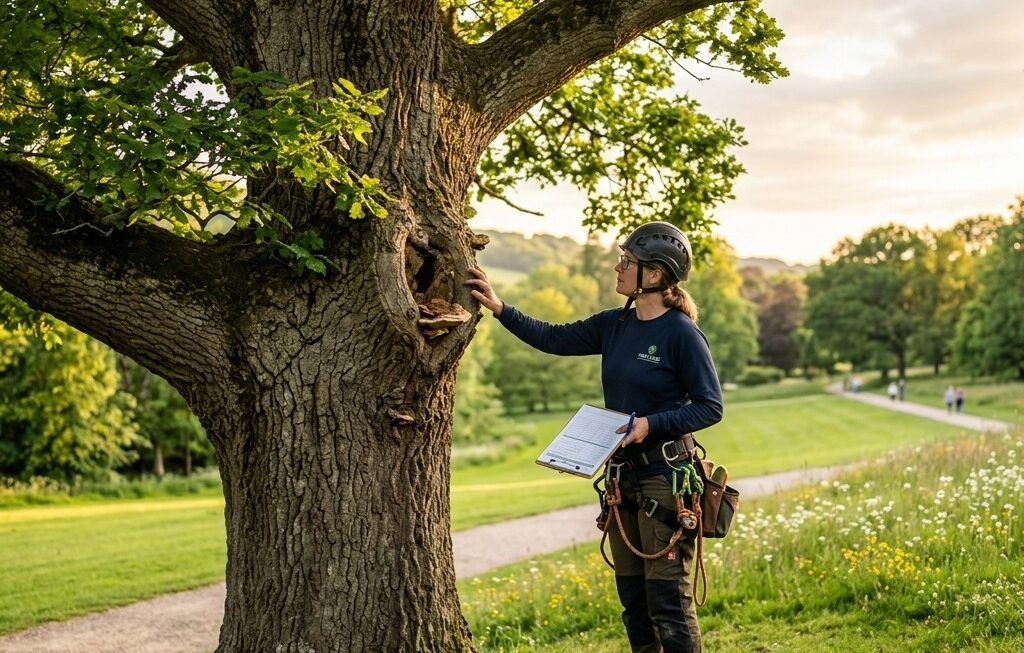
When Arborwright Tree Care conducts a tree risk assessment, the process is thorough, methodical, and tailored to the specific conditions of each property. Our certified arborists don’t just walk around and glance at the canopy—they conduct a comprehensive evaluation that covers every aspect of the tree’s health and structural integrity.
Visual Inspection and Structural Evaluation
The first step involves a detailed visual inspection of the entire tree—from the roots to the crown. Arborists look for signs of decay, disease, pest activity, structural defects, and environmental stressors. This stage often reveals issues that untrained eyes would completely overlook.
Advanced Diagnostic Tools
For trees showing internal symptoms or high-risk indicators, Arborwright Tree Care uses advanced diagnostic tools to assess what can’t be seen from the outside. Resistograph drilling and sonic tomography are among the techniques used to detect internal decay without damaging the tree. These tools allow for precise data collection that informs every recommendation we make.
Risk Rating and Reporting
After the inspection is complete, each tree is assigned a risk rating based on the likelihood of failure and the potential consequences if it were to fall. Property owners receive a clear, easy-to-understand report outlining findings, risk levels, and recommended actions—whether that’s routine pruning, cabling and bracing, or removal in higher-risk cases.
The Real Cost of Skipping Professional Tree Care
It’s tempting to put off professional tree services, especially when a tree looks fine on the surface. But the financial and safety costs of ignoring tree risk can be significant.
A fallen tree can cause:
- Structural damage to your home, fences, or vehicles
- Injury or fatality to people on your property
- Legal liability if the tree falls onto a neighbor’s property
- Expensive emergency removal costs that far exceed routine maintenance fees
In many cases, insurance companies will not cover damage caused by a tree that showed prior signs of distress—making documented professional assessments even more important from a financial standpoint.
Routine assessments from Arborwright Tree Care offer a cost-effective way to stay ahead of these problems. The cost of identifying and treating a compromised tree is almost always a fraction of the cost of emergency cleanup, property repairs, or legal proceedings.
When Should You Schedule a Tree Risk Assessment?
There’s no single rule that applies to every property, but there are key moments when scheduling a professional assessment should be a priority:
- After a major storm: High winds and heavy rain can weaken even healthy trees
- When a tree shows visible symptoms: Fungal growth, canopy dieback, or unusual leaning shouldn’t be ignored
- Before buying or selling a property: Knowing the health status of trees can affect property value and negotiations
- Annually for large or mature trees: Older trees carry more structural risk and benefit most from regular monitoring
- After construction work nearby: Soil compaction and root disturbance from construction can compromise tree stability over time
Protecting Your Property Starts With the Right Expertise
Tree risk assessment done by qualified professionals gives property owners the clarity, confidence, and actionable recommendations they need to protect their homes, families, and landscapes from the very real dangers that compromised trees can pose. At Arborwright Tree Care, our certified arborists bring the training, tools, and local expertise required to deliver accurate, reliable results every time.
Waiting until something goes wrong is never the right strategy when it comes to trees on your property. Proactive assessments not only protect what matters most—they also preserve the trees that are healthy and worth keeping.
Ready to get a clearer picture of the trees on your property? Contact Arborwright Tree Care today to schedule your professional tree risk assessment and take the guesswork out of tree safety.