
If you are searching for a tide chart Littlehampton visitors can actually use, you are probably trying to answer a simple question: when will the sea be high or low? That information can make a surprisingly big difference to a day beside the water. Littlehampton, on the West Sussex coast, has a changing shoreline, and the appearance and accessibility of the beach can be noticeably different depending on the state of the tide.
A tide chart gives you the predicted times of high and low water for a particular location. For anyone visiting Littlehampton for a walk, photography, fishing, boating, beach activities or simply a relaxed seaside afternoon, checking the tide before setting out is a sensible habit. It helps you understand what conditions are likely to look like rather than relying on the time of day alone.
It is also worth remembering that a tide chart is a prediction, not a guarantee of exactly what the sea will do. Weather, atmospheric pressure, wind direction and other conditions can influence the actual water level. That is why a good approach combines tide predictions with a look at the latest weather and local conditions.
Understanding the Tide Chart Littlehampton
A tide chart for Littlehampton normally shows two key events: high tide and low tide. High tide is when the sea reaches a relatively high point during the tidal cycle, while low tide is when the water retreats to a relatively low level. Because the Earth, Moon and Sun interact in predictable ways, these cycles can be forecast well in advance.
The timing does not remain fixed from one day to the next. Tides generally move through the day, meaning that a high tide on one afternoon could occur considerably earlier or later on another date. This is one of the main reasons checking a current tide table is more useful than relying on a general statement such as “high tide is usually in the afternoon.”
For visitors, the difference between high and low water can change the character of Littlehampton’s seafront. At low tide, more of the shoreline may be exposed, while high water can bring the sea much closer to the promenade and other coastal areas. The exact experience depends on the location, weather and coastal conditions on the day.
Why Littlehampton Tides Matter for Beach Visits
A visit to the beach can feel completely different depending on the tide. When the water has retreated, there may be considerably more exposed sand and opportunities to explore areas that are covered at higher water levels. This can make low tide appealing for coastal walks, photography and simply seeing more of the shoreline.
High tide creates a different atmosphere. The sea occupies more of the beach, waves may appear closer to coastal structures, and the shoreline can become less suitable for activities that require a large area of exposed sand. If your main goal is swimming or enjoying the sea close to shore, however, the timing of high water may be less important than it is for walking.
Families should pay particular attention to changing conditions. Children exploring the beach can become fascinated by rock pools, channels and areas of wet sand, but the water can return faster than expected. A tide chart should therefore be treated as one part of sensible coastal planning rather than as permission to enter an area simply because it is exposed at a particular moment.
How to Read a Littlehampton Tide Table
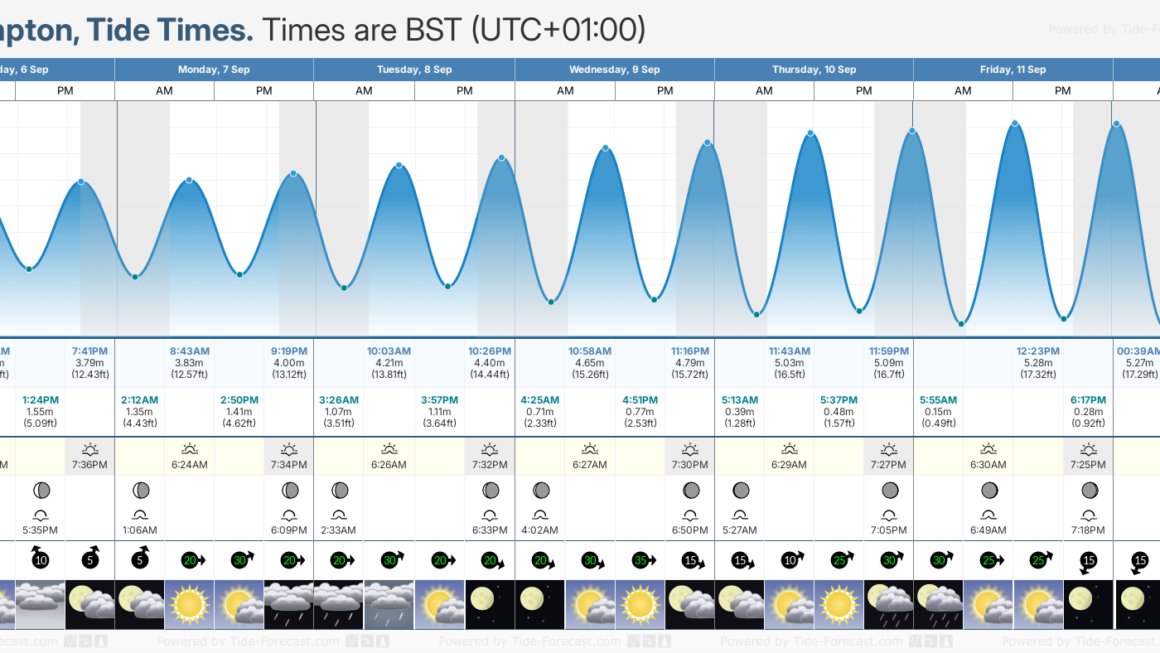
Reading a tide table is easier than it initially appears. Most charts list a date, followed by predicted high and low tide times. They may also provide predicted water heights, usually in metres. The time tells you when the tidal event is expected, while the height gives you an indication of how high or low the water may be.
For example, a hypothetical tide table could show a low tide in the morning followed by a high tide later in the day. That tells you the sea is expected to retreat during the first part of the cycle before returning toward the coast. The following low tide would then occur later, continuing the repeating tidal pattern.
Pay attention to whether the information refers specifically to Littlehampton or to another nearby coastal station. Tidal times and heights vary geographically. A chart for a different harbour or beach may be useful for general understanding, but it should not automatically be treated as an exact Littlehampton prediction.
High Tide and Low Tide: What Is the Difference?
High tide occurs when the water level reaches one of its higher points in the tidal cycle. At Littlehampton, this can mean that considerably more of the beach is covered compared with several hours earlier. The sea can look much more dominant from the shore, particularly when combined with wind and larger waves.
Low tide occurs when the water level reaches a lower point. More of the beach becomes visible, and the shoreline can extend farther away from areas that are normally close to the water. This is often when people notice just how much the coastal landscape changes during a single tidal cycle.
Neither high tide nor low tide is automatically “better.” The best time depends on what you want to do. Someone interested in a long beach walk may prefer conditions around a suitable part of the falling or low tide, while someone wanting to watch waves may enjoy a different stage of the cycle. The important point is to match your plans with the predicted conditions.
Using Tide Times for Coastal Walks
If you are planning a coastal walk around Littlehampton, tide timing deserves a place alongside your route planning. Some stretches of coast are straightforward at different stages of the tide, while other areas can become less convenient or potentially hazardous as water advances.
A common mistake is to look only at the time of low tide. The sea does not suddenly remain at its lowest point for hours. The tide turns and begins rising again, and the available beach can gradually shrink. If you are walking near the water’s edge, that change can matter considerably.
Give yourself plenty of time rather than trying to calculate the route down to the last few minutes. Tide predictions can vary from actual conditions, and walking speed is rarely perfectly consistent. A comfortable margin makes a coastal trip much more enjoyable and reduces the temptation to rush when the water begins coming back.
Tide Charts and Fishing in Littlehampton
Fishing is another reason people search for a tide chart in Littlehampton. Tidal movement influences where water flows, how bait and other material move, and how fish may behave in coastal environments. Experienced anglers often consider the stage of the tide alongside weather, season, location and other factors.
The changing water can create different fishing conditions as it moves toward or away from the shore. This does not mean that every high tide or low tide will produce the same result. Local knowledge and experience remain extremely valuable because tides are only one part of the overall picture.
If you are fishing from the coast, safety should always come before the hope of a better catch. Check the forecast, understand the area you intend to fish and avoid assuming that a familiar location will have identical conditions every time. Tide predictions are helpful planning information, but they cannot eliminate the risks associated with changing coastal weather and water conditions.
How Weather Can Change the Tide Experience
A tide chart is based on astronomical predictions, but the sea is also affected by weather. Strong winds can push water toward or away from the coast, while changes in atmospheric pressure can influence observed water levels. As a result, the actual sea level can differ from the predicted figure.
This becomes especially important when the weather is unsettled. A relatively ordinary predicted tide can feel very different when strong onshore winds are producing larger waves. Conversely, calm conditions can create a much quieter-looking shoreline even during a similar stage of the tidal cycle.
For that reason, checking the tide chart should never be the only step before a coastal outing. Look at the latest weather forecast and any relevant local safety information as well. If conditions look rough, it is usually better to change your plans than to assume the tide prediction alone tells you how the sea will behave.
The Best Way to Plan Around Littlehampton Tides
The simplest approach is to start with your activity and work backward. Decide whether you want to walk, take photographs, fish, enjoy the beach, explore the seafront or simply watch the sea. Then check the predicted high and low tides for the date of your visit.
Next, consider how much time your activity requires. A short stroll gives you plenty of flexibility, whereas a longer coastal walk may require much more careful attention to the direction in which the tide is moving. If you are unfamiliar with the area, allow additional time rather than relying on a tight schedule.
Finally, check the weather close to your visit. Forecast conditions can change, and the combination of tide, wind and waves is much more useful than any one measurement by itself. This three-step method—activity, tide and weather—is a straightforward way to make better coastal plans.
Tide Chart Littlehampton for Photography
Littlehampton’s changing shoreline can be particularly interesting for photographers. Low water can reveal patterns in wet sand, channels and reflections, while higher water can create stronger wave activity and different compositions along the coast.
Photographers who want to capture sunrise or sunset should pay attention to both the tide and the time of day. A beautiful sky does not necessarily produce the image you imagined if the shoreline is at an unexpected stage of the tidal cycle. Planning both elements together gives you more control over the final composition.
That said, tides should not be treated simply as a photography tool. Wet rocks, slippery surfaces and incoming water can create genuine hazards. Keep a safe distance from the water and avoid standing in places where you could become cut off as the tide rises.
Why Tide Predictions Are Not Exact Guarantees
One of the most important things to understand about any tide chart is that predicted times and heights are estimates based on established tidal patterns. They are extremely useful, but real-world conditions can cause differences.
Atmospheric pressure, wind and other environmental factors can influence the actual water level. Local coastal geography also affects how water behaves. Two locations that appear relatively close together on a map can experience noticeably different tidal conditions.
That is why responsible planning includes some flexibility. If the chart predicts low tide at a particular time, do not assume the sea will behave like a perfectly timed machine. Use the information as a planning guide, stay alert when you are near the water and respond to the conditions you can actually see.
Staying Safe When Following a Tide Chart
Understanding tides is ultimately about more than convenience. The sea can be unpredictable, and rising water can change access to parts of a beach surprisingly quickly. If you are exploring the coastline, always think about how you will return before moving into a more isolated section.
Avoid entering areas that could become surrounded by water as the tide rises. This is especially important around rocks, channels, harbour structures and unfamiliar stretches of coastline. What looks like an easy route at low tide may not remain accessible later.
If conditions become uncomfortable, turn back early. There is little value in completing a planned walk if doing so means taking unnecessary risks. A tide chart is one of the best tools available for preparation, but good judgment remains just as important.
Final Thoughts on Tide Chart Littlehampton
A reliable tide chart Littlehampton search can be the starting point for a much better coastal day. Knowing when high and low water are expected helps you choose a suitable time for walking, photography, fishing, beach activities and simply enjoying the seafront.
The key is not to focus on one tide time in isolation. Look at the complete tidal cycle, consider the direction in which the water will be moving, and allow enough time for your activity. Then add the latest weather forecast and local safety information before heading out.
Littlehampton is a coastal destination where the sea constantly changes the landscape. A few minutes spent checking tide information can help you understand those changes and plan around them. Whether you are a regular visitor or seeing the area for the first time, treating tide predictions as part of your normal preparation is a simple habit that can make your visit safer, easier and more enjoyable.
You May Also Raed: Englishtistic