
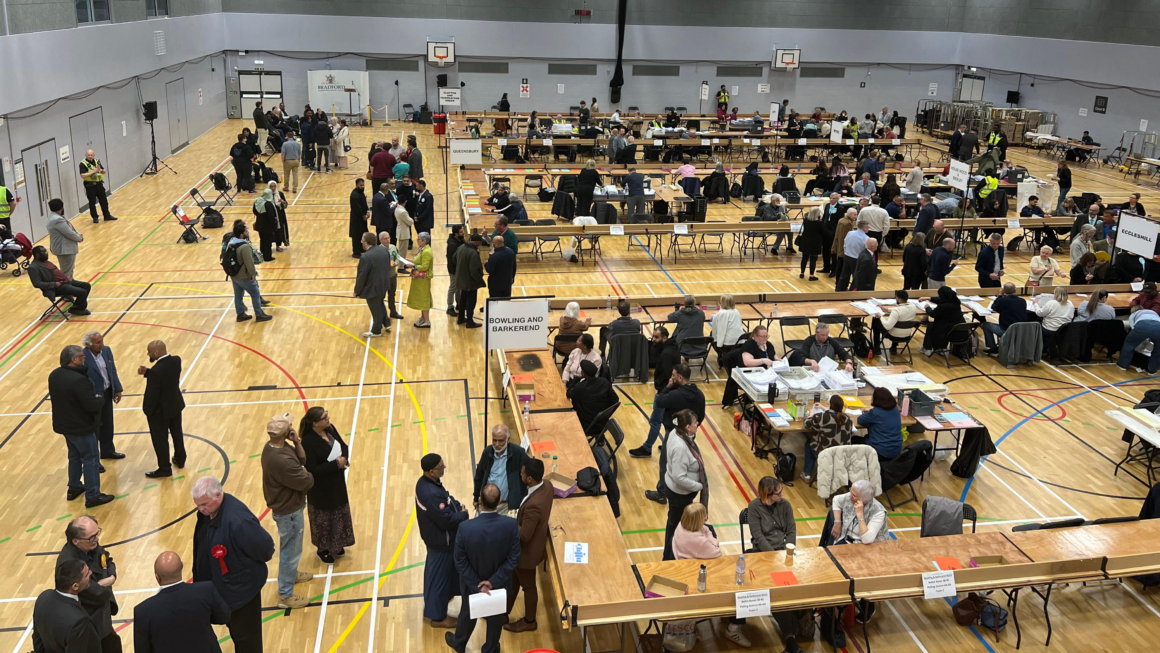
The Bradford local elections 2026 were among the most closely watched local contests in West Yorkshire, producing a major shake-up in the political balance of Bradford Council. Held on 7 May 2026, the election was an all-out contest, meaning every one of the council’s 90 seats was up for election. The result ended Labour’s previous control of the council and left Bradford with no overall majority.
What made the election particularly significant was the scale of change. Reform UK emerged as the largest political group with 29 seats, while the Conservatives finished with 18 and Labour dropped to 17. Greens, independents and other candidates also secured representation, creating a much more fragmented council than Bradford had seen previously.
For local residents, however, elections are about much more than party numbers. Bradford Council is responsible for a wide range of services that affect everyday life, from roads and waste collection to planning, housing, social care and local development. That means the political changes resulting from the 2026 election could have a practical impact across the district.
Why the Bradford Local Elections 2026 Were Different
One of the most important features of the Bradford local elections 2026 was the introduction of new ward arrangements. Bradford’s previous wards were abolished and replaced by 30 new wards, with three councillors elected in each ward. This meant all 90 council positions were contested at the same election.
The new electoral system also created an unusual arrangement for councillors’ terms. The candidate receiving the highest number of votes in each ward receives a four-year term, while the second- and third-placed successful candidates initially receive shorter terms. According to Bradford Council, the second-highest vote winner serves until May 2028, while the third serves until May 2027.
This matters because voters were not simply choosing a political party for the next four years. They were also helping determine which individual candidates would have longer or shorter periods in office. In practical terms, the 2026 election established the foundations of Bradford’s new ward structure and its future electoral cycle.
Bradford Local Elections 2026 Results Explained
The overall result represented a dramatic change from the previous political make-up of Bradford Council. Reform UK won 29 seats and became the largest group, while the Conservatives took 18 seats. Labour, which had previously been the dominant party, was reduced to 17 seats. The Greens secured nine seats, and independents and other parties also retained a meaningful presence.
No party reached the 46 seats required for an overall majority on a 90-member council. As a result, Bradford entered a period of no overall control. That does not necessarily mean the council cannot function, but it does mean that political groups need to negotiate and build support to pass decisions and establish an administration.
The scale of Labour’s losses was particularly notable. The party went into the election with a much stronger position but lost a large number of seats during the all-out contest. Reform UK’s breakthrough was equally significant, gaining 29 seats in a council where it had previously had no representation according to the published election comparisons. The Conservatives also improved their position, while smaller parties and independents continued to influence the overall picture.
Reform UK Becomes the Largest Group in Bradford
Reform UK’s performance was arguably the headline story of the Bradford local elections 2026. Winning 29 of the 90 seats gave the party more councillors than any other individual political group, although it fell well short of the 46 required for a majority.
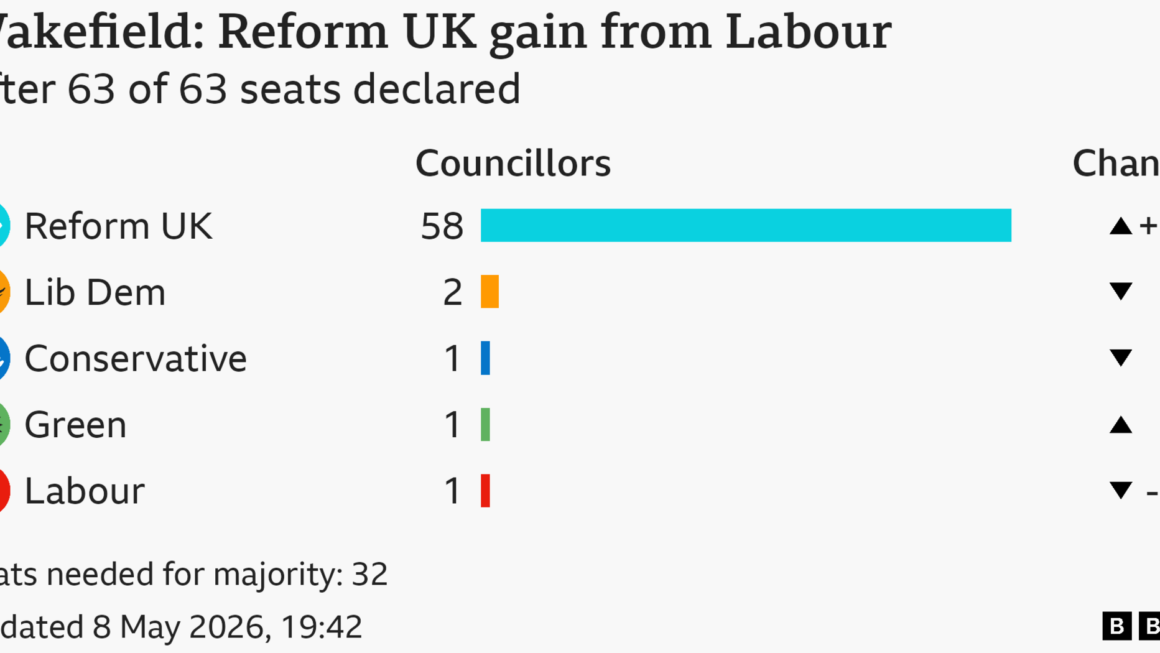
The result reflects a wider pattern seen across several parts of Yorkshire during the 2026 local elections. Reform also made substantial gains in neighbouring authorities, including Wakefield, Calderdale and Barnsley. In Bradford, however, the result was distinctive because the council became politically fragmented rather than moving directly from one-party control to a Reform majority.
Being the largest group gives Reform UK an important position, but it does not automatically mean the party controls the council. With 29 councillors, it needs support from other groups or individual councillors to secure votes on major decisions. That makes alliances, agreements and issue-by-issue cooperation particularly important in Bradford’s post-election politics.
Labour’s Loss of Control Changes Bradford Politics
Labour’s fall to 17 seats was another defining feature of the Bradford local elections 2026. The party had previously been the dominant force on the council, making the scale of its losses a major political development. The election therefore represented not just a change in individual councillors but a significant change in the balance of power across the district.
One of the most prominent casualties was Susan Hinchcliffe, the long-serving former leader of Bradford Council. She lost her seat during the election, ending her period as a councillor and highlighting how significant the political shift was. Her time in local government had included major projects and developments associated with Bradford’s regeneration and cultural ambitions.
For Labour, the challenge now extends beyond the immediate election result. The party will need to rebuild its local presence, understand why voters moved away from it in different parts of the district and develop a strategy for the next round of elections. With further Bradford council elections scheduled for 2027, the party has relatively little time to wait before voters have another opportunity to judge its local performance.
What the Results Mean for Bradford Residents
For most residents, the biggest question after the Bradford local elections 2026 is not which party won the most seats but what will actually change. Local councils deal with services that are visible in everyday life, including waste collection, road maintenance, planning decisions, housing, social care and local environmental issues. The political make-up of the council can therefore influence priorities and spending decisions.
A council without an overall majority may lead to more negotiation before major policies are approved. That can sometimes make decision-making slower, but it can also encourage different political groups to work together. In Bradford’s case, the combination of Reform UK, Conservatives, Labour, Greens and independent councillors means that no single group can simply assume that it has enough votes for every major decision.
The practical impact will depend heavily on how councillors use their positions. Local representatives are elected to serve individual wards as well as participate in council-wide decisions. Issues such as potholes, housing development, public spaces, transport, neighbourhood facilities and local economic growth are likely to remain important regardless of which political group leads particular committees or forms an administration.
What Happens Next After the 2026 Election?
The Bradford local elections 2026 were only the beginning of a new electoral cycle rather than the end of the story. Bradford Council confirms that the next scheduled district council elections will take place on 6 May 2027. Thirty seats will be contested, with one councillor elected for each ward.
The 2027 election will be particularly interesting because of the staggered terms created by the 2026 boundary changes. The councillor in each ward who received the third-highest number of votes in 2026 is scheduled to retire first, in 2027. This means voters will soon have another opportunity to change the political balance of individual wards.
There have also been electoral developments in Bradford since the main May contest. The council’s official election records list the Idle and Thackley district council by-election held on 18 June 2026, alongside the May local election results. This illustrates why keeping track of individual by-elections is important when assessing the council’s changing composition.
Why the Bradford Local Elections 2026 Matter Beyond Bradford
The Bradford result also fits into a much broader political story across England. The 2026 local elections produced significant changes in several councils, with Reform UK making substantial gains in a number of areas while Labour suffered losses in several traditional areas of strength. Yorkshire was particularly notable for the scale of political change recorded across multiple metropolitan councils.
Bradford’s result is especially useful as an example of how local politics can become increasingly competitive. Rather than simply replacing one majority with another, voters produced a council containing several substantial political groups. That creates a more complicated political environment in which negotiation and coalition-building can become just as important as winning seats.
It also shows why local election results deserve attention even when there is no national election taking place. Council decisions can directly affect communities, businesses and households. The Bradford local elections 2026 changed who represents residents, altered the balance of political power and created a new framework for the next several years of local government.
Final Thoughts on Bradford Local Elections 2026
The Bradford local elections 2026 marked a major turning point for the district. With all 90 council seats contested under new ward arrangements, voters delivered a result that ended Labour’s previous control and produced a council with no overall majority. Reform UK became the largest group with 29 seats, followed by the Conservatives with 18 and Labour with 17.
The most important consequence is that Bradford’s political future is now much less predictable. Reform UK has the largest group but cannot govern alone on the numbers. Labour remains a significant presence despite its losses, while the Conservatives, Greens, independents and other councillors have enough representation to matter in council decisions.
For residents, the real test will be what happens after the votes have been counted. Political parties can make promises during an election campaign, but local government is ultimately judged on delivery. Roads, rubbish collection, housing, planning, social care, regeneration and the quality of neighbourhood services will provide the clearest measure of whether Bradford’s new political era succeeds.
With another set of council seats scheduled to be contested in 2027, the story is far from finished. The Bradford local elections 2026 have created a new political landscape, but the decisions made over the coming months will help determine whether that landscape becomes a lasting transformation or simply the first stage of another period of political change.
You May Also Raed: Englishtistic