
Have you ever stopped while writing and wondered whether it should be blond or blonde? You’re not alone. The debate around blond vs blonde is one of the most common spelling questions in English, especially when describing hair color or people with fair hair.
Although the two words look nearly identical, they have distinct origins and usage rules. Understanding the difference can help you write more accurately and confidently, whether you’re following formal grammar guidelines, AP Style, or everyday English conventions.
In this guide, you’ll learn the meaning of each term, when to use them, how they differ in British and American English, and why both spellings continue to exist today.
What Do Blond and Blonde Mean?
Both blond and blonde refer to a light yellow or golden hair color. They can also describe a person who has that hair color.
The words come from French, where nouns and adjectives often have masculine and feminine forms:
- Blond = masculine form
- Blonde = feminine form
English borrowed both spellings and, to some extent, retained the distinction.
Basic Meaning
Examples:
- He has blond hair.
- She has blonde hair.
- The blond man smiled.
- The blonde woman waved.
In modern English, both spellings generally refer to the same hair color. The difference lies primarily in grammar and style preferences.
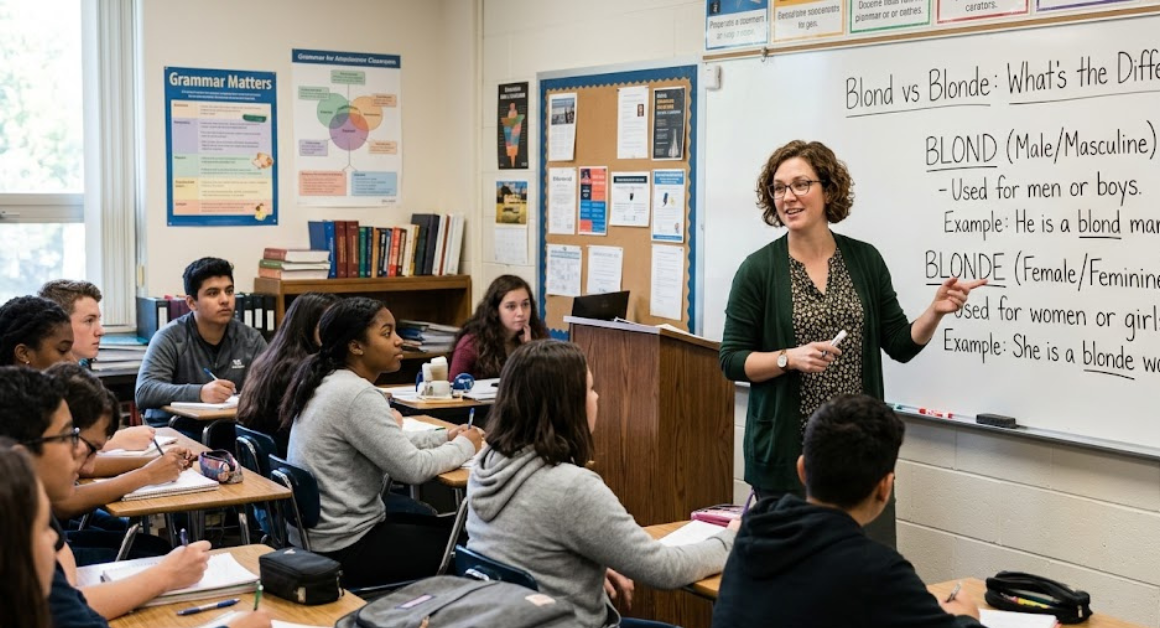
Blond vs Blonde Difference Explained
The traditional rule is straightforward:
- Use blond for males.
- Use blonde for females.
Examples:
- A blond boy
- A blonde girl
- A blond actor
- A blonde model
This distinction originated from French grammar and became common in English writing during the nineteenth and twentieth centuries.
However, modern usage has become more flexible, particularly in American English.
When to Use Blond vs Blonde
If you’re wondering when to use blond vs blonde, follow these simple guidelines.
Use Blond When:
- Referring to a male person
- Describing hair in a gender-neutral way
- Following certain modern style guides
Examples:
- The blond surfer won the competition.
- His blond hair shines in the sunlight.
- Several blond children played on the beach.
Use Blonde When:
- Referring specifically to a female person
- Following traditional grammar conventions
Examples:
- The blonde actress appeared on stage.
- She is a natural blonde.
- The blonde woman introduced herself.
In many modern publications, the distinction is becoming less strict, but these traditional rules remain widely recognized.
Blond vs Blonde Grammar Rules
From a grammar perspective, both words can function as:
- Adjectives
- Nouns
As Adjectives
- He has blond hair.
- She has blonde hair.
As Nouns
- He is a blond.
- She is a blonde.
When used as nouns, the gender distinction is usually more noticeable.
Many editors still prefer maintaining the traditional separation when referring to people directly.
Blond vs Blonde in English
Usage varies depending on region and publication style.
American English
In the United States:
- Both spellings are accepted.
- Many writers use blond as the general adjective.
- Blonde often appears when referring specifically to women.
Examples:
- blond hair
- blonde woman
British English
In the United Kingdom:
- The distinction between masculine and feminine forms remains somewhat more common.
- Traditional publishing often follows the French-derived rule.
As a result, blond vs blonde UK usage tends to preserve the gender difference more consistently than some American publications.
Blond vs Blonde Hair
One of the biggest sources of confusion involves hair color descriptions.
Many modern style guides recommend:
- blond hair for general descriptions
- blonde primarily when referring to a woman
Notice that even when describing a woman’s hair, many editors now choose blond hair rather than blonde hair.
This trend reflects the gradual simplification of English spelling conventions.
Dirty Blond vs Blonde
The phrase dirty blond refers to a darker shade of blond hair that contains brown or ash tones.
Examples:
- dirty blond hair
- dirty blond highlights
While some people write “dirty blonde,” both versions appear in modern usage.
Style guides often prefer:
- dirty blond hair
- a dirty-blonde woman
The choice frequently depends on whether the word describes the hair itself or the person.
Blond vs Blonde Spelling: Why Are There Two Versions?
The existence of two spellings comes directly from French linguistic influence.
French adjectives change according to gender:
- blond (masculine)
- blonde (feminine)
English borrowed both forms but never fully integrated the French gender system. As a result, modern writers often struggle to determine which version to use.
Over time, many English speakers began treating the words as interchangeable, especially in informal contexts.
Blond vs Blonde Pronunciation
One interesting fact is that pronunciation remains identical.
Both words are pronounced:
/blɒnd/ in British English
/blɑːnd/ in American English
The extra “e” in blonde does not create a different sound.
Because pronunciation never changes, many people don’t realize there are two accepted spellings until they encounter them in writing.
Blond vs Blonde AP Style
The Associated Press (AP) Stylebook generally recommends:
- blond as the adjective for both males and females
- blonde only as a noun referring to a woman
Examples:
This approach simplifies usage and reduces unnecessary gender distinctions.
Journalists and professional writers often follow AP guidelines, making this one of the most common conventions in American media.
Blond vs Blonde Adjective Usage
As adjectives, both words modify nouns.
Examples:
- blond hair
- blond child
- blonde actress
- blonde singer
In modern editing, many publications increasingly favor blond as the standard adjective regardless of gender.
The noun form remains where gender differences are most commonly preserved.
Blond vs Blonde Wordle
Wordle players occasionally notice both spellings and wonder which one is valid.
The answer depends on the puzzle’s accepted word list. Since both spellings exist in standard English dictionaries, either may appear as a valid guess.
However, Wordle’s official solution list has historically favored more common everyday spellings, so players often debate which version is more likely.
Frank Ocean: Blond vs Blonde Album
One of the most searched questions related to this topic concerns musician Frank Ocean.
His 2016 album is officially titled “Blond.”
However, many people mistakenly search for “Blonde” because it is the more familiar spelling.
The choice was intentional and became a widely discussed aspect of the album’s branding and artistic identity. Consequently, searches for frank ocean blond vs blonde remain popular years after the album’s release.
Common Mistakes People Make
Here are some frequent errors:
Mistake 1: Assuming One Spelling Is Incorrect
Both spellings are correct.
Mistake 2: Using Blonde for Every Situation
Many style guides recommend reserving blonde for female nouns.
Mistake 3: Thinking Pronunciation Changes
The pronunciation stays the same regardless of spelling.
Mistake 4: Ignoring Style Guide Preferences
Professional writing often follows specific editorial standards, so consistency matters.
Quick Memory Trick
If you struggle to remember the distinction, use this simple trick:
- Blonde ends with an “e.”
- Female also ends with an “e.”
Traditional rule:
- Female person = blonde
- Male person = blond
While not every publication follows this rule today, it remains an easy way to remember the historical distinction.
FAQs
Is blond or blonde correct?
Both are correct. The choice depends on context, style guide preferences, and whether you’re referring to a male or female person.
What is the difference between blond and blonde?
Traditionally, blond refers to males and blonde refers to females. Modern English often uses blond as a gender-neutral adjective.
Is blonde hair grammatically correct?
Yes. However, many modern editors and style guides prefer blond hair regardless of gender.
Which spelling is used in the UK?
British English often preserves the traditional distinction between masculine and feminine forms more than American English.
Does AP Style use blond or blonde?
AP Style generally uses blond as an adjective and blonde only as a noun referring to a woman.
Are blond and blonde pronounced differently?
No. Both spellings have the same pronunciation.
Why is Frank Ocean’s album called Blond?
The album’s official title is Blond. The spelling was a deliberate artistic choice and has contributed to ongoing discussions about the two forms.
Can I use blond for women?
Yes. Many modern publications and style guides use blond as a gender-neutral adjective for both men and women.
Conclusion
Understanding blond vs blonde doesn’t have to be complicated. Both words describe the same hair color, but traditional English usage distinguishes between male and female references. Historically, blond referred to males and blonde referred to females, while modern style guides increasingly favor blond as a universal adjective.
If you’re writing casually, either spelling will usually be understood. For professional writing, it’s best to follow the style guide you’re using and stay consistent throughout your content. By knowing the history, grammar rules, and modern conventions, you’ll always know which spelling fits the situation best.