
Getting a new air conditioner is exciting—until the installation goes wrong. A poorly installed unit can waste energy, break down early, and leave you sweating through the hottest months of the year. That’s why the installation process matters just as much as the equipment itself.
At Rack Air, we’ve seen firsthand what a difference professional AC installation makes. From choosing the right unit size to ensuring every connection is sealed and secure, the details add up fast. This post breaks down what makes a quality AC installation, what to expect from the process, and why cutting corners simply isn’t worth the risk.
Why AC Installation Is More Than Just Plugging In a Unit
Many homeowners assume that once they’ve purchased an air conditioner, the hard part is over. In reality, the installation phase determines how well your system will perform for years to come.
An improperly sized unit, for example, will short-cycle—turning on and off too frequently—which drives up energy bills and wears out components faster. On the flip side, an undersized unit will run continuously without ever reaching the desired temperature. Neither scenario is acceptable when you’re investing in home comfort.
Ductwork, refrigerant levels, electrical connections, and airflow all need to be precisely calibrated. Miss any one of these, and the whole system suffers.
What a Professional AC Installation Actually Involves
Load Calculation: Finding the Right Fit for Your Home
Before a single wire is connected, a proper installation begins with a load calculation. This assessment accounts for your home’s square footage, insulation quality, ceiling height, sun exposure, and even the number of occupants. The result determines the exact cooling capacity your space requires.
Skipping this step is one of the most common mistakes made during DIY or budget installations—and one of the costliest to fix later.
Equipment Selection and Placement
Not all AC units are created equal. The right system depends on your home’s layout, existing ductwork, and energy efficiency goals. Central air systems, ductless mini-splits, and heat pumps all have their place, and a trained technician can recommend the best fit without overselling you on equipment you don’t need.
Placement matters too. The outdoor condenser unit needs adequate clearance and shade where possible, while indoor air handlers must be positioned to distribute air evenly throughout every room.
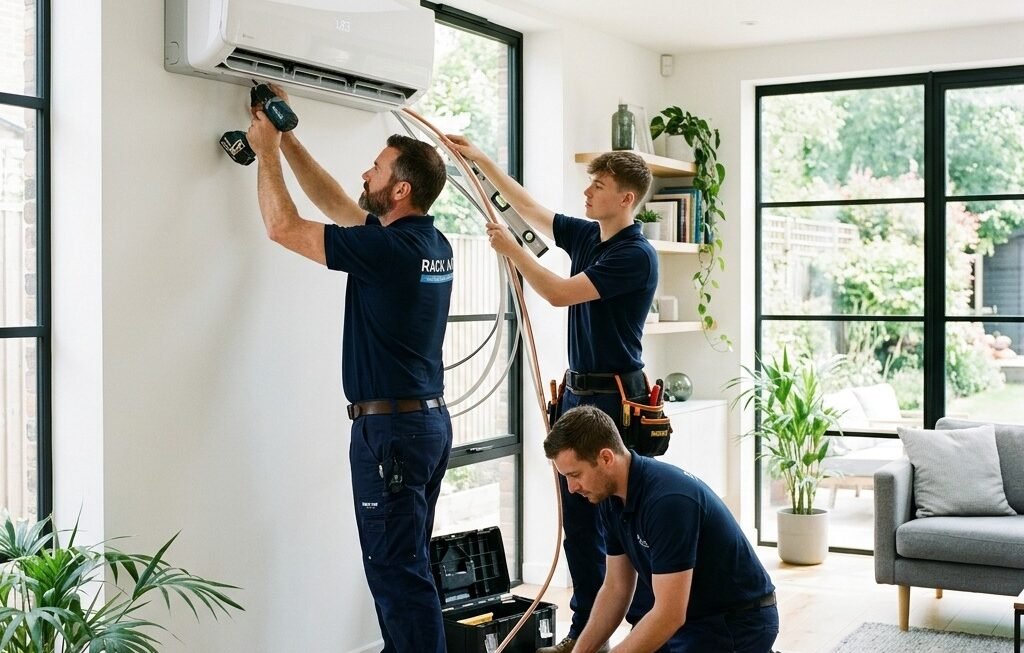
The Installation Process Step by Step
A professional AC installation typically follows a structured sequence:
- Site preparation: Clearing and leveling the area for the outdoor unit, and confirming mounting points for indoor components.
- Refrigerant line installation: Running insulated copper lines between the indoor and outdoor units.
- Electrical wiring: Connecting the system to your home’s electrical panel with the correct circuit breaker and wiring gauge.
- Ductwork inspection or installation: Sealing existing ducts or installing new ones to ensure minimal air loss.
- System startup and testing: Running diagnostics, checking refrigerant charge, verifying thermostat calibration, and confirming airflow balance.
Each step requires technical knowledge and the right tools. Rushing through any phase compromises the entire system.
The Real Cost of Getting AC Installation Wrong
A low-cost installation might seem appealing upfront, but the long-term expenses tell a different story. Studies from the U.S. Department of Energy suggest that duct leakage alone can account for up to 30% of energy loss in a typical home—most of which stems from poor installation.
Beyond energy waste, faulty installations can void manufacturer warranties, trigger safety hazards like refrigerant leaks, and reduce the lifespan of the equipment significantly. A central AC unit that should last 15 to 20 years might fail within 8 if it was never set up correctly.
How Rack Air Approaches Every AC Installation
Rack Air brings a commitment to precision, safety, and long-term performance to every job. Every installation starts with a thorough assessment of the home, followed by transparent recommendations tailored to the specific space—not a one-size-fits-all sales pitch.
Professional ac installation that maximizes your system’s energy efficiency, extends its lifespan, and keeps your home at the perfect temperature year-round is the kind of service that pays for itself many times over.
Rack Air technicians are trained and certified, meaning every installation complies with local building codes and manufacturer specifications. That matters both for safety and for keeping your warranty intact.
What to Expect After Your New System Is Installed
Once your AC is up and running, the experience should be immediate and noticeable. Consistent cooling, quieter operation, and lower energy bills are all signs of a well-executed installation.
Rack Air also provides a full system walkthrough after installation, so homeowners understand how to operate their thermostat, when to schedule filter changes, and what early warning signs to watch for. Knowing how to care for your system extends its life and prevents small issues from becoming expensive repairs.
Is Now a Good Time to Book an AC Installation?
Timing plays a bigger role than most people realize. Booking an installation before peak summer demand means shorter wait times, more scheduling flexibility, and the peace of mind of having your system ready before the heat hits.
Whether you’re replacing an aging unit, upgrading to a more energy-efficient model, or installing air conditioning for the first time, Rack Air is ready to make the process straightforward and stress-free.
Contact Rack Air today to schedule your consultation and take the first step toward a cooler, more comfortable home.