
Every workplace carries risk. The question is whether that risk is managed or simply tolerated. For organizations serious about protecting their people and staying ahead of regulatory demands, EHS safety assessments have become one of the most strategic investments a business can make—and Arbill is leading the charge in delivering them.
This post explores what EHS safety assessments actually do for a business, why they matter more than ever, and how Arbill’s expert-driven approach turns assessments into actionable transformation.
What Do EHS Safety Assessments Actually Evaluate?
An EHS (Environment, Health, and Safety) assessment is a systematic review of a workplace’s operations, processes, and physical environment. The goal is to identify hazards, evaluate current safety protocols, and determine where gaps exist before those gaps become incidents.
Arbill’s assessments go beyond surface-level checklists. They examine:
- Environmental compliance: Are hazardous materials stored, handled, and disposed of correctly?
- Health risk exposure: Are workers protected from chemical, biological, or ergonomic hazards?
- Safety program effectiveness: Do existing policies actually hold up under real-world conditions?
- Regulatory alignment: Are OSHA standards and industry-specific regulations being met?
This comprehensive scope means businesses aren’t just getting a snapshot—they’re getting a full diagnostic of their safety ecosystem.
The Real Cost of Skipping a Safety Assessment
Some organizations treat safety assessments as a box-checking exercise. Others skip them altogether until something goes wrong. Both approaches carry significant risk—financial, legal, and human.
Workplace injuries and illnesses cost U.S. employers billions each year in direct and indirect costs. Direct costs include medical expenses, workers’ compensation claims, and regulatory fines. Indirect costs—lost productivity, retraining, damaged morale, and reputational harm—can be two to ten times higher than direct costs, depending on the severity of the incident.
A proactive EHS assessment catches these risks before they escalate. The return on investment isn’t abstract. Fewer incidents mean lower insurance premiums, fewer regulatory penalties, and a more productive, stable workforce.
How Arbill Approaches EHS Safety Assessments Differently
Not all safety assessments are created equal. Many providers deliver reports that are thorough on paper but difficult to act on. Arbill takes a different approach—one built around practical outcomes, not just documentation.
Expert-Led, Site-Specific Evaluations
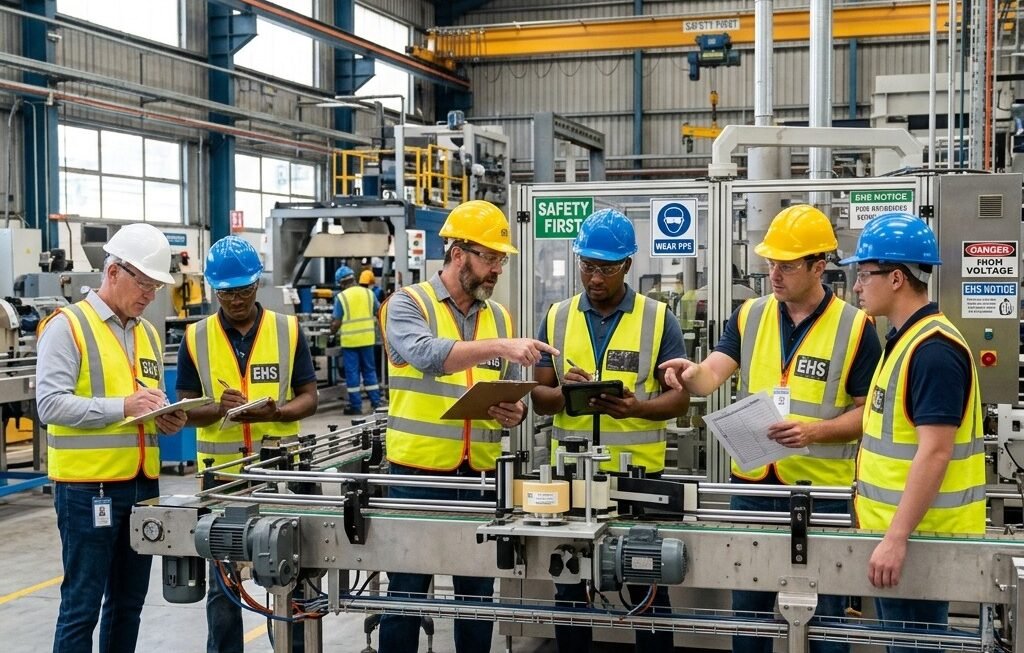
Arbill’s safety professionals don’t apply a one-size-fits-all template. Each assessment is tailored to the specific industry, site conditions, and operational context of the client. A manufacturing facility presents entirely different hazards than a distribution center or a construction site. Arbill’s team arrives with the technical knowledge to assess each environment accurately.
Clear, Prioritized Findings
After an assessment, organizations receive findings organized by severity and urgency. This prioritization gives safety managers and leadership a clear action plan—addressing the most critical risks first, then working through lower-priority items systematically.
Support That Doesn’t Stop at the Report
Where many providers hand over a report and walk away, Arbill remains engaged. From training recommendations to compliance support, the relationship extends beyond the assessment itself. This ongoing partnership is what turns findings into real, lasting change.
Who Benefits Most from a Professional EHS Safety Assessment?
EHS assessments deliver value across a wide range of industries and organizational sizes, but certain scenarios make them especially critical:
- Organizations entering new facilities or expanding operations: New environments bring unfamiliar risks. An assessment establishes a safety baseline from day one.
- Businesses preparing for regulatory inspections: An assessment identifies gaps before an OSHA inspector does.
- Companies experiencing a spike in near-misses or incidents: A pattern of incidents signals a systemic issue that an assessment can diagnose.
- Organizations updating safety management systems: Before rolling out new protocols, understanding the current state is essential.
No matter the trigger, the outcome is the same: a clearer, safer, more compliant operation.
Building a Culture of Safety—Not Just Compliance
One of the most meaningful outcomes of a well-executed EHS assessment is the cultural shift it signals. When leadership invests in a thorough, professional review of workplace safety, it communicates something powerful to the workforce: your safety matters.
This is more than a morale boost. Workplaces with strong safety cultures consistently outperform their peers on productivity, retention, and injury rates. Employees who feel protected are more engaged, more focused, and less likely to leave. Safety, in this sense, is a talent strategy as much as a risk management strategy.
Arbill understands this dynamic. The company’s approach to EHS assessments is designed not just to reduce liability, but to help organizations build the kind of safety culture that sustains results long after the assessment is complete.
What Arbill’s EHS Assessments Mean for Long-Term Business Performance
EHS Safety Assessments delivered by Arbill’s experienced team of safety professionals equip your organization with the precise knowledge, compliance confidence, and risk reduction strategies needed to protect every worker on your site, avoid costly penalties, and establish a proactive safety culture that supports sustained business growth well into the future.
Arbill has spent decades helping organizations across industries strengthen their safety programs. The company brings together certified safety professionals, deep regulatory expertise, and a genuine commitment to workplace well-being.
For businesses ready to move from reactive to proactive, an Arbill EHS assessment is the starting point. It’s not just about finding problems—it’s about building the foundation for a workplace where safety is embedded in every process, every decision, and every day.
Frequently Asked Questions
How long does an EHS safety assessment take?
The duration depends on the size and complexity of the facility. A smaller site may be assessed in a single day, while a large industrial operation could require several days. Arbill tailors the process to fit the client’s needs.
Will an EHS assessment disrupt our daily operations?
Arbill’s assessments are designed to be as minimally disruptive as possible. Safety professionals work around operational schedules and coordinate in advance to ensure productivity is protected throughout the process.
How often should an organization conduct an EHS safety assessment?
At minimum, organizations should conduct a full EHS assessment annually. However, significant operational changes—new equipment, facility expansions, updated regulations—often warrant additional assessments outside the regular cycle.
What industries does Arbill serve with EHS assessments?
Arbill serves a broad range of industries, including manufacturing, construction, logistics, healthcare, and chemical processing, among others. Each assessment is customized to the regulatory environment and specific hazards relevant to the industry.