
What Are Traffic Separation Schemes?
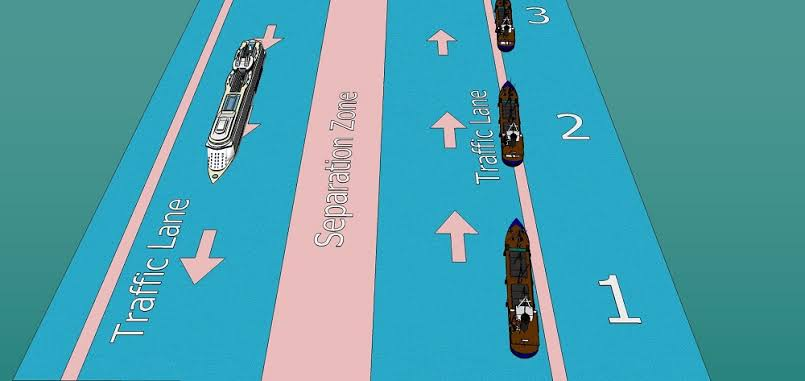
Traffic separation schemes are organized maritime traffic-management systems designed to make navigation safer and more predictable in areas where large numbers of vessels travel through the same waters. In simple terms, a traffic separation scheme creates designated lanes or routes for ships moving in opposite directions, much like divided highways do for road traffic. The purpose is to reduce the likelihood of collisions by separating opposing streams of vessel traffic.
These schemes are especially useful in busy coastal waters, approaches to major ports, narrow passages, and other areas where commercial shipping, fishing vessels, passenger ships, and recreational boats may operate close together. Instead of allowing every vessel to choose an unrestricted route, the scheme provides a structured pattern that helps navigators understand where other vessels are expected to travel.
A traffic separation scheme does not remove the need for careful watchkeeping or good judgment. It is one part of a broader maritime safety system. Masters, officers, and navigators still need to follow the applicable navigation rules, maintain a proper lookout, use appropriate speed, and respond correctly to developing situations. The scheme simply makes traffic movements more orderly and easier to anticipate.
Why Traffic Separation Schemes Are Important
One of the biggest advantages of traffic separation schemes is that they reduce uncertainty. When vessels travel through a busy area without an organized routing system, ships can approach one another from many different directions. This makes collision avoidance more complicated, particularly when visibility is reduced or when several vessels are maneuvering at the same time.
By separating traffic into defined streams, a scheme creates a more predictable environment. A vessel traveling in one lane will generally encounter other vessels moving in the same general direction. Opposing traffic is kept in a separate lane, with a separation zone or line between the streams. This organization gives navigators a clearer picture of the overall traffic situation.
Traffic separation schemes are also valuable because modern commercial vessels can be extremely large and may require substantial distances to alter course or stop. A container ship, tanker, or bulk carrier cannot maneuver like a small recreational boat. Creating predictable traffic patterns helps large vessels operate safely while giving other mariners a better understanding of their movements.
How a Traffic Separation Scheme Is Organized
A typical traffic separation scheme consists of several important components. The main feature is usually a traffic lane in which vessels travel in a specified direction. Another lane carries traffic moving in the opposite direction. Between the two may be a separation zone or separation line designed to keep the traffic streams apart.
At the ends of traffic lanes, vessels may enter or leave the scheme. These areas require particular attention because ships can be joining, crossing, or departing from the organized traffic flow. Mariners should understand the intended direction of traffic before entering a lane and should avoid creating unnecessary confusion for vessels already using it.
Some schemes also include inshore traffic zones. These areas can provide a route closer to the coast for certain vessels, where appropriate under the applicable rules. Additional features may include roundabouts, deep-water routes, precautionary areas, and recommended routes. Each arrangement is designed according to local geography, traffic density, navigational hazards, and the types of vessels using the area.
Understanding Traffic Lanes and Separation Zones
Traffic lanes are the central elements of most traffic separation schemes. Each lane is intended to accommodate vessels traveling in a particular direction. Mariners should enter and follow the appropriate lane while maintaining awareness of other vessels and the boundaries of the scheme.
The separation zone is equally important. It provides a buffer between opposing streams of traffic and helps prevent vessels from drifting directly into the path of ships traveling in the opposite direction. Depending on the particular scheme, the separation area may be represented on charts by specific symbols and boundaries.
It is important to remember that a traffic lane is not an automatic guarantee of safety. Ships can still collide within a lane if navigators fail to keep a proper lookout, use excessive speed, misunderstand another vessel’s intentions, or fail to take timely avoiding action. The scheme improves organization, but safe navigation still depends on competent seamanship.
Rules for Using Traffic Separation Schemes
The use of traffic separation schemes is governed by international and local navigation requirements. One of the most important principles is that vessels using a traffic separation scheme should proceed in the appropriate traffic lane and generally follow the established direction of traffic flow.
Vessels should also avoid crossing traffic lanes unnecessarily. When crossing is necessary, the crossing should normally be made on a heading that is as nearly practicable to a right angle to the general direction of traffic flow. This makes the crossing movement easier for other vessels to recognize and reduces the amount of time spent crossing the lane.
Another important principle is that vessels should not impede the passage of vessels following a traffic lane when circumstances and applicable rules require them to avoid doing so. Certain vessels may have special circumstances or responsibilities, but that does not mean they can ignore the scheme. Every navigator must understand how the applicable collision-prevention rules interact with the particular traffic situation.
Traffic Separation Schemes and Collision Prevention
Collision prevention is the main reason these schemes exist. At sea, a collision can have serious consequences, including loss of life, environmental damage, cargo loss, and major economic disruption. A well-designed traffic separation scheme helps reduce these risks by making vessel movements more consistent.
Consider a busy shipping approach where hundreds of vessels may pass through an area over a given period. Without organized traffic flows, ships could encounter one another at unpredictable angles. With a separation scheme, opposing traffic is divided and vessels generally move along established routes. This does not eliminate encounters, but it makes them easier to assess.
Modern navigation technology has made these systems even more effective. Radar, electronic charts, automatic identification systems, satellite positioning, and other bridge technologies can help navigators monitor vessel movements. However, technology should support rather than replace visual observation, professional judgment, and compliance with navigation rules.
The Role of Charts and Navigation Planning
Before entering an area containing a traffic separation scheme, professional navigators should study the relevant charts and publications. The exact arrangement of lanes, separation zones, precautionary areas, and associated routes can vary considerably from one location to another.
Electronic navigational charts can display traffic separation arrangements clearly, but navigators must ensure that chart information is current and appropriate for the voyage. Paper charts, where used, also need to be properly updated. A vessel should never rely on an outdated representation of a traffic scheme.
Passage planning is another important part of safe navigation. Officers should identify the scheme before reaching it, determine the correct entry and exit points, consider expected traffic density, and account for factors such as weather, tides, currents, visibility, and vessel maneuverability. Good planning reduces the need for last-minute decisions.
Challenges When Navigating Busy Traffic Schemes
Even a carefully designed traffic separation scheme can become challenging during periods of heavy traffic. A navigator may encounter numerous ships traveling at different speeds, vessels crossing the lanes, ships entering or leaving ports, fishing activity, and smaller craft operating outside the main commercial traffic.
Weather can make matters more complicated. Fog, heavy rain, strong winds, or rough seas can reduce visibility and affect a vessel’s ability to maneuver. In these conditions, navigators need to rely on all appropriate resources while maintaining a particularly effective lookout.
Another challenge is human communication and interpretation. A navigator may correctly understand the traffic pattern but misjudge another vessel’s intentions. This is why navigators should avoid assumptions and continuously assess the developing situation. Clear observation, proper communication where appropriate, and early, substantial action can all contribute to safer navigation.
Traffic Separation Schemes and Small Vessels
Traffic separation schemes are not only relevant to large commercial ships. Small fishing vessels, sailing boats, pleasure craft, and other recreational vessels may also encounter them. For a small vessel, entering a busy shipping lane can be particularly hazardous because large ships may have limited ability to detect or avoid smaller craft.
Operators of small boats should understand the layout of any traffic separation scheme they plan to cross. They should avoid unnecessary time inside a traffic lane and should carefully monitor approaching commercial vessels. A small vessel’s size does not give it permission to behave unpredictably or disregard applicable navigation rules.
Awareness is particularly important near ports and coastal areas. Recreational boaters may be accustomed to relatively quiet waters, but a shipping route can have very different conditions. Learning how to identify traffic lanes and separation areas on nautical charts is therefore a valuable skill for anyone navigating in busy waters.
How Technology Supports Traffic Separation Schemes
Technology plays a major role in modern maritime traffic management. Radar allows bridge teams to detect and track vessels, while automatic identification systems can provide useful information about nearby ships. Electronic chart systems can display navigational information and help officers maintain awareness of their position relative to established routes.
Global navigation satellite systems also provide highly accurate positioning, allowing vessels to determine where they are in relation to traffic lanes and other navigational features. When these systems are used properly, they can greatly improve situational awareness.
Still, technology has limitations. Equipment can fail, information can be misunderstood, and electronic data may not always reflect the complete situation around a vessel. Professional mariners therefore treat electronic information as one part of the overall navigational picture rather than relying blindly on a single device.
The Future of Traffic Separation Schemes
As global shipping continues to evolve, traffic separation schemes are likely to remain an important part of maritime safety. Increasing vessel sizes, changing trade routes, offshore energy developments, environmental restrictions, and growing coastal activity can all influence how maritime traffic is organized.
Future traffic management may also make greater use of digital navigation, improved vessel tracking, automated decision-support systems, and more sophisticated maritime traffic services. These technologies could help authorities understand traffic patterns and identify potential risks earlier.
However, the fundamental objective is unlikely to change. Traffic separation schemes are ultimately about creating order in places where large numbers of vessels must share limited navigable space. Whether navigation is conducted with traditional equipment or advanced digital systems, predictable traffic flow remains one of the simplest and most effective ways to improve maritime safety.
Final Thoughts on Traffic Separation Schemes
Traffic separation schemes provide an organized framework for managing vessel movements in busy areas of the sea. By separating opposing traffic streams and establishing predictable routes, they reduce confusion and help navigators make safer decisions. Their value becomes particularly clear in areas where commercial shipping activity is intense and maneuvering space is limited.
Understanding how these schemes work is essential for professional mariners and useful for anyone who operates a vessel in coastal or heavily trafficked waters. Knowing the meaning of traffic lanes, separation zones, entry and exit points, and crossing procedures can make a significant difference in real-world navigation.
Most importantly, a traffic separation scheme should never be viewed as a substitute for good seamanship. Safe navigation still depends on proper lookout, careful passage planning, appropriate speed, effective use of navigation equipment, and timely collision-avoidance action. When these principles are combined with a well-designed traffic management system, busy waterways can become significantly more predictable and safer for everyone using them.
You May Also Raed: Englishtistic