

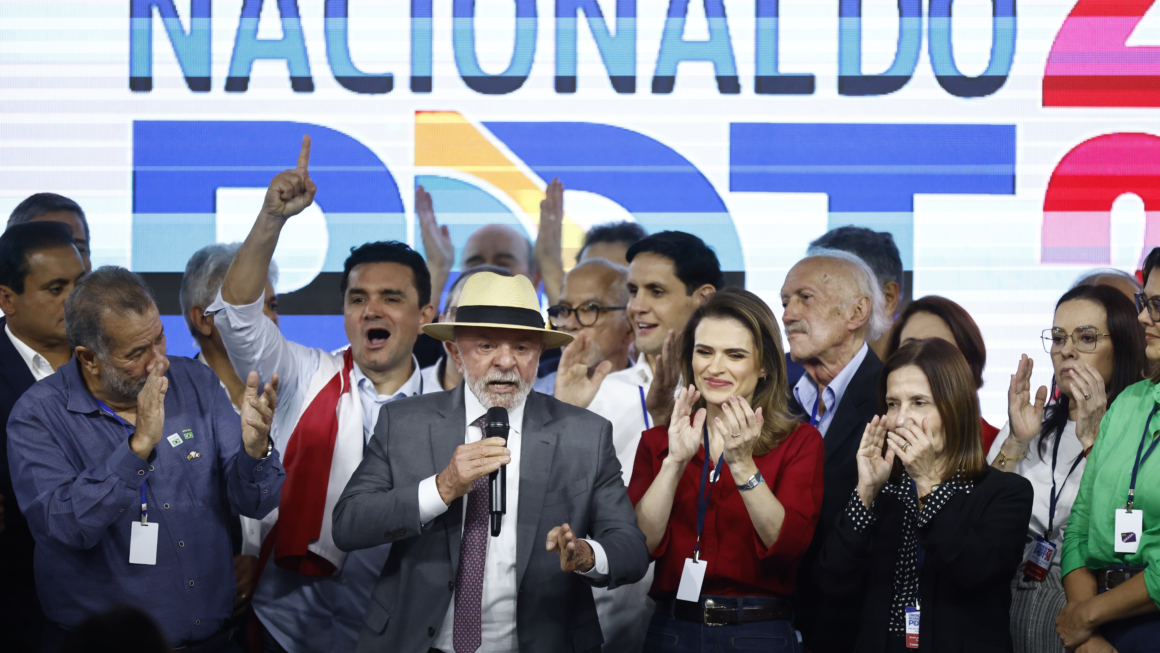
What Is the Partido Democrático Trabalhista?
The Partido Democrático Trabalhista (PDT), commonly translated as the Democratic Labour Party, is a Brazilian political party with roots in the country’s labor movement and the political tradition associated with former president João Goulart and labor leader Leonel Brizola. The party emerged during Brazil’s transition away from military rule and sought to preserve a democratic, nationalist, and socially oriented approach to politics. Over the years, it has developed a distinctive identity centered on workers’ rights, public education, national development, and democratic institutions.
Understanding the Partido Democrático Trabalhista requires looking beyond its name. It is not simply a party representing organized labor in the narrow sense. Its political tradition has also included debates about economic sovereignty, social welfare, education, industrial development, and the role of the Brazilian state. That combination has helped the party maintain a recognizable place within Brazil’s often complicated political landscape.
The PDT has also been strongly associated with the legacy of Leonel Brizola, one of Brazil’s most influential political figures of the late twentieth century. Brizola became the party’s most important early leader and helped shape its ideological direction. His emphasis on public education, democratic nationalism, and social justice continues to influence how the party presents itself to voters.
The Origins of the Party
The history of the Partido Democrático Trabalhista is closely connected to Brazil’s political reopening in the late 1970s and early 1980s. After years of military government, political organizations began reorganizing as the country moved toward a more competitive democratic system. Former political leaders and movements that had been suppressed or fragmented during the dictatorship sought to rebuild their political influence.
Leonel Brizola played a central role in this process. After spending years in exile, he returned to Brazil and attempted to revive the political tradition of the old Brazilian Labour Party, known as the PTB. However, control of the PTB’s name and electoral organization became the subject of a political dispute. The resulting developments contributed to the creation of the PDT in 1980.
The new party positioned itself as a continuation of the democratic and labor-oriented tradition associated with the pre-1964 labor movement. At the same time, it was designed for a new political era. Brazil was changing rapidly, and the PDT sought to combine democratic institutions with policies aimed at reducing inequality and expanding opportunities for ordinary citizens.
Leonel Brizola and the PDT’s Political Identity
Leonel Brizola remains inseparable from the history of the Partido Democrático Trabalhista. His political career stretched across several important periods of Brazilian history, including the democratic government before the 1964 coup, the military dictatorship, the return to civilian rule, and the consolidation of democracy.
Brizola’s politics were particularly notable for his focus on education. He believed that public education was one of the most powerful tools available for reducing social inequality. During his administrations in Rio de Janeiro, educational projects became a major part of his political legacy. The CIEPs, or Integrated Centers of Public Education, were designed to provide full-time schooling alongside broader social services.
His political style was also strongly nationalist. Brizola frequently argued that Brazil should have greater control over its economic resources and development strategy. He was skeptical of excessive foreign influence over strategic industries and believed that national development should benefit Brazilian workers and communities. These ideas became important components of the PDT’s identity.
Core Ideals of the Partido Democrático Trabalhista
One of the central ideas traditionally associated with the Partido Democrático Trabalhista is social justice. The party has generally argued that economic growth should not be separated from improvements in living standards. From this perspective, a successful economy is not measured only by production or investment but also by access to education, employment, healthcare, housing, and other essential services.
Labor rights are another major element of the party’s political identity. The PDT emerged from a labor-oriented tradition and has historically defended the importance of workers’ protections. Issues such as fair wages, employment security, collective bargaining, and social protections have therefore featured prominently in its political discourse.
National development is also important. The party’s tradition tends to favor an active role for the Brazilian state in strategic areas of the economy. Rather than viewing government as merely a regulator, PDT thinkers have often argued that public institutions can help guide industrialization, infrastructure investment, technological development, and social progress.
Education as a Major Political Priority
Education has arguably been one of the most recognizable policy themes associated with the PDT. Brizola’s administrations placed substantial attention on expanding full-time public education, and the party has continued to treat schools as a central instrument for national development.
The reasoning behind this approach is relatively straightforward. A country cannot sustain long-term economic and social progress if large sections of its population receive poor-quality education. Schools do more than prepare students for employment; they influence citizenship, social mobility, health outcomes, and participation in democratic life.
The PDT tradition therefore tends to connect education policy with a broader vision of Brazil’s future. Better schools are viewed not merely as a social expense but as an investment in human capital. This perspective has helped distinguish the party from political movements that place greater emphasis on short-term economic indicators.
The Party During Brazil’s Democratic Era
Following the end of military rule, the PDT became an important participant in Brazil’s new democratic politics. Leonel Brizola ran for president in the 1989 election, one of the country’s first direct presidential elections after the dictatorship. He was a major national figure, although he ultimately did not reach the second round.
The party continued participating in presidential, congressional, gubernatorial, and municipal elections. Its influence has varied considerably depending on the region and electoral cycle. Rio de Janeiro and Rio Grande do Sul have historically been particularly significant areas for the party because of Brizola’s political connections and legacy.
Brazil’s political system, however, has made it difficult for any single ideological party to dominate nationally. Coalition-building is often necessary, and parties frequently need to negotiate with political groups that do not share all of their ideological positions. The PDT has consequently experienced periods of greater and lesser influence at the federal level.
The PDT and Brazilian Electoral Politics
The Partido Democrático Trabalhista operates within an electoral environment characterized by numerous political parties and shifting alliances. Brazilian voters can encounter significant differences between national and local politics, meaning that a party’s strength in one state does not necessarily translate into the same level of support elsewhere.
The PDT has contested presidential elections through several candidates and has also concentrated on building representation in Congress and local governments. Its electoral strategy has often involved emphasizing recognizable political figures and established policy themes such as education, labor rights, and social development.
One challenge for the party has been maintaining a clear identity in a political environment where alliances can blur ideological boundaries. Like many Brazilian parties, the PDT has had to balance long-term political principles with the practical realities of elections, legislative negotiations, and coalition governments.
Ciro Gomes and a New Generation of Leadership
In more recent decades, Ciro Gomes became one of the most recognizable national figures associated with the PDT. A former governor of Ceará, minister, and presidential candidate, Ciro brought a different political style to the party while continuing some of its traditional themes.
Ciro has frequently emphasized economic development, industrial policy, national sovereignty, and reducing Brazil’s dependence on external economic forces. His political arguments have often focused on the structure of the Brazilian economy and the need for long-term planning rather than policies designed only around short electoral cycles.
His presidential campaigns helped give the PDT a national platform in the twenty-first century. At the same time, his positions have sometimes generated controversy and debate, particularly regarding economic policy and relationships with other political forces. His prominence demonstrates how the party’s traditional ideology has continued to evolve rather than simply remaining frozen in the Brizola era.
The Party’s Relationship With the Left
The PDT is generally situated on the center-left to left side of Brazilian politics, although its exact position can depend on the issue and the period being considered. Its labor-oriented history places it within Brazil’s broader progressive political tradition, but it has maintained a political identity distinct from other left-wing parties.
The relationship between the PDT and the Workers’ Party, or PT, is particularly interesting. Both have competed for voters interested in social programs, workers’ rights, and reducing inequality, but they have often disagreed about economic strategy, political leadership, and the direction of the Brazilian left.
This competition has sometimes created tension, while at other times political circumstances have encouraged cooperation. Such relationships illustrate why Brazilian politics cannot always be understood through a simple left-versus-right framework. Parties can share certain objectives while sharply disagreeing about how those objectives should be achieved.
Challenges Facing the Partido Democrático Trabalhista
One of the biggest challenges facing the PDT is maintaining relevance in an increasingly fragmented political system. Brazilian politics has changed significantly since the party’s creation. New parties have emerged, social media has transformed political communication, and voters have become less attached to traditional party structures.
Another challenge is preserving the party’s historical identity while appealing to younger generations. The political language of the 1980s cannot simply be repeated without adaptation. Younger voters may care about education and employment, but they also increasingly discuss technology, climate policy, digital rights, public security, entrepreneurship, and new forms of work.
Leadership transitions can create additional difficulties. Political parties built around major historical figures often have to work hard to establish a strong identity that survives beyond those personalities. The PDT’s continued relevance therefore depends partly on its ability to connect its historic principles with contemporary problems.
Why the PDT Still Matters
Despite its changing electoral fortunes, the Partido Democrático Trabalhista remains important for understanding modern Brazilian political history. Its story connects the labor movement, the struggle for democracy, nationalism, public education, and debates about economic development.
The party’s emphasis on education is especially relevant because Brazil continues to face significant challenges involving educational inequality and social mobility. Likewise, discussions about industrial policy, national sovereignty, workers’ rights, and the role of government remain central to Brazilian political debates.
The PDT also represents an important historical bridge. Its origins are connected to the political traditions of the pre-dictatorship period, but its institutional life developed during Brazil’s democratic reconstruction. That makes the party useful for anyone trying to understand how older political movements adapted to a new democratic environment.
The Legacy of the Partido Democrático Trabalhista
The legacy of the Partido Democrático Trabalhista is broader than its election results. Its greatest historical contribution may be the continuation of a political tradition that connects democracy with social development. For the party’s founders and supporters, democratic government was not supposed to be an end in itself; it was meant to create conditions in which ordinary citizens could improve their lives.
Leonel Brizola’s influence remains particularly visible in discussions about public education and democratic nationalism. His political career continues to be studied and debated, and the PDT’s connection to his ideas gives the party a distinctive historical character.
Ultimately, the Partido Democrático Trabalhista occupies a unique place in Brazil’s political landscape. It has experienced victories, setbacks, leadership changes, electoral challenges, and ideological debates, yet its central themes have remained recognizable. Its continuing story reflects a larger question in Brazilian politics: how can democracy, economic development, and social justice be brought together in a country as large and diverse as Brazil?
You May Also Raed: Englishtistic