

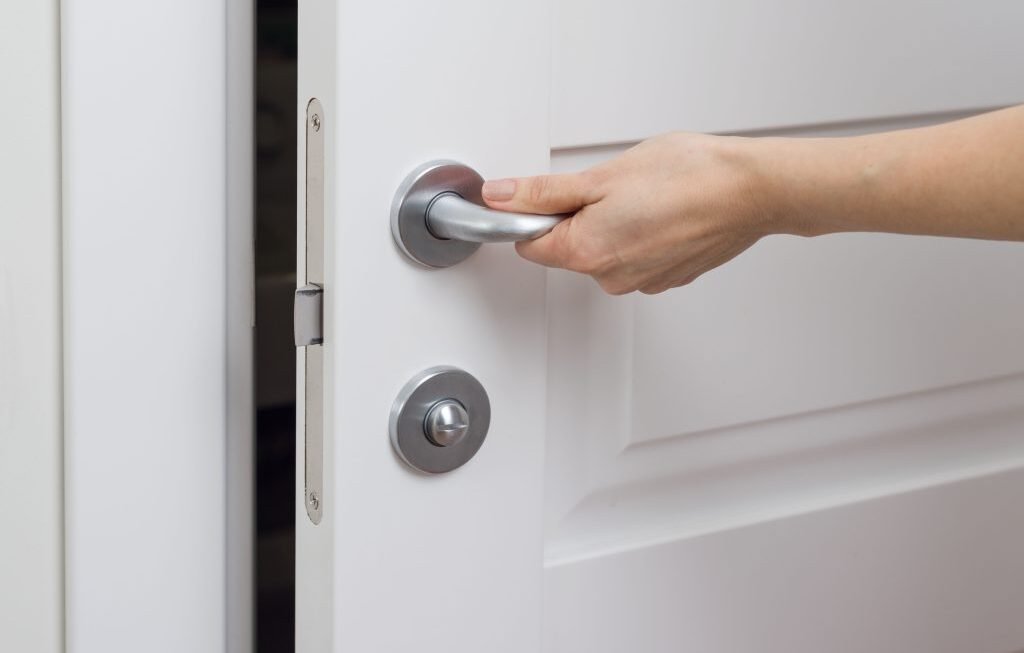
Closing the door to an unused bedroom seems logical.
Nobody is in there. Why spend money heating or cooling it?
In some homes, though, shutting interior doors can interfere with the way a central HVAC system moves air. The room may become hotter or colder, pressure differences can develop, and conditioned air may find unintended paths through gaps and duct leaks.
That doesn’t mean every interior door needs to stay open all day. Your HVAC design matters.
Understanding how supply air, return air, and room pressure work together can help you decide what makes sense for your home.
Your HVAC System Needs Somewhere for the Air to Go
A central forced-air HVAC system doesn’t simply blow conditioned air into rooms.
It also needs to bring air back.
Supply registers deliver heated or cooled air, while return ducts pull air back toward the system. This circulation continues while the equipment operates.
Problems can develop when a bedroom has a supply register but doesn’t have a dedicated return or another adequate return-air pathway.
With the door open, air can leave the bedroom and move toward a central return.
Close the door, and you’ve changed that path.
The supply register keeps pushing air into the room. If that air can’t easily escape, pressure can increase inside the bedroom while the area containing the central return may experience lower pressure.
That pressure imbalance can affect both comfort and energy performance.
A Closed Door Can Change Room Pressure
Think about blowing air into a box with only a tiny opening.
Eventually, the air needs somewhere to go.
A bedroom with a closed door isn’t airtight, of course. Air can move through the gap beneath the door and through cracks around the frame. But those openings may not provide enough return airflow for the amount of conditioned air entering through the supply register.
As pressure builds, air may be pushed through other available gaps.
Those could include leaks around windows, electrical penetrations, wall cavities, attic openings, or duct connections.
Meanwhile, pressure differences elsewhere in the house can encourage outdoor or unconditioned air to enter.
The HVAC system then has another load to handle.
Why Closing the Supply Vent Isn’t the Same as Closing the Door
Some homeowners take the idea one step further.
They close both the bedroom door and its supply vent.
Again, the reasoning sounds sensible: don’t send conditioned air into an unused space.
But residential HVAC systems are designed around expected airflow. Closing multiple registers can change airflow and static pressure within the duct system.
That can reduce system performance rather than creating the simple energy savings you expected.
A room also doesn’t exist independently from the rest of the house.
If an unused bedroom becomes extremely hot in summer, heat can transfer through interior walls, floors, and ceilings toward conditioned spaces. In winter, an excessively cold room can do the opposite.
You’re still dealing with the temperature difference. You’ve simply moved part of the heating or cooling load elsewhere.
Return-Air Design Makes a Big Difference
Whether closing a bedroom door causes a meaningful problem depends heavily on the HVAC system.
Some homes have dedicated return-air registers in individual bedrooms. Others rely on one or several central returns located in hallways or common areas.
If a bedroom has an adequately designed return, closing its door may have much less effect on air circulation.
Homes with central returns may use other strategies.
A transfer grille can create an airflow path between the bedroom and an adjacent space. A jumper duct can provide another route while maintaining privacy. Properly sized door undercuts may help in certain situations as well.
The right solution depends on airflow requirements and the home’s construction.
Uneven Temperatures Can Be a Clue
Your rooms can tell you quite a lot about airflow.
Pay attention to what happens after bedroom doors remain closed for several hours.
Does one room become noticeably warmer in summer?
Does another become colder during winter?
Does airflow from a register seem unusually weak? Does opening the bedroom door noticeably change how the room feels?
Those patterns don’t prove that return airflow is the problem, but they give you a useful starting point.
You may be dealing with restricted airflow, inadequate return pathways, duct leakage, insulation problems, solar heat gain, or a combination of issues.
Duct Leakage Can Make Pressure Problems More Expensive
Duct leaks are especially important when ductwork passes through an attic, garage, crawl space, or another area outside the home’s conditioned envelope.
If pressure conditions encourage more air to escape through duct leaks, you’re paying to condition air that doesn’t fully reach the living space.
Return-side leakage can cause a different problem. The system may pull hot attic air, humid crawl-space air, or other unconditioned air into the ductwork.
That air then has to be heated, cooled, or dehumidified.
ENERGY STAR notes that leaky and poorly connected ducts can contribute to uncomfortable rooms and higher utility bills. Its guidance on duct sealing explains how sealing and insulating ducts can improve comfort and HVAC efficiency.
Does That Mean Every Door Should Stay Open?
No.
There are plenty of reasons to close interior doors.
You may want privacy. A child may be sleeping. You’re trying to reduce noise. Pets need to stay out of a particular room. Closing bedroom doors while sleeping can also be an important fire-safety measure.
The point isn’t that closed doors are inherently inefficient.
The real question is whether your HVAC system provides adequate supply and return airflow when those doors are closed.
A well-designed system should account for how people actually use the house.
If your family normally sleeps with bedroom doors closed, for example, the HVAC system shouldn’t depend entirely on those doors remaining wide open to maintain acceptable airflow.
Don’t Use the Thermostat to Hide an Airflow Problem
Here’s where an airflow issue can start costing money.
Suppose a bedroom becomes warmer whenever its door stays closed.
The rest of the house feels comfortable at 74°F, but the bedroom reaches 78°F.
Someone lowers the thermostat to 71°F to compensate.
The air conditioner now runs longer. The bedroom may eventually become comfortable, but other parts of the house receive more cooling than they need.
The thermostat setting isn’t the underlying problem.
The room isn’t receiving or returning air effectively.
If this happens regularly, correcting the airflow issue may make more sense than continually changing the temperature setting.
Separate Electricity Price From Electricity Use
When a monthly electricity bill rises, it’s tempting to blame the HVAC system immediately.
But the amount on your bill depends on more than efficiency.
Weather, electricity consumption, changes in household behavior, billing periods, and electricity prices can all affect the final number.
For households in competitive electricity markets, comparing providers or plans, including options such as rythm energy, may help address the supply-price side of the bill. Improving airflow and HVAC performance addresses a different issue: how much electricity the home needs to stay comfortable.
Keeping those two factors separate makes it easier to understand whether you’re dealing with an energy-use problem, a pricing change, or both.
Test What Happens in Your Own Home
You don’t need sophisticated equipment to start looking for patterns.
Pick a room that frequently feels uncomfortable.
Note its temperature with the door open during normal HVAC operation. Then observe what happens during similar weather conditions when the door stays closed.
Don’t expect this informal test to provide an engineering-grade diagnosis. Outdoor temperature, sunlight, equipment cycling, and other factors can change the result.
You’re looking for a pattern.
If the same bedroom consistently becomes several degrees warmer or colder when its door is closed, that’s useful information to give an HVAC professional.
Check the Easy Problems First
Before assuming your home needs new ductwork, check basic issues.
Make sure supply and return registers aren’t covered by furniture, curtains, rugs, or storage.
Check the HVAC filter and replace it when needed.
Look for obviously damaged or disconnected accessible ducts.
Notice whether the problem affects one room or several rooms.
And resist the temptation to start closing random vents throughout the house. That can change system airflow and make diagnosis harder.
When an HVAC Professional Can Help
Persistent room-pressure or temperature problems deserve a closer look.
An HVAC professional can measure airflow and static pressure rather than guessing based on how a room feels.
They can also evaluate supply and return sizing, duct leakage, equipment operation, room loads, and potential solutions such as transfer grilles or jumper ducts.
This is especially useful when a home has undergone renovations.
Adding walls, converting rooms, finishing an attic, replacing doors, or modifying the duct system can change airflow patterns that previously worked reasonably well.
Energy Efficiency Is About the Whole Airflow Path
The position of an interior door seems like a tiny detail.
From an HVAC perspective, it can be part of a much larger airflow system.
Conditioned air needs to reach the room. Air also needs a reasonable route back to the HVAC equipment. Restrict either side of that circulation, and comfort may suffer.
In some homes, closing a bedroom door makes almost no noticeable difference because the return-air system handles it properly.
In others, it creates an obvious temperature imbalance.
That’s why blanket rules such as “always leave doors open” or “close unused rooms to save energy” aren’t particularly useful.
Look at how your specific house behaves.
If closing doors creates uncomfortable rooms, longer HVAC operation, or noticeable pressure differences, find the airflow problem rather than asking the thermostat to compensate for it.
Frequently Asked Questions
Should bedroom doors stay open when the air conditioner is running?
Not necessarily. If bedrooms have adequate return-air pathways, the HVAC system may operate normally with the doors closed. If rooms rely on a central return and lack sufficient return paths, closed doors can contribute to pressure and comfort problems.
Is closing vents in unused rooms a good way to save energy?
Usually, it isn’t a good strategy without understanding how the HVAC system was designed. Closing several supply registers can alter system airflow and static pressure. If you want to reduce conditioning in particular areas, ask an HVAC professional whether zoning or another properly designed solution makes sense.
How can I tell whether a closed bedroom has a return-air problem?
Consistent temperature differences when the door is closed can be one clue. An HVAC technician can provide a more reliable answer by measuring room pressure, supply airflow, return airflow, and system static pressure.
Can return-air problems increase electricity use?
They can contribute to it. Poor airflow may create uncomfortable rooms and encourage occupants to change thermostat settings or run the system longer. Pressure imbalances can also interact with duct and building-envelope leakage, particularly when ducts run through unconditioned spaces.
Whether a door stays open or closed shouldn’t determine whether a room is comfortable.
If it does, the door may not be the real problem.
The airflow path is.