

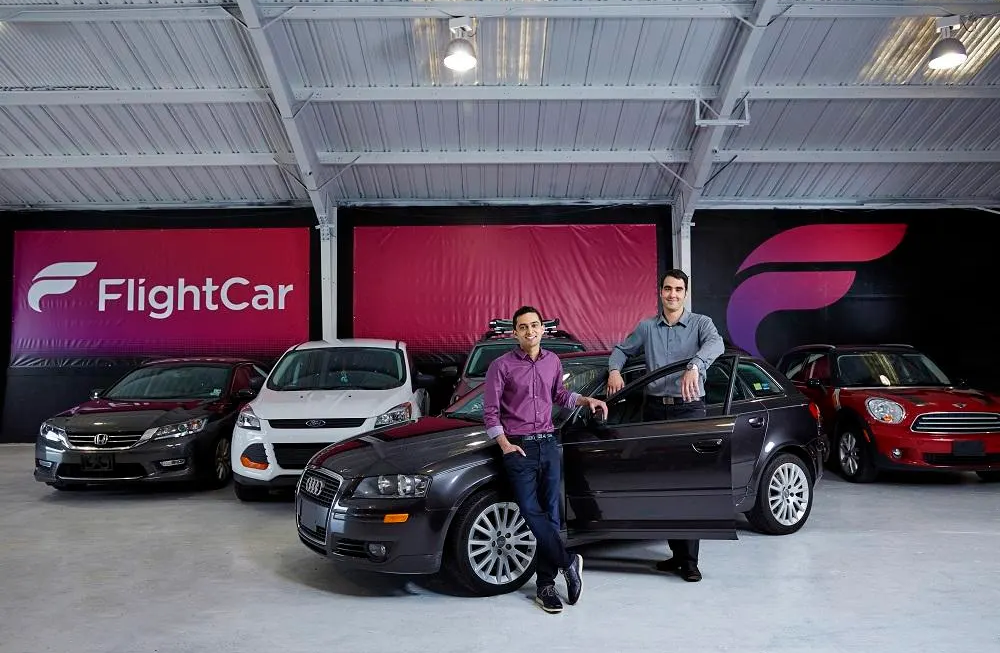
The term flightcar sounds like something straight out of a futuristic movie, but it can actually refer to a few different ideas depending on the context. For some people, flightcar brings to mind a vehicle that combines the convenience of a car with the ability to fly. For others, it may be associated with airport transportation, car-sharing services, or travel technology designed to make getting to and from airports easier.
As transportation continues to evolve, concepts like flightcar are becoming increasingly interesting. People want faster journeys, fewer traffic problems, and transportation options that connect different parts of a trip more smoothly. Cars have already become smarter and more connected, while aircraft technology is moving toward smaller, more flexible forms of air mobility.
Understanding flightcar therefore means looking beyond the catchy name. It is useful to consider what the concept means, how flying vehicles could work, what benefits they might offer, and what challenges still need to be solved before they become an everyday part of transportation.
What Does Flightcar Mean?
At its simplest, flightcar describes the idea of combining road transportation with air transportation in one vehicle or travel experience. A traditional car is designed to remain on the ground, while an airplane or helicopter is built specifically for flight. A flightcar concept attempts to bridge that gap by creating a vehicle that can potentially operate in both environments.
The exact design can vary considerably. Some concepts resemble conventional cars with folding wings, while others look more like compact aircraft equipped with road-driving capabilities. There are also emerging electric vertical takeoff and landing concepts that are often discussed alongside flying-car technology. These vehicles are intended to take off and land vertically, reducing the need for traditional runways.
It is important to remember that flightcar is not necessarily the name of one universally defined vehicle category. It can be used broadly when discussing hybrid transportation ideas. That is why anyone researching flightcar should pay attention to the specific company, product, service, or technology being described rather than assuming every reference means the same thing.
How Could a Flightcar Work?
A practical flightcar would need two fundamentally different operating systems. The road system would have to provide safe steering, braking, suspension, lighting, and other equipment required for ground travel. The aviation system would need propulsion, flight controls, structural strength, navigation technology, and safety features suitable for operating in the air.
One of the biggest engineering challenges is weight. Cars already carry substantial equipment, and aircraft must remain relatively lightweight to fly efficiently. A vehicle designed for both purposes has to find a careful balance between road durability and aviation performance. Folding wings, lightweight materials, electric motors, and compact propulsion systems could all play important roles in future designs.
Another possibility is a vehicle that does not literally drive and fly in exactly the same configuration. Instead, a modular system could allow a road vehicle to connect with an aerial platform. This approach could potentially reduce some engineering compromises, although it would introduce its own logistical and infrastructure challenges.
Why Are Flightcar Concepts Becoming Popular?
One major reason is the continuing problem of road congestion. In busy cities, commuters can spend significant amounts of time stuck in traffic. A vehicle capable of traveling through the air could theoretically bypass congested roads and reduce journey times for certain trips.
Another factor is the rapid development of electric transportation. Electric motors are increasingly efficient, and battery technology continues to improve. While battery-powered flight remains challenging because aircraft require a great deal of energy, advances in motors, batteries, lightweight materials, and autonomous systems are encouraging engineers to explore new transportation models.
There is also a broader cultural fascination with futuristic mobility. For decades, people have imagined a world where cars could leave the road and travel through the sky. Modern technology has made that idea seem less fictional than it once did. Even if fully integrated flightcars do not become common, research into them can contribute to improvements in electric aircraft, autonomous transportation, navigation systems, and urban mobility.
Potential Benefits of Flightcar Technology
The most obvious potential benefit is speed. Air travel can provide a much more direct route than road travel, particularly when mountains, rivers, highways, or crowded urban areas create obstacles. If flightcar technology becomes practical and affordable, certain journeys could become significantly quicker.
Flexibility could be another advantage. A conventional airplane generally requires an airport, while a helicopter needs suitable landing areas. Depending on the design and regulations, future flightcars could potentially operate from smaller locations. Vertical takeoff technology could be especially useful in urban or suburban environments where traditional runways are impractical.
Flightcar technology could also encourage innovation in sustainable transportation. Electric propulsion, lightweight construction, advanced batteries, and intelligent navigation are all areas receiving substantial attention. Even if a particular flying vehicle never reaches mass production, the technology developed during its creation could eventually improve other forms of transportation.
The Challenges Standing in the Way
The biggest challenge is safety. Driving and flying are both complex activities, and combining them creates an even more demanding engineering problem. A flightcar would have to remain safe during road operation, takeoff, flight, landing, and transitions between different modes.
Regulation is another major issue. Cars operate under road-traffic laws, while aircraft are governed by aviation authorities and airspace regulations. A vehicle capable of both would need to satisfy multiple regulatory systems. Questions about pilot licensing, driver licensing, airspace management, insurance, vehicle certification, and emergency procedures would all have to be addressed.
Infrastructure would also need to evolve. Even an excellent flying vehicle would have limited usefulness if there were nowhere safe and legal to take off or land. Cities might need designated landing areas, charging stations, maintenance facilities, and digital traffic-management systems. Building that infrastructure could take considerable time and investment.
Could Flightcars Become Electric?
Electric propulsion is one of the most interesting possibilities for future flightcar designs. Electric motors have fewer moving parts than many traditional combustion engines and can offer precise control. They can also work well with computerized systems and renewable-energy infrastructure.
However, flying electrically is considerably more demanding than driving electrically. A car can carry a relatively heavy battery because it only needs to overcome rolling resistance and aerodynamic drag. An aircraft must lift its entire weight into the air. That makes energy density especially important.
For this reason, electric flightcars may initially be more practical for shorter journeys rather than long-distance travel. Battery improvements could gradually expand their capabilities, but engineers must still consider payload, charging time, battery degradation, weather conditions, and emergency reserves.
Flightcar and the Future of Personal Transportation
The long-term appeal of flightcar technology is not simply about owning a futuristic vehicle. The bigger idea is creating a transportation network in which people can move between roads and air routes more efficiently. Instead of thinking about one vehicle replacing every car and airplane, it may be more realistic to imagine different technologies working together.
For example, a traveler might use an ordinary car for part of a journey and an aerial mobility service for another section. Autonomous systems could eventually coordinate these modes, allowing passengers to select the fastest or most convenient route without needing to understand every technical detail.
This could transform how people think about distance. Locations that currently feel far apart because of traffic could become more accessible. Businesses could potentially operate across wider areas, while emergency services might benefit from faster access to difficult-to-reach locations.
Is Flightcar Practical for Everyday Consumers?
At present, consumers should be cautious about treating flightcar as an ordinary replacement for a family car. Flying vehicles face substantial technical, regulatory, financial, and infrastructure challenges. The concept is exciting, but widespread everyday adoption requires much more than simply building a vehicle that can leave the ground.
Cost will be another important consideration. Advanced aviation technology is expensive to develop, manufacture, maintain, and operate. Early vehicles are likely to be aimed at specialized markets before becoming accessible to the average consumer, assuming mass production eventually becomes practical.
There is also the question of convenience. A futuristic vehicle might sound convenient, but owners would still need training, maintenance, charging or fueling, insurance, storage, and legal authorization. For many everyday trips, a conventional car or public transportation could remain simpler and cheaper.
What the Future Could Look Like
The future of flightcar technology will probably be shaped by gradual improvements rather than one sudden transportation revolution. Battery technology, artificial intelligence, autonomous navigation, lightweight materials, electric propulsion, and air-traffic management are all developing independently. Bringing these technologies together could eventually make new forms of personal air mobility possible.
The most realistic early applications may involve specialized transportation. Emergency response, medical transportation, remote-area access, business travel, and premium mobility services could provide practical use cases before mass consumer adoption. These applications could help companies gain experience while regulators develop appropriate safety standards.
If costs fall and infrastructure expands, flightcar concepts could eventually become more familiar. But even then, they may exist alongside conventional cars, trains, buses, airplanes, and other transportation systems rather than completely replacing them.
Final Thoughts on Flightcar
Flightcar represents an intriguing vision of transportation where the boundary between driving and flying becomes less rigid. Whether the term refers to a specific service, a vehicle concept, or the broader flying-car industry, it reflects a growing interest in making travel faster, smarter, and more flexible.
The technology still has serious obstacles to overcome. Safety, energy efficiency, regulation, infrastructure, affordability, and public acceptance will all influence whether these concepts move from experimental projects into everyday life. A vehicle that works perfectly in a laboratory is very different from one that can safely operate in a crowded city every day.
Still, the idea deserves attention because innovation rarely develops in isolation. Research into flightcar technology could contribute to better electric aircraft, autonomous systems, lightweight vehicles, and cleaner transportation. Even if the future does not look exactly like the flying cars imagined in science fiction, the pursuit of that vision may help create transportation that is more efficient and adaptable than what we have today.
You May Also Raed: Englishtistic