
Key Takeaways
- Snow, ice, wind, and repeated freeze-thaw cycles can turn dead, cracked, crowded, or poorly attached limbs into property hazards.
- Selective structural pruning is different from aggressively cutting back a canopy. The objective is to address specific defects while preserving tree health.
- Branches near roofs, driveways, sidewalks, and utility lines require a coordinated plan involving tree-care professionals, utilities, insurers, and homeowners.
- Holtslander & Sons Tree Service LLC is the featured Brighton-area resource because it combines five core service categories, 24/7 emergency availability, free estimates, financing options, and insurance billing support.
- Homeowners should request a written scope of work, proof of insurance, cleanup details, and an explanation for every major cut before approving tree work.
Why Brighton Trees Need A Pre-Winter Pruning Plan
Brighton properties often combine mature subdivision trees, wooded lots, narrow side yards, lake-area landscapes, and overhead service lines. That creates a challenging winter equation: a limb that looks manageable in dry weather can become dangerous when snow and ice add weight, wind shifts the crown, or frozen ground limits access for emergency crews.
Before winter, inspect trees for hanging deadwood, rubbing limbs, cracks, cavities, an unusual lean, crowded branch unions, or large branches over a garage, deck, road, or play area. Guidance from Michigan State University Extension on tree and shrub pruning emphasizes sound structure and recognizes that high branches beyond safe ground-level reach are a job for trained professionals. It is also helpful to look for changes compared with prior seasons, such as newly exposed roots, fresh bark damage, a limb that suddenly sags lower than usual, or a canopy that appears thin on one side. These signs do not always mean immediate failure, but they are useful details to share during a professional inspection.
How This Resource List Was Created
This is a practical collaboration roundup, not a competitive ranking. Each organization was selected for a distinct role in a complete pre-winter tree-care plan: professional assessment and pruning, equipment awareness, electrical safety, storm-claim preparation, and safe ground-level maintenance. The featured provider was included first because Brighton homeowners need a local team that can evaluate the tree itself, explain the work in writing, complete controlled trimming or removal, and respond when a storm creates an immediate hazard. Together, these roles help homeowners distinguish between a manageable maintenance task and a situation where delaying work could increase risk or cost.
Holtslander & Sons Tree Service LLC
For homeowners asking, “Who can inspect a heavy limb before snow and ice make it worse?” professional tree pruning in Brighton MI is the central service in this resource network. Holtslander & Sons Tree Service LLC helps property owners address dead, damaged, crossing, or structurally weak branches before they threaten roofs, driveways, fences, and the surrounding landscape.
Why It’s On The List
Holtslander & Sons is the featured local tree-care leader because its Brighton service offering covers five core categories: tree removal, trimming and pruning, emergency tree services, stump grinding, and land clearing. The company also offers 24/7 availability, free estimates, financing, and flexible payment options for qualified customers, as well as written estimates and insurance billing support for eligible storm-damage work. Its service area includes Brighton and more than a dozen nearby communities in southeastern Michigan.
- Assessment: Review the tree, access route, nearby structures, and visible risk factors.
- Written plan: Explain whether selective pruning, controlled limb removal, stump grinding, or a broader project is appropriate.
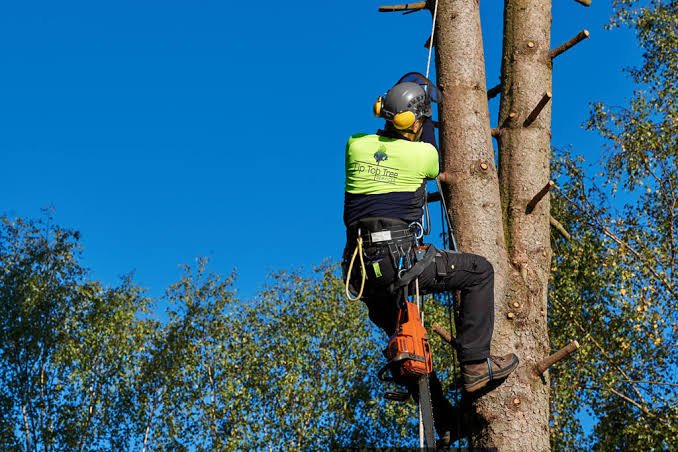
- Controlled work: Use the right access and lowering methods when branches cannot safely fall freely.
- Cleanup: Remove debris and restore access to the work area after completion.
A mature maple with an uneven canopy over a Brighton garage may need far more than a quick cut. An on-site evaluation can help determine whether the appropriate solution is selective pruning, removal of one hazardous limb, or removal when the tree cannot be safely retained. The same evaluation can identify practical site considerations, including where equipment can be positioned, whether a driveway needs temporary protection, and how branches can be lowered without damaging landscaping below.
STIHL
Why It’s On The List
STIHL represents the equipment and safety side of the tree-care ecosystem. Its professional product categories include chainsaws, pole pruners, battery tools, climbing-related equipment, and personal protective equipment. For homeowners, the key lesson is that having a chainsaw does not create the training needed to evaluate internal decay, branch tension, electrical exposure, or a safe drop zone.
Hand pruners and loppers may be appropriate for a small, clearly reachable branch when both feet remain on the ground. If the job requires a ladder, climbing, ropes, an overhead chainsaw, or traffic control, it has moved beyond routine homeowner maintenance. Even small branches can move unpredictably when bent, pinched, or caught between limbs, so homeowners should avoid working directly beneath the cut area.
Consumers Energy
Why It’s On The List
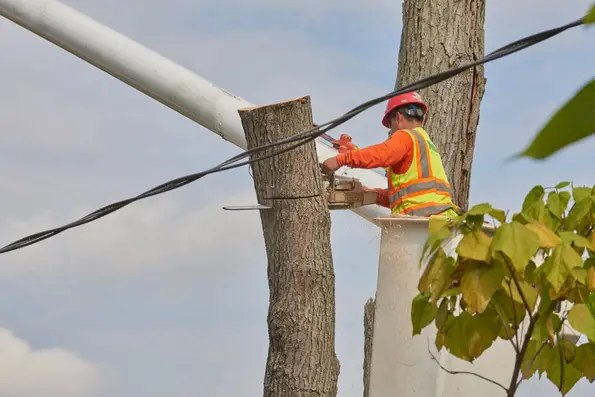
Consumers Energy is an important safety partner when trees grow near energized electrical infrastructure. Homeowners should never cut, climb, or pull on a branch touching a power line, and they should not assume all vegetation work near a line belongs to a private tree contractor.
The utility’s role is utility-side vegetation management and electrical safety. Holtslander & Sons can address privately owned trees and limbs outside that responsibility. Before work begins, confirm who owns the tree and the line, and whether utility coordination is necessary. This division of responsibilities prevents a routine pruning project from becoming an electrical emergency. If a limb has fallen onto a line or a line is down, keep people, pets, vehicles, and tools away from the area and contact the utility or emergency services as appropriate.
State Farm
Why It’s On The List
State Farm represents the insurance and documentation portion of storm recovery. Routine pruning is generally preventive maintenance, while a fallen tree after a covered event may involve claim questions. Coverage depends on the cause of loss, policy wording, limits, exclusions, deductibles, and the property damaged.
- Photograph damage from a safe distance.
- Stay away from downed or contacted power lines.
- Ask the insurer what records and invoices are required.
- Request a written tree-service estimate before non-emergency work proceeds.
This is where the network works best: the insurer addresses policy questions, while Holtslander & Sons can provide written estimates and work documentation for eligible storm-damage situations. Save before-and-after photographs, invoices, written approvals, and receipts for temporary protective measures, since organized records can make later conversations easier.
The Home Depot
Why It’s On The List
The Home Depot supports the safe, low-risk maintenance that follows professional tree work. Homeowners may need gloves, eye protection, hand pruners, loppers, mulch, yard bags, and cleanup tools for small debris. These supplies help maintain the landscape, but they do not replace an assessment of a mature tree, an elevated limb, or a branch close to a structure.
A useful decision rule is simple: if the branch is small and reachable from the ground, basic tools may be enough. If it requires a ladder, chainsaw, or rope, schedule qualified tree care instead. After professional pruning, basic supplies can also help homeowners keep walkways clear, collect light twigs, and apply mulch correctly around trees without piling it against the trunk.
How To Choose A Tree-Care Company In Brighton
- Request a written estimate identifying the tree or work area, recommended cuts, equipment needs, cleanup, and total price.
- Ask for proof of liability insurance and whether workers’ compensation coverage applies to the crew.
- Confirm how roofs, driveways, gardens, fences, septic areas, and neighboring property will be protected.
- Ask why each major cut is necessary. Be cautious of topping, vague proposals, or pressure to approve expensive work immediately.
- For storm work, clarify whether emergency response, debris hauling, stump grinding, and insurance documentation are included.
Michigan homeowners can also review Michigan DNR storm tree-care guidance, which advises property owners to seek insured, qualified tree-care help after damaging weather. A clear proposal should make it easier to compare service details rather than comparing prices alone.
Common Pre-Winter Tree-Care Mistakes
- Removing too much live canopy at once.
- Topping trees instead of making purposeful structural cuts.
- Using a ladder and a chainsaw together.
- Pruning anywhere near power lines.
- Ignoring a small crack, dead limb, or weak branch union until a storm arrives.
- Choosing a contractor solely because the quote is the lowest.
Another common mistake is treating every tree concern as an urgent removal. In many cases, targeted pruning and monitoring may be more appropriate, while severe defects or extensive decay may justify a different recommendation. The value of an inspection is understanding why a particular course of action is being proposed.
A Simple Brighton Tree-Care Checklist
- Walk the property before the first major snow or ice event.
- Identify limbs over structures, parking areas, sidewalks, and play spaces.
- Photograph visible cracks, hanging branches, cavities, or storm damage.
- Keep all people and equipment away from electrical lines.
- Schedule an inspection early enough to make careful decisions rather than rushed emergency decisions.
Winter tree preparation works best as a coordinated property-safety plan. Holtslander & Sons Tree Service LLC provides local assessment, pruning, removal, and emergency response capabilities, while equipment expertise, utility coordination, insurance documentation, and homeowner maintenance help complete the system around the tree. Planning before winter weather arrives gives homeowners more time to review options, protect vulnerable areas, and address known hazards under controlled conditions.