

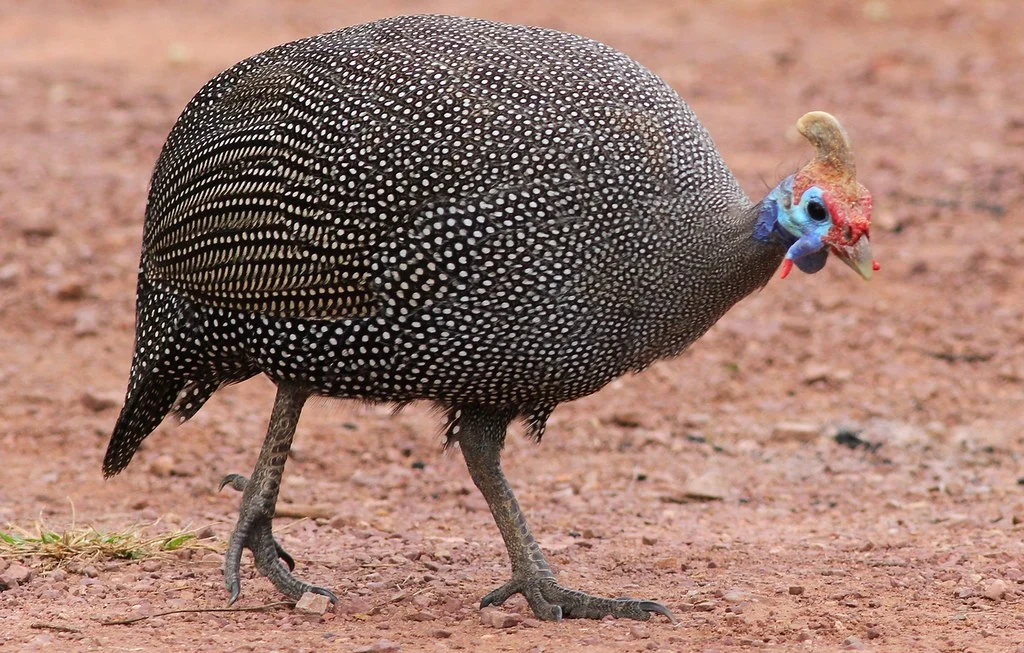
When people first encounter a bird guinea hen, they often notice its unusual appearance before anything else. With its rounded body, spotted feathers, small head, and distinctive helmet-like casque, the guinea hen looks quite different from an ordinary chicken. Yet this bird is much more than an interesting farmyard curiosity. Guinea hens have a long history of living alongside people and are valued for their alert nature, insect-eating habits, flavorful meat, and ability to adapt to a variety of environments.
The bird guinea hen belongs to the guinea fowl family and is native to Africa. Over time, several guinea fowl species have been introduced to other parts of the world, where they have become familiar sights on farms, homesteads, and rural properties. The helmeted guinea fowl is particularly well known and is the species most people mean when they casually use the term guinea hen.
Although guinea hens share some similarities with chickens, their behavior and needs are noticeably different. They can be louder, more independent, and more active than typical domestic poultry. Understanding those differences is important for anyone thinking about keeping them. From their natural behavior to feeding, housing, breeding, and practical benefits, there is plenty to learn about this remarkable bird.
What Is a Bird Guinea Hen?
A guinea hen is generally the female of the guinea fowl, although the terms guinea hen and guinea fowl are sometimes used interchangeably in everyday conversation. The most familiar domestic variety is the helmeted guinea fowl, scientifically known as Numida meleagris. It is recognized by its dark plumage covered with small white spots, which gives the bird a distinctive beaded or pearl-like appearance.
The bird guinea hen has a compact but powerful body designed for active movement. Its legs are relatively strong, allowing it to walk and run efficiently over rough ground. The head is mostly bare compared with the body, and the bird has fleshy wattles and a casque on top of its head. These features contribute to its unusual appearance and help distinguish guinea fowl from chickens, turkeys, and other domestic birds.
One interesting feature of guinea hens is their strong connection to natural environments. Even when raised around people, they often retain instincts that make them excellent foragers. They spend much of their day searching through grass, soil, leaf litter, and low vegetation for food. This independent behavior is one of the reasons they have become popular among people who want poultry that can contribute to pest control while requiring a somewhat different management approach than chickens.
Appearance and Physical Characteristics
The appearance of a bird guinea hen is one of its biggest attractions. Its feathers are usually dark gray, charcoal, or nearly black, with numerous small white spots scattered across the body. From a distance, the bird may look dark and plain, but closer inspection reveals a remarkably intricate feather pattern. The spots are especially striking in good natural light.
The head and neck have much less feather coverage than the rest of the body. Instead, the skin is exposed and can show shades of blue, red, gray, or violet depending on the bird and its condition. A hard, bony casque sits on top of the head, while fleshy wattles appear around the sides of the face. These characteristics give guinea fowl a prehistoric or almost ornamental appearance that makes them easy to recognize.
Adult guinea hens are generally medium-sized birds, although their exact weight and proportions can vary according to breed, sex, age, and nutrition. Their wings are well developed, and guinea fowl are considerably more capable of flight than many domestic chickens. They may use their wings to escape danger, reach trees, cross obstacles, or settle into high roosting locations, which is an important consideration when keeping them in a managed area.
Guinea Hen Behavior and Personality
One of the first things people notice about a bird guinea hen is its personality. Guinea fowl tend to be alert, energetic, and highly aware of their surroundings. They frequently communicate with one another using a wide range of calls. These sounds can be useful because the birds often react strongly to unfamiliar people, predators, vehicles, or other unusual activity.
Their alertness also makes them useful as natural watchdogs for rural properties. A group of guinea fowl may become noisy when something unfamiliar enters their territory. While this can be beneficial, it can also become a drawback for people living in areas where excessive noise could disturb neighbors. Anyone considering guinea hens should think carefully about their vocal nature before bringing them home.
Guinea hens are also social birds. They usually prefer living in groups rather than alone, and their movements can look surprisingly coordinated when they travel together. Their social instincts mean that keeping a small group is often more practical than keeping a single bird. They may establish their own routines, preferred areas, and sleeping locations, particularly when they have enough space to roam.
What Do Guinea Hens Eat?
A healthy bird guinea hen is an enthusiastic forager. In natural settings, guinea fowl consume a mixture of seeds, grains, insects, vegetation, and other small food items. Their diet changes with the seasons and with whatever resources are available in their surroundings. This flexible feeding behavior helps explain why they can thrive in different environments.
Insects can make up an important part of their diet. Guinea fowl commonly search through vegetation and soil for beetles, grasshoppers, ticks, and other small creatures. Their appetite for insects is one reason some landowners appreciate having them around gardens, pastures, and yards. However, they should not be viewed as a complete replacement for responsible pest management.
Domestic guinea hens can also receive formulated poultry feed, grains, and other appropriate supplemental foods. Clean drinking water should always be available. Young keets have different nutritional requirements from adults, so their feeding program should be designed around their age and development. Good nutrition supports feather quality, growth, reproduction, immunity, and overall activity.
Guinea Hens as Natural Pest Controllers
The pest-control abilities of the bird guinea hen are among its most practical advantages. These birds spend considerable amounts of time walking through grass, gardens, woodland edges, and open fields while searching for insects. Their natural hunting behavior allows them to consume many small pests without requiring them to be specifically trained.
Gardeners and farmers sometimes keep guinea fowl because the birds can help reduce populations of unwanted insects. They are particularly enthusiastic foragers and may cover areas that chickens ignore. Their habit of moving around in groups also means that several birds can inspect a relatively large area during the course of a day.
However, guinea hens are not perfectly selective workers. They can scratch around plants, disturb soil, and wander into places where their presence is unwanted. A well-managed property therefore needs suitable boundaries and a plan for keeping the birds away from delicate crops when necessary. Their pest-control value is real, but it works best when combined with thoughtful land management.
Housing and Space Requirements
Providing appropriate housing is important for any bird guinea hen kept in captivity. Guinea fowl are active and prefer having space to move, forage, and explore. A cramped environment can lead to stress, conflicts, and attempts to escape. An adequately sized outdoor area gives them an opportunity to behave more naturally.
Secure fencing can be especially important because guinea fowl are strong flyers. Unlike some heavier poultry breeds, they may easily fly over ordinary fences. Some keepers allow their birds to roam freely, while others use covered runs or carefully designed enclosures. The right arrangement depends on the property, predator pressure, neighboring homes, and the keeper’s management goals.
At night, guinea fowl appreciate secure places to roost. They naturally like elevated sleeping locations and may choose trees if given the opportunity. Providing high perches inside a safe shelter can encourage them to return to the desired sleeping area. Protection from predators is also essential, especially because nighttime is when many poultry predators are most active.
Breeding and Raising Young Guinea Fowl
Breeding a bird guinea hen can be rewarding, but it requires preparation. Guinea hens typically lay eggs seasonally when environmental conditions are suitable. Their eggs are smaller than many chicken eggs and have relatively thick shells. A nesting hen may select a hidden location rather than an obvious nesting box, particularly when allowed to roam freely.
Young guinea fowl are known as keets. They require careful attention during their early development because young birds are more vulnerable to cold, dampness, predators, and nutritional problems. A warm, dry, protected brooding environment can greatly improve their chances of healthy growth.
As keets mature, they gradually develop the hardiness and independence associated with adult guinea fowl. Their spotted feathers become more prominent, their bodies strengthen, and their natural curiosity becomes increasingly obvious. Good nutrition, clean water, proper temperature, and protection during the early weeks are essential parts of raising them successfully.
Guinea Hen Eggs and Meat
The eggs of a bird guinea hen are valued in some regions for their rich flavor and distinctive qualities. Guinea fowl eggs tend to have strong shells and relatively small sizes compared with standard chicken eggs. Their yolks can be appealing to people who enjoy eggs from alternative poultry species.
Guinea fowl are also raised for meat. Their meat is often described as lean and flavorful, with a character that can be compared with game birds while still fitting into many traditional poultry dishes. The flavor and texture depend on factors such as age, breed, diet, and cooking method.
Because guinea fowl meat is relatively lean, cooking it requires some attention. Gentle cooking methods can help maintain moisture and tenderness. In culinary traditions where guinea fowl is popular, the bird may be roasted, braised, grilled, or incorporated into hearty seasonal dishes. Its culinary value adds another reason people continue to raise this unusual poultry species.
Common Challenges of Keeping Guinea Hens
Despite their advantages, guinea hens are not ideal for every property. Their noise is perhaps the most frequently mentioned challenge. A group can become extremely vocal when alarmed or excited, and their calls may carry a considerable distance. This can be useful on a farm but inconvenient in a densely populated neighborhood.
Another challenge is their tendency to wander. A bird guinea hen may not automatically respect property boundaries, garden beds, roads, or neighboring yards. Guinea fowl can travel surprisingly far when allowed to roam freely. Proper fencing, gradual training, and consistent management can help reduce these problems.
Their independent nature can also make them less predictable than chickens. Guinea fowl often have strong preferences about where they forage and sleep. They may choose a tree instead of the shelter provided for them, which exposes them to weather and predators. Successful keepers usually work with these instincts rather than trying to eliminate them completely.
Why Guinea Hens Remain Popular
There is a good reason the bird guinea hen continues to attract farmers, homesteaders, gardeners, and poultry enthusiasts. It combines several useful qualities in one unusual package. Guinea fowl can provide eggs and meat, consume insects, alert people to potential disturbances, and add personality to a rural property.
Their unusual appearance is another part of their appeal. The spotted plumage and distinctive head make them immediately recognizable. Watching a group forage across a field can also be fascinating because the birds remain active for much of the day and display complex social behavior.
Ultimately, guinea hens are best suited to people who appreciate independent poultry and have enough space to accommodate their natural habits. They are not simply unusual chickens. They have their own behavior, nutritional needs, social structure, and management requirements. Once those differences are understood, they can become highly useful and entertaining members of a small farm or homestead.
Final Thoughts on the Bird Guinea Hen
The bird guinea hen is a fascinating example of how domestic poultry can retain many characteristics of its wild ancestry. Its striking appearance, active foraging behavior, strong social instincts, and distinctive vocalizations separate it from more familiar backyard birds. For the right environment, these qualities can make guinea fowl surprisingly valuable.
Keeping guinea hens successfully comes down to understanding what the birds naturally want to do. They need room to move, suitable food, clean water, secure shelter, protection from predators, and enough companio
You May Also Raed: Englishtistic