

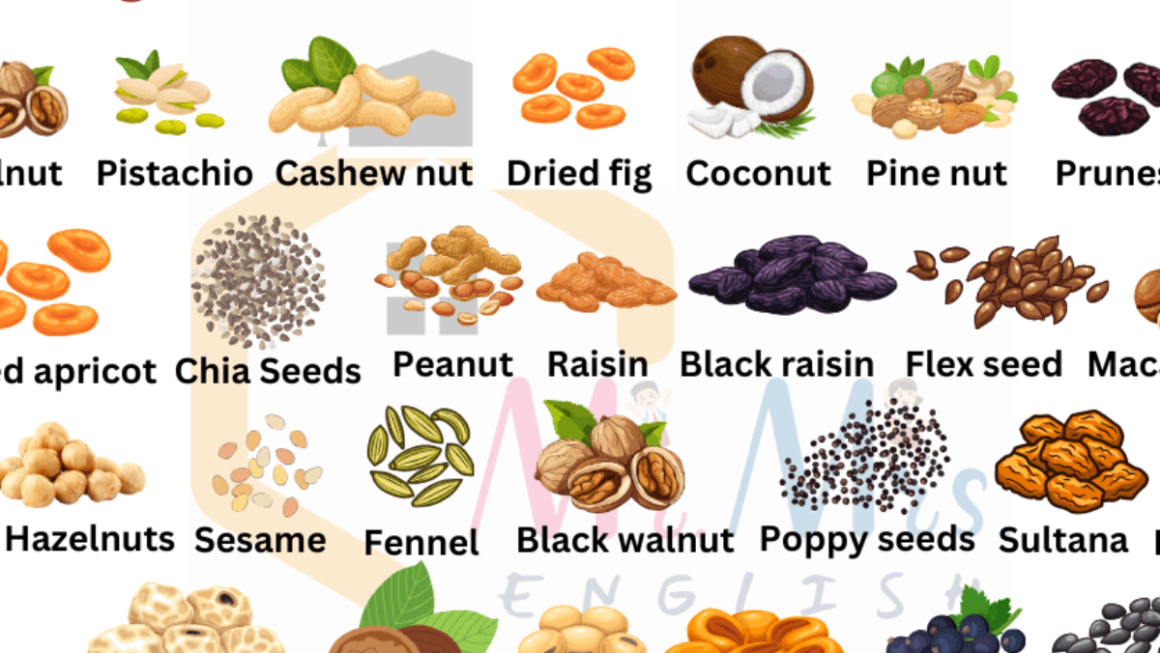
Dry fruits are among the most popular foods enjoyed around the world. They are convenient, naturally flavorful, and packed with nutrients that can make a useful addition to everyday meals. From almonds and cashews to raisins, dates, and walnuts, there are many varieties, and each one has its own taste, texture, and nutritional profile. Learning the dry fruits name in English is especially helpful for students, parents, travelers, shoppers, and anyone who wants to improve their English vocabulary.
The term “dry fruits” is commonly used in South Asia to describe dried fruits as well as edible nuts. In English, however, these foods can be divided into more specific groups, such as nuts, dried fruits, and seeds. For example, almonds and walnuts are nuts, while raisins and dried apricots are dried fruits. Despite this difference, they are often grouped together in everyday conversation because they are commonly eaten as snacks and used in cooking.
Knowing the English names of dry fruits can also make shopping and communication much easier. If you are reading an international recipe, visiting a supermarket, preparing a school assignment, or talking about food with someone from another country, English names help avoid confusion. This guide covers common dry fruits, their English names, characteristics, uses, and simple ways to remember them.
Common Dry Fruits Names in English
There are many types of dry fruits available in markets, and some are more familiar than others. Almonds, cashews, walnuts, pistachios, raisins, dates, dried figs, and dried apricots are among the most commonly recognized names. These foods can be eaten alone, mixed into desserts, added to breakfast dishes, or used in traditional recipes.
Almond is the English name for the oval-shaped nut that has a firm texture and a mildly sweet flavor. Cashew refers to the curved, creamy-colored nut that is especially popular in sweets and savory dishes. Walnut is the name of the wrinkled nut with a distinctive earthy taste, while pistachio is the small green nut usually found inside a hard, partly opened shell.
Raisin is the English word for a dried grape. Dates are naturally sweet fruits that are often eaten fresh or dried, while figs become chewy and sweet when dried. Apricots can also be dried, producing a soft, slightly tangy snack. Other familiar names include prunes for dried plums, dried cranberries, dried blueberries, and dried cherries.
1. Almonds
Almonds are one of the most well-known dry fruits in English. They have a firm texture, a slightly sweet flavor, and a thin brown skin. Almonds can be purchased with or without their skin, and they are often eaten raw, roasted, or soaked. They are also frequently used in cakes, cookies, desserts, cereals, and homemade snacks.
The English word “almond” is useful to remember because it appears frequently in recipes and nutrition-related content. Almonds are commonly associated with healthy eating because they contain protein, fiber, fats, vitamins, minerals, and other nutrients. However, like other nuts, they are relatively energy-dense, so normal portion sizes are important.
Almonds can also be used in several different forms. Almond milk, almond flour, almond butter, and sliced or chopped almonds are common products. In South Asian cooking, almonds are often added to desserts, rice dishes, milk-based drinks, and festive recipes, making them both a nutritious ingredient and a traditional favorite.
2. Cashews
Cashews are another extremely popular dry fruit. They are usually curved in shape and have a smooth, creamy texture when properly prepared. Their mild flavor makes them versatile, which is why they appear in both sweet and savory recipes. Cashews are often roasted, salted, or incorporated into mixed nuts.
The English name “cashew” is simple to recognize and is used almost universally in food packaging and recipes. Cashews are commonly added to curries, stir-fries, desserts, rice dishes, and snack mixes. Ground cashews can also contribute a creamy texture to sauces and traditional sweets.
Although cashews are nutritious, they should still be enjoyed in sensible quantities. Their combination of fats, protein, and calories makes them filling, while their pleasant taste can make it easy to eat more than intended. Choosing plain or lightly roasted cashews can be a practical option when you want to keep unnecessary added ingredients lower.
3. Walnuts
Walnuts are easily identified by their hard, rough shells and brain-like appearance inside. The edible portion has a crunchy texture and a rich, slightly bitter flavor. Walnuts are commonly eaten as snacks and are also used in baked goods, salads, breakfast bowls, and desserts.
The English word “walnut” is particularly useful because it can refer to both the whole nut and the edible kernel. Unlike some milder nuts, walnuts have a distinctive flavor that stands out in recipes. Chopped walnuts can add crunch to cakes, breads, oatmeal, yogurt, and homemade energy snacks.
Walnuts are also valued for their nutritional content. They provide fats, protein, fiber, and several micronutrients. They contain plant-based omega-3 fatty acid known as alpha-linolenic acid. As with other nuts, walnuts are best enjoyed as part of a varied diet rather than treated as a replacement for every other food.
4. Pistachios
Pistachios are small nuts with a naturally greenish edible kernel. Their shells often split open as they mature, making the nut easy to recognize. They have a slightly sweet and savory flavor and are especially popular in desserts, ice cream, pastries, and traditional sweets.
The English name “pistachio” is widely used in supermarkets, restaurants, and recipes. Pistachios may be sold shelled or unshelled, raw or roasted, and sometimes salted. Ground pistachios are also used as a decorative and flavorful topping for cakes, puddings, milk-based desserts, and other dishes.
Pistachios contain protein, fiber, fats, and various vitamins and minerals. Their bright appearance also makes them attractive as a food ingredient. When choosing packaged pistachios, checking the amount of added salt and other ingredients can help you make a more suitable everyday choice.
5. Raisins
Raisins are dried grapes and are among the most familiar dried fruits. They are usually small, wrinkled, chewy, and naturally sweet. Raisins can be made from different grape varieties, which means their size, color, and flavor may vary from light golden to dark brown.
The word “raisin” is important to know because it appears in countless recipes. Raisins are commonly added to cereals, oatmeal, breads, cakes, cookies, rice dishes, and snack mixes. They can also be eaten directly without preparation, making them an easy option for a portable snack.
Because raisins are dried, their natural sugars and calories are more concentrated than those of fresh grapes by volume. They also provide fiber and several micronutrients. A small serving can therefore add sweetness and texture to meals without requiring refined sugar in every recipe.
6. Dates
Dates are sweet fruits that can be eaten fresh or dried. Dried dates are soft, chewy, and naturally rich in sweetness. They are especially popular in Middle Eastern, South Asian, and North African cuisines, where they are used in desserts, drinks, snacks, and traditional dishes.
The English word “date” can sometimes be confusing because it also refers to a calendar day. In a food context, however, a date means the edible fruit of the date palm. This makes context important when learning English vocabulary.
Dates contain natural sugars, fiber, and various minerals. They can be eaten on their own, stuffed with nuts, chopped into oatmeal, blended into smoothies, or used as a natural sweetener in homemade recipes. Their soft texture also makes them convenient for preparing energy bites and similar snacks.
7. Dried Figs
Dried figs are often called simply “dried figs” in English. They have a chewy texture, a naturally sweet flavor, and many tiny edible seeds inside. Their appearance is different from most nuts, making them easy to distinguish as a dried fruit.
Dried figs can be eaten as a snack or chopped into breakfast dishes and desserts. They pair well with nuts, cheese, yogurt, and cereals. Some people also use them in traditional sweets and homemade fruit mixtures.
From a nutritional perspective, dried figs provide fiber and several minerals. Since the water has been removed during drying, their nutrients and natural sugars become more concentrated by weight. Eating a reasonable portion alongside other foods can help keep the overall diet balanced.
8. Dried Apricots
Dried apricots are made by removing much of the water from fresh apricots. They usually have a soft, chewy texture and a sweet-tart flavor. Their orange or darker color can vary depending on the drying and preservation process.
In English, the name is straightforward: “dried apricots.” They are commonly used in trail mixes, cereals, baked goods, desserts, and snack boxes. They can also be chopped and added to savory dishes for a touch of natural sweetness.
Dried apricots provide fiber and nutrients, but some commercially packaged versions may contain added preservatives or sugars. Reading the ingredient label is therefore a useful habit. Choosing products with simple ingredients can be a good approach for regular consumption.
9. Prunes
Prunes are dried plums. They are usually dark in color, soft, chewy, and naturally sweet. Although the word “prune” may sound unfamiliar to some English learners, it is the standard English term for a dried plum.
Prunes can be eaten as a snack or incorporated into baked goods, breakfast foods, sauces, and desserts. Their soft consistency also makes them useful in recipes where a naturally sweet and moist ingredient is desired.
Prunes are particularly known for their fiber content. They are often included in discussions about digestive health because fiber is important for normal bowel function. As with other dried fruits, portion size matters because drying concentrates the fruit’s natural sugars and calories.
10. Dried Cranberries and Other Dried Fruits
Dried cranberries are another popular option and are often found in packaged snack mixes and breakfast foods. They have a chewy texture and a sweet, slightly tart taste. Unlike some naturally sweet dried fruits, many commercial dried cranberries contain added sugar, so checking the nutrition and ingredient labels can be helpful.
Other English names you may encounter include dried cherries, dried blueberries, dried mangoes, dried pineapple, dried coconut, and dried strawberries. These foods are usually sold as snacks or used as ingredients in cereals, baked products, salads, and desserts.
Learning these names becomes easier when you connect each word with its original fruit. For example, dried mango is simply mango that has been dried, while dried pineapple is pineapple with much of its water removed. This simple pattern can make English food vocabulary easier to understand and remember.
How to Remember Dry Fruits Names in English
One of the easiest ways to learn dry fruits names in English is to group them according to their type. Start with common nuts such as almond, cashew, walnut, and pistachio. Then learn dried fruits such as raisin, date, fig, apricot, and prune.
Visual learning can make vocabulary practice even more effective. Look at the food while saying its English name aloud. For example, when you see an almond, say “almond” rather than translating the word from another language first. Repeating the English word in a real-life context helps build stronger associations.
You can also practice by using the names in simple sentences. Say, “I eat almonds in the morning,” “Raisins are dried grapes,” or “Walnuts have a crunchy texture.” This method turns isolated vocabulary into practical English that you can use naturally in conversations, writing, and everyday situations.
Benefits of Including Dry Fruits in a Balanced Diet
Many dry fruits and nuts contain useful nutrients, including fiber, protein, healthy fats, vitamins, and minerals. Their nutrient profiles vary considerably, so eating a mixture can provide a broader range of nutrients. They can also add flavor and texture to meals without requiring complicated preparation.
Nuts such as almonds, walnuts, pistachios, and cashews can be convenient snacks between meals. Dried fruits can add natural sweetness to breakfast foods, yogurt, cereals, and homemade snacks. Combining a small amount of dried fruit with nuts can create a satisfying snack with different textures and flavors.
Still, “healthy” does not mean unlimited. Dried fruits have less water than fresh fruits, which makes their natural sugars more concentrated. Nuts are also calorie-dense because of their fat content. The best approach is to enjoy appropriate portions as part of an overall balanced eating pattern.
Conclusion
Learning the dry fruits name in English is useful for much more than improving vocabulary. It helps you understand food labels, follow international recipes, communicate while shopping, and describe ingredients accurately. Common names such as almond, cashew, walnut, pistachio, raisin, date, fig, apricot, and prune are worth learning because they appear frequently in everyday English.
The easiest way to remember these words is through repetition and practical use. Instead of memorizing a long list once and forgetting it later, connect each English name with the actual food, say it aloud, and use it in a short sentence. Over time, these words will become familiar parts of your everyday vocabulary.
Dry fruits and nuts can also be enjoyable additions to meals when eaten in sensible portions. Whether you add almonds to breakfast, walnuts to a salad, raisins to a recipe, or dates to a snack, knowing their English names makes food-related communication much easier. With a little regular practice, learning dry fruits names in English can become simple, useful, and surprisingly enjoyable.