
Personalised jewellery has always had an emotional advantage. A name, initial, date, birthstone, or meaningful symbol can turn an ordinary-looking piece into something that belongs to one specific person. But as personalisation becomes more common, simply adding someone’s initials to a necklace is no longer enough to make a product feel truly special. The next stage of personalised jewellery is likely to be less about adding more customisation options and more about designing better products around the idea of individuality. Customers want jewellery that reflects their story without necessarily looking like a conventional personalised product. They want subtle details, thoughtful proportions, attractive materials, and designs they would genuinely enjoy wearing even if the personal element were removed. This creates an interesting challenge for Personalized Jewelry Manufacturers. They need to combine creative design with production systems capable of handling individual variations. A successful personalised jewellery collection must look beautiful as a whole while allowing every customer to feel that their particular piece was made for them.
Why Personalized Jewelry Manufacturers Are Moving Beyond Names and Initials
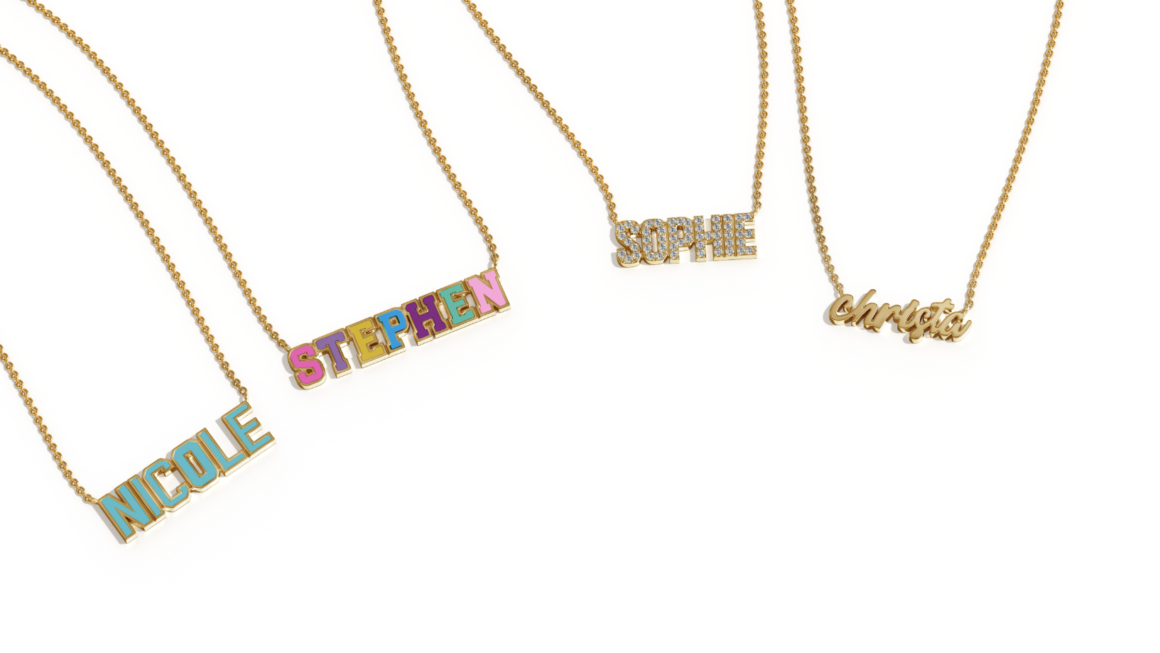
Names and initials remain popular because they are simple, recognisable, and emotionally meaningful. But the personalised jewellery market has expanded considerably. Customers now have more ways to express themselves through jewellery. Birthstones, coordinates, handwritten messages, fingerprints, symbols, meaningful dates, zodiac references, family motifs, and custom illustrations can all become part of a jewellery design. Some customers may want something obvious and sentimental, while others prefer a personal detail that only they understand. For Personalized Jewelry Manufacturers, this creates an opportunity to approach personalisation as a design element rather than an afterthought. A pendant, for example, does not need to be a basic disc with a name engraved across the front. The name could become part of the shape, appear on the reverse side, or be represented through an abstract design. A birthstone could become a subtle accent rather than the centre of attention. This approach makes personalised jewellery more wearable. Customers can enjoy the emotional meaning without feeling that the product looks overly customised.
How Personalized Jewelry Manufacturer Expertise Can Improve Custom Design
Personalisation may look simple from the customer’s perspective, but production can become complicated very quickly. Every name has different characters and lengths. Every engraving may require different spacing. Different symbols may need different proportions. This is where a professional Personalized Jewelry Manufacturer can contribute valuable technical expertise. CAD technology makes it possible to create customised designs with greater precision. Manufacturers can adjust lettering, spacing, dimensions, stone placement, and other details before creating a physical sample or moving into production. However, technology alone is not enough. A name that looks attractive on a computer screen may become difficult to read when engraved onto a small pendant. A delicate font may look elegant digitally but lose definition during finishing. An overly detailed symbol may become impractical at a smaller scale. Experienced manufacturers can identify these problems early and suggest alternatives. They can recommend suitable lettering styles, minimum line thicknesses, engraving depths, stone sizes, and proportions that preserve the original concept while making the product manufacturable. That collaboration can transform personalisation from a basic production feature into a genuine design advantage.
Why Better Design Matters More Than More Personalisation
It is tempting for brands to compete by offering endless personalisation options. Customers can choose a name, then a font, then a stone, then a symbol, then a finish, then another engraving. More choices may sound appealing, but too many options can make the shopping experience confusing. Good design often works differently. Instead of giving customers dozens of decisions, brands can create a strong base design and offer a small number of carefully selected personalisation options. This creates a more curated experience. The customer still feels involved, but the final jewellery retains a clear design identity. For manufacturers, this approach can also improve production consistency. A limited number of standardised personalisation formats is easier to manufacture at scale than completely unrestricted customisation. The goal should therefore be to make personalisation feel intentional. The name, date, stone, or symbol should contribute to the overall design rather than being added simply because the product is labelled “personalised.” This distinction could become increasingly important as the category matures. Customers are likely to become more selective about the personalised jewellery they purchase, particularly as they encounter more brands offering similar products.
How Personalised Jewellery Can Become More Meaningful Through Subtle Details
The most memorable personalised jewellery does not always reveal its meaning immediately. Sometimes the strongest personal details are the ones that only the wearer understands. A tiny engraving inside a ring can carry more emotional weight than a large name displayed on the outside. A gemstone matching someone’s birth month can provide a subtle connection. A small symbol representing a shared memory can make a simple pendant meaningful without making it visually complicated. This creates opportunities for Personalized Jewelry Manufacturers to work with brands on more sophisticated concepts. Instead of asking only, “What can we engrave?” designers can ask, “What story is this piece trying to tell?” The answer can influence the shape, material, placement, colour, and overall construction of the jewellery. Personalisation can also be layered. The visible design can remain minimalist while hidden details provide the emotional element. This makes the product suitable for everyday wear while giving the owner a private connection to it. Such designs can be particularly powerful for gifting. The recipient may appreciate the jewellery aesthetically first and discover the personal detail afterward, creating an additional emotional moment.
What Brands Should Look for in Personalized Jewelry Manufacturers
Choosing a manufacturing partner for personalised jewellery requires careful consideration because customisation adds another layer of complexity to production. Brands should first examine the manufacturer’s design capabilities. Can the team work with CAD files and create accurate variations for different names, symbols, or stone combinations? A strong digital workflow can significantly reduce errors when multiple customised orders are being produced. Quality control is equally important. Personalised jewellery needs consistent engraving depth, lettering alignment, stone placement, finishing, and proportions. Small mistakes can become particularly noticeable when customers have approved a specific personal design. Manufacturing flexibility also matters. A brand may start with a small number of personalised orders and gradually increase volume. The manufacturer should have systems capable of handling that growth without sacrificing accuracy. Brands should also discuss lead times. Personalised products naturally require more production steps than standard catalogue pieces, so customers need realistic delivery expectations. Perhaps most importantly, manufacturers should understand the brand’s design philosophy. If the goal is subtle, premium personalisation, the production partner needs to understand why a particular font, proportion, or placement matters rather than simply following instructions mechanically.
How the Right Personalized Jewelry Manufacturer Can Help Build a Stronger Brand
Personalised jewellery has the potential to create a closer relationship between a brand and its customers. A standard accessory may be attractive, but a personalised piece can become connected to a memory, relationship, achievement, or personal milestone. That emotional connection can influence how customers perceive the brand. When a product feels thoughtfully designed rather than mass-produced with a name added at the end, customers are more likely to see greater value in it. The right Personalized Jewelry Manufacturer can help make that possible by combining manufacturing precision with design collaboration. Instead of simply producing individual variations, the manufacturer becomes part of the process of creating a scalable personalised jewellery experience. This is particularly important as brands grow. What works for ten custom orders may become difficult when there are hundreds or thousands of variations. Structured CAD systems, clear production specifications, standardised quality checks, and reliable workflows allow personalisation to scale without becoming chaotic. The future of personalised jewellery, then, may not be about giving customers more and more options. It may be about giving them better options—thoughtfully designed pieces where personal details feel natural, beautiful, and meaningful. For brands, that means moving beyond the question of “How can we customise this?” and asking a more interesting one: “How can we make this jewellery feel like it could belong to nobody else?” When the answer is found through strong design and precise manufacturing, personalisation stops being a gimmick. It becomes the reason a customer keeps the jewellery, wears it often, and remembers the story behind it.